
Visiting Erbil? Request a vetted security driver for your visit.
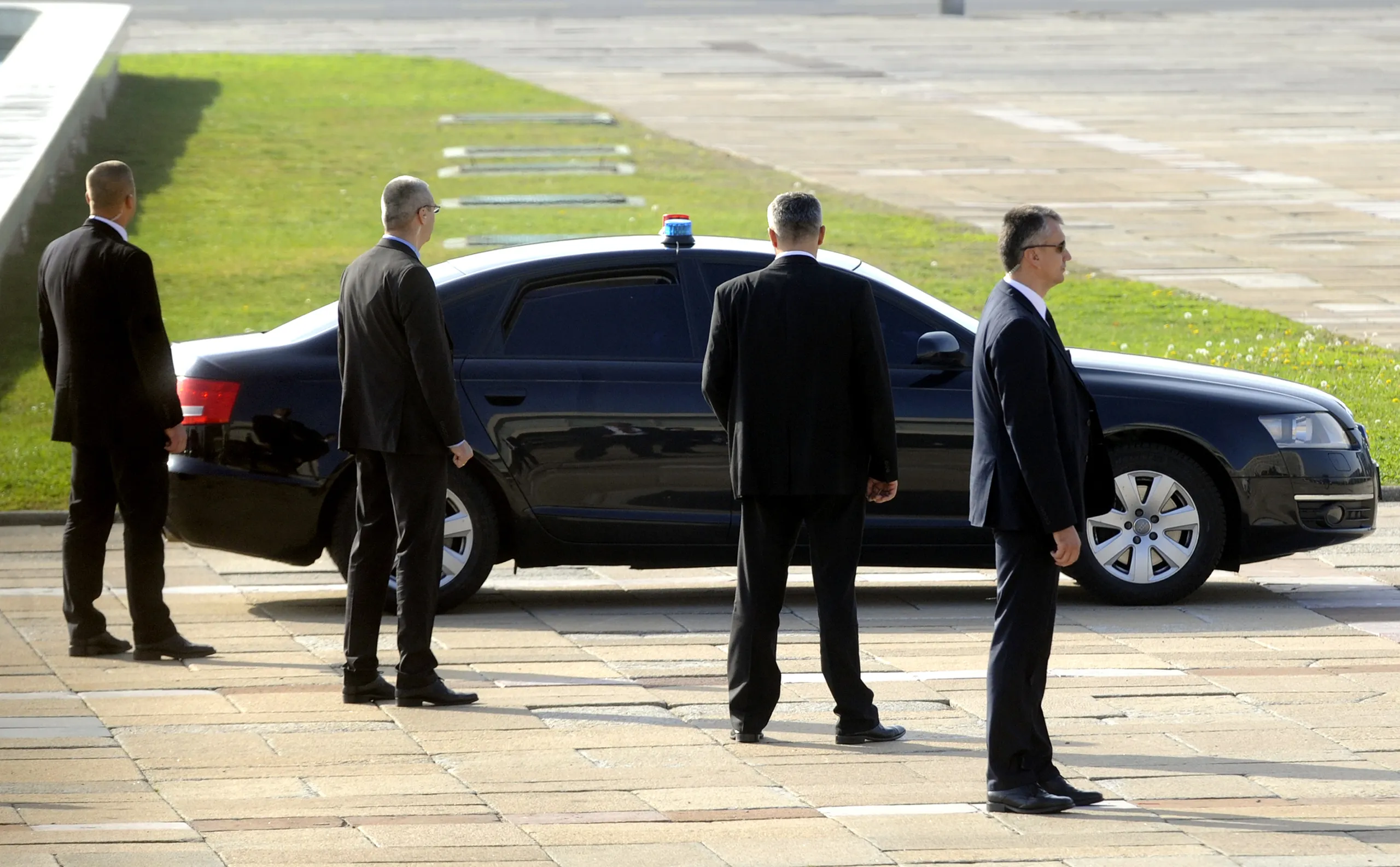
Security drivers in Erbil are the minimum sensible arrangement for a business visit to the Kurdistan Region, and for routine city-centre itineraries they are the core of the plan. The driver handles the leg that matters most, the transfer from Erbil International Airport, which has itself been targeted by rocket and drone attacks, then runs in-city movement on assessed routes under an operations controller. Vehicles range from soft-skin for corridor work to armoured platforms, the KRI norm for higher-risk principals.
The airport leg comes first
EBL is not a neutral arrival point: rocket and drone attacks by Iran-aligned militia groups have struck the airport as well as the US Consulate and coalition facilities in the city, without warning. Transfer design responds to that record: vehicle pre-positioned, collection inside the terminal rather than at the kerb, minimal time on the airport approach, and the operations controller following the flight so the ground plan flexes with delays. Source: FCDO Iraq travel advice (2026).
Where the wheels go, and where they do not
In-city work concentrates on the Ainkawa Road corridor linking the Citadel area to Ankawa, the ground with the city’s densest security infrastructure and most of its business venues; route planning there is about choke points and alternates. The harder rules apply at the edges: southern Erbil and the Mosul road approaches border contested territory and are excluded from routine driving, Makhmour and the areas south and west remain elevated-risk, and no journey leaves the KRI without its own assessment and armed backing.
The full zone and threat breakdown is in our Erbil city briefing, with wider context on the Iraq country page. If the arrival phase is your main concern, see secure airport transfers in Erbil; if the visit needs an officer as well as a driver, see bodyguard hire in Erbil.
What does this cover in Erbil?
Transfers From a Targeted Airport
Erbil International Airport (EBL) has itself been targeted by rocket and drone attacks, which sets the tone for every transfer. Drivers are briefed on the airport's local emergency procedures, dwell time on the airport approach is kept short, and the vehicle is pre-positioned so the principal moves from terminal to wheels without a kerb-side wait. Source: FCDO Iraq travel advice (2026).
Armoured and Reinforced Vehicle Fleet
Armed close protection with an armoured or reinforced vehicle is the norm for higher-risk principals in the KRI, and Erbil transport is quoted accordingly: soft-skin vehicles for routine corridor movement at the baseline, armoured platforms for senior principals and for any tasking that approaches the edges of the city. Vehicle type is fixed at the threat assessment stage, not on the day.
The Ainkawa Road Corridor as the Route Spine
Most business journeys in Erbil run the Ainkawa Road corridor between the Citadel-area centre and the Ankawa district, the stretch holding the international hotels, embassies, and commercial offices with the highest security infrastructure density in the city. Drivers hold current knowledge of this corridor's choke points and alternates, and plan primary and secondary routes for every journey.
Hard Boundaries on the Road Map
Southern Erbil and the approaches to the Mosul road are adjacent to contested territory and are not driven for non-essential purposes; Makhmour and areas south and west of the city remain elevated-risk from historical ISIL activity. Journeys outside the KRI are not accepted without a specific security assessment and armed support. These boundaries are contractual, not advisory. Source: FCDO Iraq travel advice (2026).
A Separately Administered Security Environment
The Kurdistan Region maintains its own security forces (Peshmerga) and its own KRG Ministry of Interior licensing framework, distinct from federal Iraq. Drivers and their companies are licensed under the KRG system, and crossing the region's boundary means leaving that environment, so intercity movement south is a different operation entirely.
Operations Controller on Every Journey
Each Erbil movement runs under an operations controller who tracks the journey from departure to confirmed arrival, holds the client organisation's emergency contact chain, and maintains a check-in cadence with the driver. A missed check-in triggers an immediate welfare call and, if unresolved, activation of the documented contingency routing.
Sources for this page
Licensing, firearms and foreign-operator rules for Erbil, checked : Kurdistan Parliament, laws passed in 2021 (Law No. 18 of 2021, Private Security Companies in the Kurdistan Region); Journal of Legal and Political Studies (University of Sulaimani), notes on Kurdistan Region Law No. 18 of 2021 (December 2022); Iraq Ministry of Justice, Weapons Law No. 51 of 2017 (text). The full rules are on our Erbil security overview.
Travel advice quoted on this page: FCDO travel advice: Iraq. Advice changes; read the current version before travel.
Frequently Asked Questions
What is the airport transfer protocol for security drivers in Erbil?
Do I need an armoured vehicle for Erbil?
Will a driver take me outside the Kurdistan Region?
How are driving routes planned within Erbil?
This page is published by CloseProtectionHire.com and written to editorial standards overseen by James Calloway, Senior Security Consultant (regulation, licensing, vetting and risk frameworks) and Marcus Webb, Security Operations Adviser (operational close protection, secure transport and city-specific safety).
Threat, regulatory and emergency information is sourced to named, dated authorities such as the FCDO, the US State Department and national licensing bodies. Last updated . See how we verify.