
Book a security driver in Basra
Basra’s oil-and-gas economy brings a consistent flow of international executives, project managers, and technical specialists to one of the world’s most challenging security environments. Ground transport in Basra is not a logistical convenience: it is a primary security risk that demands professional management at every stage of a movement.
The FCDO advises against all but essential travel to Basra Governorate. Armed ambush, kidnap-for-ransom, and militia checkpoint activity are live threats on the road corridors that connect Basra International Airport, accommodation compounds, and oil-field operational sites. Standard taxi or car-hire arrangements are wholly inadequate for these conditions.
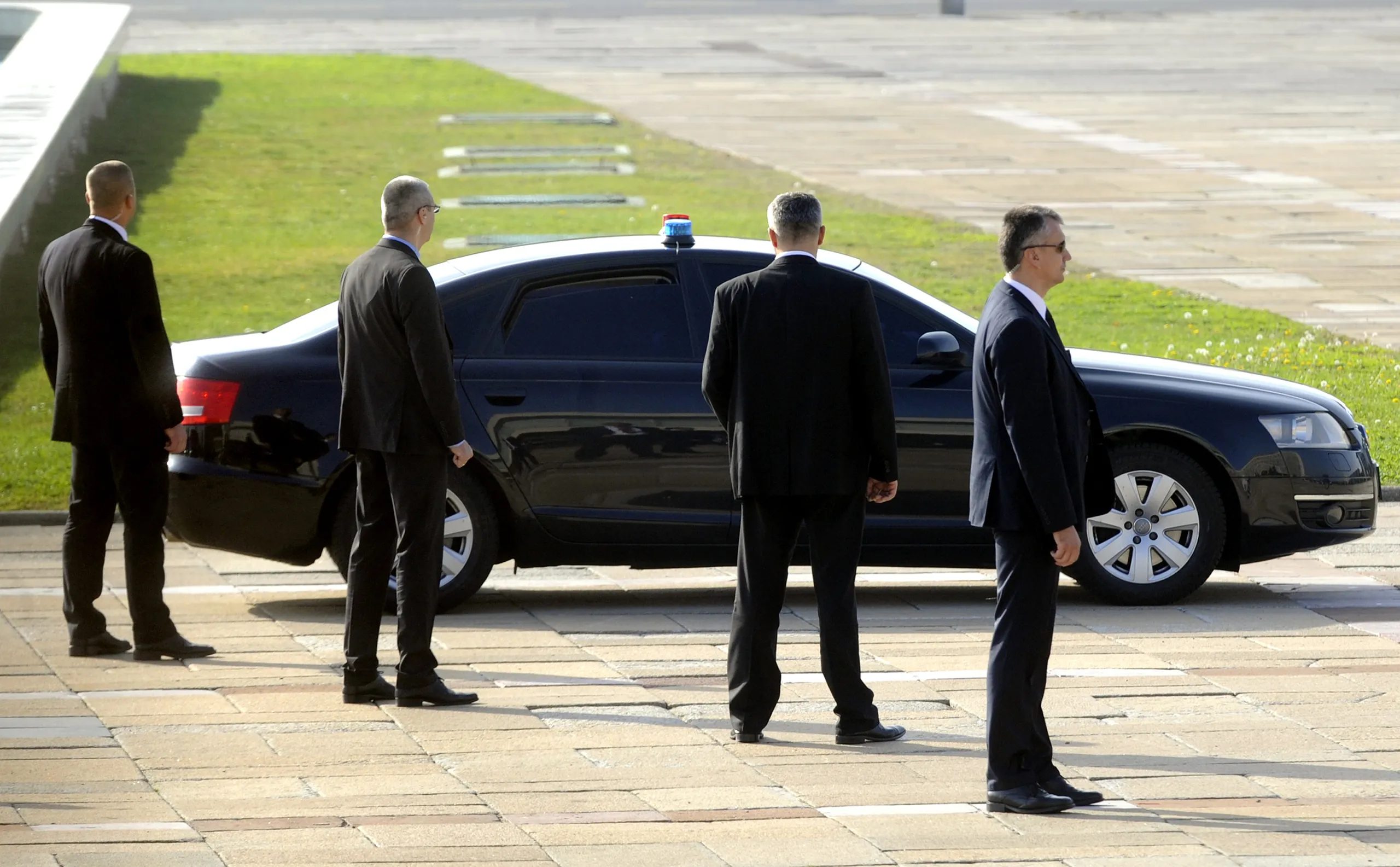
Our Basra security drivers are Ministry of Interior-licensed under the Private Security Companies Law No. 52 of 2017, have completed hostile-environment vehicle operations training, and operate in B6-level armoured SUVs as the default platform for all client movements. Route intelligence is updated daily, convoy protocols are defined before each movement, and all operations maintain contact with a 24-hour operations centre.
For executives arriving from outside Iraq, the detail begins at Basra International Airport (BSR) and continues through every movement until departure. Compound-to-compound transfers, oil-field site visits, and port-district movements are all managed under the same strict protocol.
For clients who require a fully integrated armed close protection detail alongside armoured transport, see bodyguard hire in Basra and review the Basra city security profile.
What does this cover in Basra?
Licensing and Legal Framework
Security drivers in Iraq work for companies licensed under the Private Security Companies Law No. 52 of 2017 by the Directorate of Private Security Companies Affairs at the Ministry of Interior. 52 of 2017, administered by the Directorate of Private Security Companies Affairs at the Ministry of Interior. Our Basra partners are fully Ministry of Interior-licensed and compliant with Iraqi statutory requirements.
Threat Environment
Basra presents a high-risk environment for all vehicle movements. Armed ambush and vehicle-based kidnapping are active threats on key transit corridors. Militia checkpoints can appear with limited warning on routes between the airport, accommodation compounds, and oil-field sites. Armoured vehicles and trained, armed security drivers are the appropriate standard for all non-emergency movements outside secured facilities.
Key Routes and Operational Areas
Critical transport corridors include Basra International Airport (BSR) to principal accommodation compounds, the southern oil-field corridor (Rumaila, West Qurna), the Basra port district, and the Abu al-Khaseeb industrial zone. All routes are assessed for current militia activity, checkpoint locations, and road conditions before each movement.
Armoured Vehicle Services
All vehicle movements for foreign executives in Basra are conducted in B6-level armoured SUVs as a minimum standard. For convoy movements to oil-field sites, a multi-vehicle configuration is standard: lead vehicle with an armed security driver and close protection officer, follow vehicle with a second armed team. Convoy communications are maintained throughout.
Route Intelligence and Planning
Our Basra operations team maintains current route intelligence updated daily from field sources and open-source monitoring. Route plans are reviewed each morning and adjusted for overnight changes in checkpoint locations or incident reports. Alternative routing via Shatt al-Arab waterway where road conditions warrant it is incorporated into contingency plans.
Airport and Compound Transfer Protocols
Basra International Airport (BSR) transfers are conducted with an armed vehicle positioned airside where access permits. Compound-to-compound transfers follow a defined SOPs protocol: communication windows, pre-movement checks, and a defined escalation procedure if a convoy is overdue. All transfer timings are communicated to the operations centre before departure.
Sources for this page
Licensing, firearms and foreign-operator rules for Basra, checked : Iraq Ministry of Justice, Private Security Companies Law No. 52 of 2017, as amended (Arabic text); Private Security Companies Law No. 52 of 2017, English text (Proelium Law); Iraq Ministry of Justice, Weapons Law No. 51 of 2017 (text). The full rules are on our Basra security overview.
Travel advice quoted on this page: FCDO travel advice: Iraq. Advice changes; read the current version before travel.
Frequently Asked Questions
Are armoured vehicles mandatory for all movements in Basra?
How are routes assessed before vehicle movements?
What is the standard convoy configuration for an oil-field site visit?
Can you coordinate with an employer's existing Basra security team?
What happens if a vehicle breaks down or is disabled on a route?
This page is published by CloseProtectionHire.com and written to editorial standards overseen by James Calloway, Senior Security Consultant (regulation, licensing, vetting and risk frameworks) and Marcus Webb, Security Operations Adviser (operational close protection, secure transport and city-specific safety).
Threat, regulatory and emergency information is sourced to named, dated authorities such as the FCDO, the US State Department and national licensing bodies. Last updated . See how we verify.