
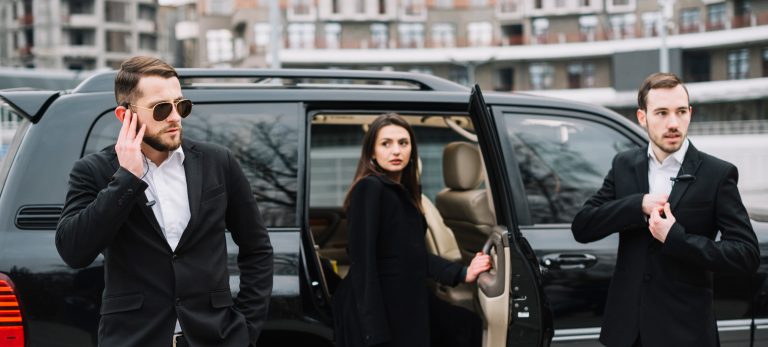
Request a protection detail for Rotterdam
This page is about the people who provide close protection in Rotterdam: who they are, how they are vetted, and what credentials to verify before they deploy. Every operator in our Rotterdam network works for a Wpbr-licensed firm, and is assessed for local competence including port-security awareness. It covers standard team configuration, the permit any armed cover would need, and the credential checks a buyer should insist on before engaging any officer.
Corporate visits typically centre on the Kop van Zuid business zone, WTC Rotterdam, and the Port Authority headquarters at Wilhelminapier, with energy, maritime, and logistics sector meetings often extending to Europoort or Maasvlakte port facilities. For those visits, ISPS security pass applications must be initiated a minimum of five working days in advance. For principals with formal corporate events or hospitality commitments in Rotterdam, event security in Rotterdam covers the additional venue and crowd management requirements for high-profile engagements.
Our CPO teams from Wpbr-licensed firms in Rotterdam bring specific experience in port facility access coordination, Erasmus Bridge zone vehicle positioning, and the advance operational planning required for Europoort and Maasvlakte deployments. Full operational documents covering WPBR-verified contractor credentials, advance route packs, and emergency contacts are prepared for every engagement and shared with the client security contact before arrival.
To arrange short-term cover for a specific trip, see bodyguard hire in Rotterdam. For organisational, duty-of-care protection around a corporate visit, see executive protection in Rotterdam.
What does this cover in Rotterdam?
Regulatory Framework and Licensing
Close protection in Rotterdam is governed by the Wet particuliere beveiligingsorganisaties en recherchebureaus (Wpbr, 1997). Private security firms need a licence from the Minister of Justice and Security, applied for through Justis. Individual close protection operatives need consent (toestemming) from the police chief (korpschef) and must work within a Wpbr-licensed firm. Carrying a firearm needs a carry permit from the police chief under the Wet wapens en munitie, granted only for a well-founded reason; our standard details are unarmed with professional counter-surveillance and physical intervention capability. A security licence from another EU member state counts as a Dutch one only where it guarantees a professional level at least equal to the Dutch one, and a firm with no Dutch establishment needs the Minister's consent for each person it sends. Oversight and compliance inspections are conducted by Dienst Nationale Recherche and regional Politie units. Principals visiting port facilities at Europoort or Maasvlakte should arrange site access with the facility well in advance.
Threat Environment in Rotterdam
FCDO Netherlands 2024 rates Rotterdam as low risk for most business visitors. Documented petty crime includes pickpocketing at Rotterdam Centraal station and the Lijnbaan shopping area. Dutch Politie annual data for 2023 confirms that Rotterdam port is Europe's highest-volume cocaine seizure point; gang-related violence is documented in port-adjacent industrial areas including Botlek and Maasvlakte, though this does not create direct risk for business visitors to the commercial centre. Demonstrations at Schouwburgplein and the Erasmus MC area during national political events are generally orderly. Rotterdam's status as Europe's largest port (Europoort, Maasvlakte 2) makes it a documented target for organised crime and state-level threat actors (AIVD 2023); this is relevant context for energy, maritime, and logistics sector executives visiting operational port facilities.
Principal Hotel and Business Zone Coverage
Principal accommodation options reflect the city's distinctive character. The ss Rotterdam (Lloydkade) is a unique floating hotel in the RDM harbour area and suits principals who value unusual, low-profile accommodation. Hotel New York (Wilhelminapier, Kop van Zuid) occupies the historic Holland America Line building and is the premium HNWI choice in Rotterdam, with the Wilhelminapier peninsula providing an operationally contained environment. Mainport Design Hotel (Leuvehaven, inner harbour) offers good vehicle access near the business district. The primary business zone is Kop van Zuid, anchored by the Erasmus Bridge, and housing WTC Rotterdam, Deloitte, PwC, and the Port Authority headquarters. The Coolsingel corporate and financial corridor in the city centre provides an alternative business zone. For port facility visits to Europoort or Maasvlakte, arrange site access with the facility and its host well in advance.
Airport and Transit Security
Rotterdam The Hague Airport (RTM) is approximately 6km northwest of the city centre with a transit time of approximately 15 minutes, handling regional European routes by Transavia, KLM, and easyJet. Intercontinental delegates typically arrive via Amsterdam Schiphol (AMS), approximately 75km northwest with a transit time of around 50 minutes via the A13 and A4 motorways. Rotterdam does not have a general aviation terminal at RTM; private aircraft typically use Schiphol or Amsterdam Lelystad Airport, with ground transport from those airports to Rotterdam. The Nieuwe Maas river crossings - via bridge or the Maastunnel - affect routing; teams should plan for the signal gap within the Maastunnel during transit and note that raised bridge positions, while infrequent during business hours, can affect route timing.
Operational Considerations
Dutch is the formal working language in Rotterdam, but the city's business community has exceptionally high English fluency - among the highest in continental Europe - making daily operational communication straightforward. Mobile coverage on KPN, Vodafone, and T-Mobile 4G networks is solid throughout the city and most port areas; Maasvlakte 2 outer port areas have some signal gaps that should be noted in advance operational planning. Rotterdam's modern grid layout and broad boulevards make surveillance detection route planning more straightforward than in historic Dutch city centres such as Amsterdam's canal ring. Tunnel transit (Maastunnel, Heinenoordtunnel) creates predictable signal gaps; pre-communications protocols at tunnel entry and exit points should be confirmed before transit.
Emergency Response and Medical Support
The primary trauma and emergency facility in Rotterdam is Erasmus MC (Dr Molewaterplein 40, telephone +31 10 704 0704), a leading academic medical centre located approximately 15 minutes from the Kop van Zuid business zone. For emergency care in south Rotterdam, Maasstad Ziekenhuis (Maasstadweg 21, +31 10 291 1911) has an emergency department. Emergency numbers: unified emergency 112, police non-emergency 0900 8844. Consular contacts: British Embassy The Hague +31 70 427 0427; US Embassy The Hague +31 70 310 2209. Note that both the British and US embassies in the Netherlands are located in The Hague rather than Rotterdam; travel time to The Hague from Rotterdam city centre is approximately 25 to 30 minutes by road.
Sources for this page
Licensing, firearms and foreign-operator rules for Rotterdam, checked : Wet particuliere beveiligingsorganisaties en recherchebureaus (wetten.overheid.nl); Wet wapens en munitie (wetten.overheid.nl); Ondernemersplein: licence for a private security organisation. The full rules are on our Rotterdam security overview.
Travel advice quoted on this page: FCDO travel advice: Netherlands. Advice changes; read the current version before travel.
Frequently Asked Questions
Do close protection officers in Rotterdam need a Dutch licence?
Is armed close protection available in Rotterdam?
Which areas of Rotterdam carry the highest theft risk?
How long does it take to transfer from the airport to Rotterdam city centre?
What medical facilities are available in Rotterdam for international principals?
This page is published by CloseProtectionHire.com and written to editorial standards overseen by James Calloway, Senior Security Consultant (regulation, licensing, vetting and risk frameworks) and Marcus Webb, Security Operations Adviser (operational close protection, secure transport and city-specific safety).
Threat, regulatory and emergency information is sourced to named, dated authorities such as the FCDO, the US State Department and national licensing bodies. Last updated . See how we verify.