
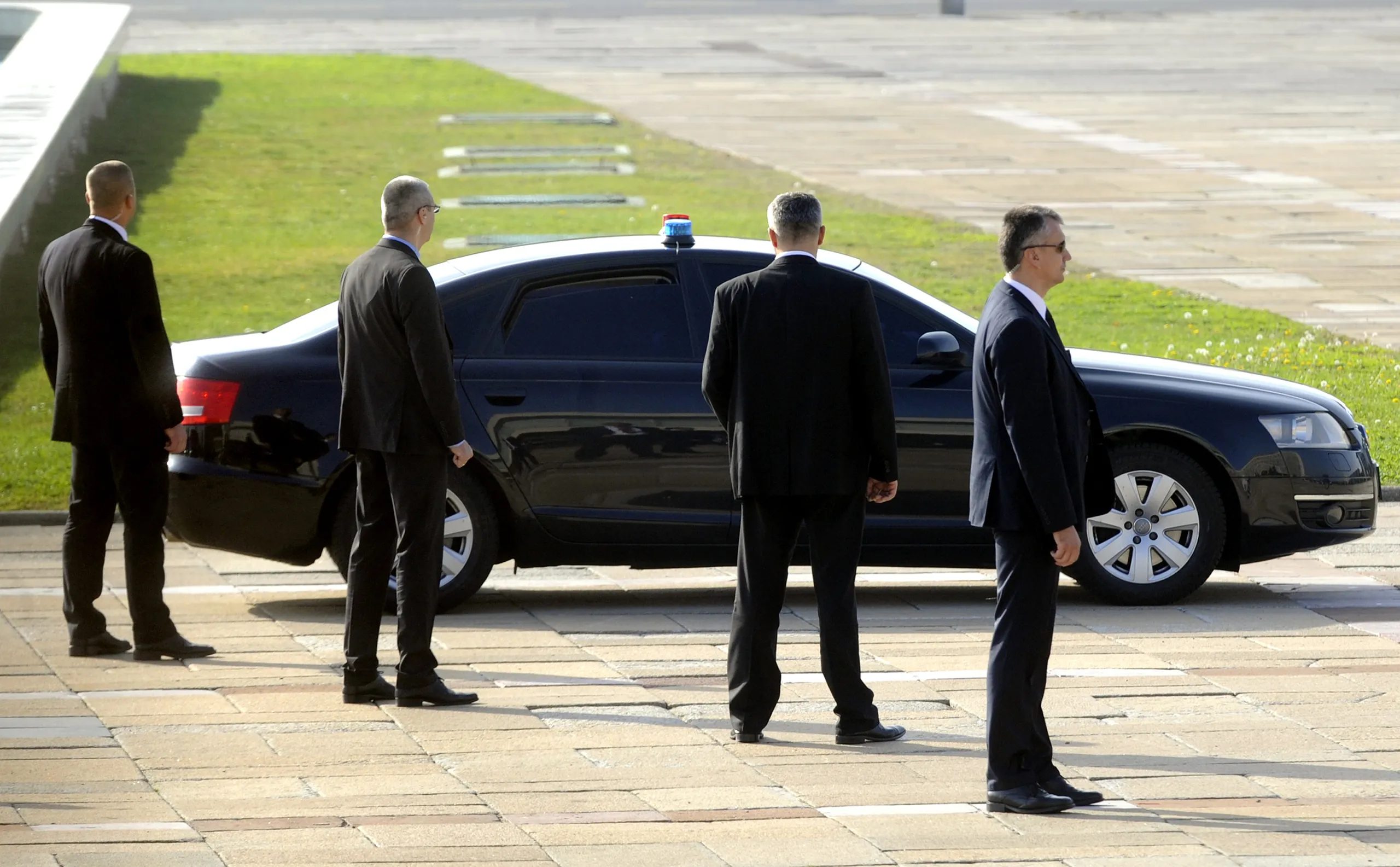
Arrange your Rotterdam airport transfer
Rotterdam is the Netherlands’ industrial and logistics heart, drawing shipping executives, port sector delegations, and petrochemical industry visitors from across Europe and beyond. As the largest port in Europe by cargo volume, it also receives a significant flow of corporate travellers with commercially sensitive itineraries. Rotterdam The Hague Airport (RTM) handles primarily regional European connections, while many higher-yield international visitors arrive at Amsterdam Schiphol (AMS) and connect to Rotterdam by rail or road. FCDO Netherlands travel advice (2024) identifies Rotterdam Centraal station and the Lijnbaan area as the main petty crime environments; a pre-arranged transfer with name-board collection ensures the principal is met at the correct point and moved to their vehicle without navigating these higher-density public spaces unaccompanied.
For clients arriving at AMS, the NS Intercity Direct rail service to Rotterdam Centraal is often faster than road transfer during peak hours, and drivers positioned at Rotterdam Centraal can meet the principal on arrival at the station. For those arriving directly at RTM, the 20-minute road transfer on the A20 is straightforward and low-risk. Further background on security conditions and the Rotterdam port environment is available on the Rotterdam city page.
For clients whose Rotterdam visit includes port facility access, multi-site commercial visits, or executive programmes requiring integrated security beyond the airport transfer, the Rotterdam close protection team can be briefed alongside the transfer booking to provide continuity of cover from landing to departure. Combined programmes covering all surface movement, including Maasvlakte port access, are available and ensure consistent situational awareness throughout the assignment.
What does this cover in Rotterdam?
Rotterdam Airport Route and Logistics
Rotterdam The Hague Airport (IATA: RTM, ICAO: EHRD) is located approximately 7 kilometres northwest of Rotterdam city centre via the A20 motorway and N209. The standard transfer takes between 20 and 25 minutes under normal conditions, rising to 35 to 40 minutes during morning peak hours on the A20 approach to the city. RTM is a compact airport serving primarily budget and regional European routes, with a single terminal building. For executive and corporate travellers who require a wider range of direct international connections, Amsterdam Schiphol (AMS) is the primary alternative gateway, approximately 80 kilometres north via the A13/A4. The most practical approach for many Rotterdam visitors arriving at AMS is to take the NS Intercity Direct rail service from Schiphol to Rotterdam Centraal, a journey of approximately 30 minutes, with a vehicle and driver meeting them at Rotterdam Centraal rather than at the airport. Road transfer from AMS to Rotterdam is approximately 65 to 80 minutes depending on the A13 traffic, which is frequently subject to peak-hour delays near Delft and the N14 interchange. Both RTM and AMS transfers are covered; the client specifies their arrival gateway at booking, and the driver is positioned accordingly.
Vehicle and Driver Standards
Security drivers and any protective personnel operating Rotterdam airport transfers are regulated under the Wet particuliere beveiligingsorganisaties en recherchebureaus (WPBR 1997), the Netherlands' principal legislation governing private security organisations and investigators. Companies need a licence from the Minister of Justice and Security, applied for through Justis (Dienst Justis), and individuals need consent from the police chief (korpschef). Carrying a firearm needs a carry permit from the police chief under the Wet wapens en munitie, granted only for a well-founded reason, and our standard engagements are unarmed. Drivers hold a valid Dutch rijbewijs for the vehicle class and a Verklaring Omtrent het Gedrag (VOG) certificate of conduct from Justis. Vehicles are dark-livery executive saloons or people carriers, typically Mercedes E-Class or V-Class, maintained to Dutch APK roadworthiness standards with commercial passenger insurance. Rotterdam's port environment and its associated commercial complexity mean a proportion of business visitors arrive with sensitive cargo or commercially sensitive information; all drivers are briefed on non-disclosure expectations as standard.
Arrival Hall Protocols and Risk Management
FCDO Netherlands travel advice (2024) identifies pickpocketing at Rotterdam Centraal station and the Lijnbaan shopping area as the primary petty crime risk for visitors. RTM's arrivals hall is a compact and well-managed environment, lower-risk than Rotterdam Centraal station, but the public zone outside the terminal still attracts unsolicited taxi approaches, particularly from drivers not on the official airport rank. The name-board collection protocol positions the driver inside the arrivals hall at the agreed meeting point with a clearly printed board; the principal does not need to interact with the public forecourt. On contact, luggage handling is taken over immediately and the principal is escorted to the pre-positioned vehicle in the designated pick-up area. For clients arriving at AMS Schiphol, the transfer approach differs: if arriving by road, the driver meets the principal at the Schiphol arrivals hall in the standard name-board position. If the principal is taking NS Intercity Direct rail to Rotterdam Centraal, the driver meets at the agreed point within Rotterdam Centraal, which is a busier and higher-risk environment requiring closer attention to luggage security. Drivers carry identification matching the booking confirmation in all cases.
Route Security Assessment
The A20 motorway corridor between RTM and Rotterdam city centre presents a low security risk profile, consistent with FCDO Netherlands (2024) assessments for the region. The route passes through the northern residential districts of Rotterdam without any documented pattern of vehicle crime targeting travellers. Port-related organised crime in Rotterdam is documented in the Politie annual report 2023, which records drug trade activity in the port and adjacent industrial areas, but this does not present a direct threat to executive transfer vehicles on the A20 or on the standard hotel approach routes via Westblaak and the Kralingse Plas corridor. Counter-surveillance awareness is maintained as standard on all runs. The A13 road from AMS Schiphol to Rotterdam is well-maintained and well-lit, but congestion near the Ypenburg junction and the N14 interchange is common in both morning and evening peak hours, and drivers allow an additional 15 to 20 minutes buffer on this corridor during peak times. Demonstration activity noted in FCDO Netherlands (2024) is typically concentrated around The Hague government buildings rather than Rotterdam's commercial or hotel districts.
Principal Hotel and Venue Drop-off
Rotterdam's principal executive hotels are concentrated along the Wilhelminakade waterfront and in the city centre commercial district. nhow Rotterdam (Wilhelminakade 137) is in the Kop van Zuid district on the south bank of the Nieuwe Maas and has a private vehicle entrance with covered drop-off in the hotel's lower ground loading bay, suitable for discreet arrivals. Mainport Hotel Rotterdam (Leuvehaven 77) is in the inner harbour and is accessed from Leuvehaven; driver co-ordination with the hotel concierge is standard for confirming the harbour-side drop-off slot. Marriott Rotterdam (Weena 686) is in the city centre near Rotterdam Centraal and has a street-level vehicle bay on Weena, convenient for clients arriving by road transfer from AMS. For clients visiting the Port of Rotterdam Authority, Deltalinqs, or major shipping and petrochemical facilities at Maasvlakte, route and access arrangements require advance planning as Maasvlakte is approximately 30 kilometres west of the city; the driver can be briefed to proceed directly from RTM to Maasvlakte without stopping in the city. Departure logistics are confirmed with the principal on arrival.
Emergency and Medical Protocols
The principal hospital for serious medical emergencies in Rotterdam is Erasmus MC (Dr Molewaterplein 40, +31 10 704 0704), one of Europe's largest university medical centres, operating a 24-hour Spoedeisende Hulp (emergency department) with specialist trauma and intensive care facilities. Maasstad Ziekenhuis (Maasstadweg 21, +31 10 291 1911) is a major secondary facility in the south of the city. The Netherlands' unified emergency number is 112, connecting to police, fire, and ambulance services; the non-emergency police line is 0900-8844. The British Embassy in The Hague (+31 70 427 0427) provides consular assistance to UK nationals throughout the Netherlands and operates an out-of-hours emergency referral; US nationals should contact the US Embassy in The Hague (+31 70 310 2209). In the event of a medical emergency during transfer, the driver diverts immediately to the nearest Spoedeisende Hulp and notifies the principal's designated emergency contact using pre-briefed details. Private medical care in English is available at the Erasmus MC outpatient clinics and at several Rotterdam private clinics, though Erasmus MC is the appropriate first point of contact for any acute emergency.
Sources for this page
Licensing, firearms and foreign-operator rules for Rotterdam, checked : Wet particuliere beveiligingsorganisaties en recherchebureaus (wetten.overheid.nl); Wet wapens en munitie (wetten.overheid.nl); Ondernemersplein: licence for a private security organisation. The full rules are on our Rotterdam security overview.
Travel advice quoted on this page: FCDO travel advice: Netherlands. Advice changes; read the current version before travel.
Frequently Asked Questions
Which airport should I use for Rotterdam: RTM or Schiphol?
Can the transfer collect me at Rotterdam Centraal station if I take the train from Schiphol?
What are the main security risks noted for Rotterdam?
Are drivers in Rotterdam licensed under Dutch security law?
What is the main emergency hospital in Rotterdam?
This page is published by CloseProtectionHire.com and written to editorial standards overseen by James Calloway, Senior Security Consultant (regulation, licensing, vetting and risk frameworks) and Marcus Webb, Security Operations Adviser (operational close protection, secure transport and city-specific safety).
Threat, regulatory and emergency information is sourced to named, dated authorities such as the FCDO, the US State Department and national licensing bodies. Last updated . See how we verify.