
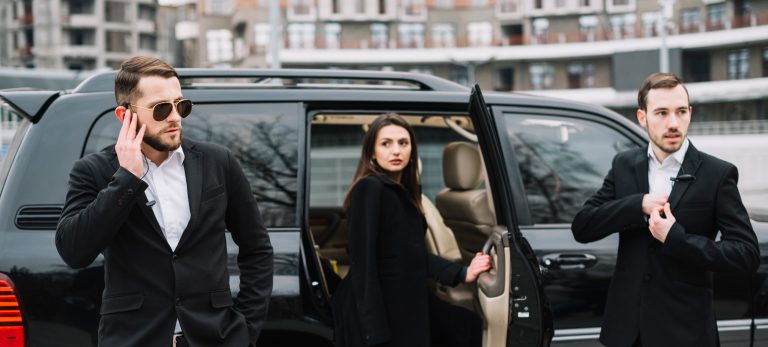
Request a protection detail for The Hague
This page is about the people who provide close protection in The Hague: who they are, how they are vetted, and what credentials to verify before they deploy. Every operator in our The Hague network works for a Wpbr-licensed firm, is screened to a standard appropriate for the city’s international-institution environment, and is assessed for local competence. It covers standard team configuration, diplomatic-protection coordination, and the checks a buyer should insist on.
Corporate and legal visits typically involve the Bezuidenhout business district, Hotel des Indes on Lange Voorhout, and the international organisation campus on Johan de Wittlaan. All assignments near the ICC, ICJ, OPCW, Europol, or Eurojust facilities require advance coordination with those institutions’ own security departments; this should be built into the planning timeline as a minimum five-day lead requirement. For principals with formal legal hearings, diplomatic meetings, or public engagements in the city, event security in The Hague provides the additional institutional liaison and venue coordination capability these environments require.
Our CPO teams from Wpbr-licensed firms in The Hague bring specific experience in international organisation security protocols, diplomatic quarter counter-surveillance route planning, and the advance institutional vetting coordination that The Hague’s unique operating environment demands. Full operational plans are prepared for every deployment, including institutional security contact details, WPBR-verified contractor credentials, and emergency medical routing confirmed with the receiving hospital and local ambulance service in advance.
To arrange short-term cover for a specific trip, see bodyguard hire in The Hague. For organisational, duty-of-care protection around a corporate visit, see executive protection in The Hague.
What does this cover in The Hague?
Regulatory Framework and Licensing
Close protection in The Hague is governed by the Wet particuliere beveiligingsorganisaties en recherchebureaus (Wpbr, 1997). Firms need a licence from the Minister of Justice and Security, applied for through Justis; individual operatives need consent (toestemming) from the police chief (korpschef). Carrying a firearm needs a carry permit from the police chief under the Wet wapens en munitie, granted only for a well-founded reason. State protection for people in the highest risk category is provided by the national police's Dienst Koninklijke en Diplomatieke Beveiliging (DKDB). A security licence from another EU member state counts as a Dutch one only where it guarantees a professional level at least equal to the Dutch one, and a firm with no Dutch establishment needs the Minister's consent for each person it sends. A critical distinction from other Dutch cities: firms providing close protection services near international organisations - the International Criminal Court (ICC), International Court of Justice (ICJ), OPCW, Europol, or Eurojust - may be subject to additional background vetting by those organisations' own security departments before access is permitted. Coordinate all assignments near international organisation buildings with the client institution's security directorate well in advance of deployment.
Threat Environment in The Hague
FCDO Netherlands 2024 rates The Hague as low risk in general terms, but the city presents specific targeted risks absent in other Dutch cities. Petty crime occurs in the Centraal Station area and at Scheveningen seafront during summer. Protest activity near the Peace Palace, ICC buildings, and Europol is documented - primarily anti-ICC protests by national delegations and protests connected to specific cases including Netherlands-Indonesia historical litigation and Russia-Ukraine ICJ proceedings (Dutch media 2022-2024). The most significant contextual risk for The Hague is foreign intelligence activity: the AIVD annual report 2023 explicitly documents foreign intelligence services operating in the Netherlands with a focus on international organisations and the diplomatic quarter. Certain principals connected to ICC or ICJ proceedings (state actors, parties to cases, witnesses in high-profile matters) may face specific personal risk not reflected in the city's general crime statistics.
Principal Hotel and Business Zone Coverage
Hotel des Indes (Lange Voorhout 54) is The Hague's premier 5-star property, positioned adjacent to the embassy row on Lange Voorhout; it is the reference property for state, legal, and international organisation delegations and requires professional lobby and entrance management given the guest profile. Kurhaus Hotel Scheveningen (Gevers Deynootplein 30) is suitable for leisure principals in the coastal resort environment and provides a lower-profile alternative to the city centre. Mercure Hotel Den Haag Central provides a business-standard city centre option. The primary business zones are Bezuidenhout (Haagse Arc, near Centraal Station), Benoordenhout (residential embassy district), and the international organisation campus on Johan de Wittlaan, which concentrates the ICC, Europol, and Eurojust buildings. Unlike Rotterdam or Amsterdam, The Hague functions as a government, diplomatic, and international legal centre; most corporate meetings involve government agencies, law firms, or international institutions.
Airport and Transit Security
Amsterdam Schiphol Airport (AMS) is approximately 50km northwest with a normal transit time of around 40 minutes via the A4 and N14 under normal conditions, and is the primary gateway for intercontinental delegates. Rotterdam The Hague Airport (RTM) is approximately 15km south with a transit time of around 20 minutes, handling regional EU routes. Private aviation typically uses RTM, where advance ground handling coordination is required. A direct intercity rail service runs from Schiphol to Den Haag Centraal in approximately 45 minutes; principals with counter-surveillance requirements should not use public transport, but the regular public rail movement affects route planning for accompanying ground transport vehicles during parallel transit.
Operational Considerations
Dutch is the formal working language; English fluency is very high across the international community in The Hague. Mobile coverage on KPN, Vodafone, and T-Mobile 4G networks is solid throughout the city. Counter-surveillance route planning in The Hague requires more thorough advance work than in Rotterdam: the older street grid around the international organisation quarter has narrower streets and more complex one-way patterns. Anti-surveillance awareness is particularly relevant given the AIVD-documented intelligence activity in the city (2023). The large number of diplomatic vehicles with immunity plates in the diplomatic quarter creates specific protocol considerations for any incident involving diplomatic quarter movements; teams should be briefed on immunity vehicle identification and escalation procedures. All assignments near ICC, ICJ, OPCW, Europol, or Eurojust facilities require advance coordination with those institutions' security departments.
Emergency Response and Medical Support
Hospital emergency departments within The Hague provide 24-hour acute cover, and the primary receiving facility for each assignment is identified and confirmed during advance planning rather than assumed on the day. Serious trauma cases may require onward transfer to a specialist centre outside the city, so the medical plan records both the in-city emergency department and the onward route agreed with the ambulance service. Emergency numbers: unified emergency 112, police non-emergency 0900 8844. Consular contacts: British Embassy The Hague +31 70 427 0427; US Embassy The Hague +31 70 310 2209. Both the British and US embassies are based in The Hague, making consular access more direct than in most Dutch cities.
Sources for this page
Licensing, firearms and foreign-operator rules for The Hague, checked : Wet particuliere beveiligingsorganisaties en recherchebureaus (wetten.overheid.nl); Wet wapens en munitie (wetten.overheid.nl); Ondernemersplein: licence for a private security organisation. The full rules are on our The Hague security overview.
Travel advice quoted on this page: FCDO travel advice: Netherlands. Advice changes; read the current version before travel.
Frequently Asked Questions
Do close protection officers in The Hague need a Dutch licence?
Is armed close protection available in The Hague?
Which areas of The Hague carry the highest risk for targeted principals?
How long does it take to transfer from the airport to The Hague?
What medical facilities are available in The Hague for international principals?
This page is published by CloseProtectionHire.com and written to editorial standards overseen by James Calloway, Senior Security Consultant (regulation, licensing, vetting and risk frameworks) and Marcus Webb, Security Operations Adviser (operational close protection, secure transport and city-specific safety).
Threat, regulatory and emergency information is sourced to named, dated authorities such as the FCDO, the US State Department and national licensing bodies. Last updated . See how we verify.