
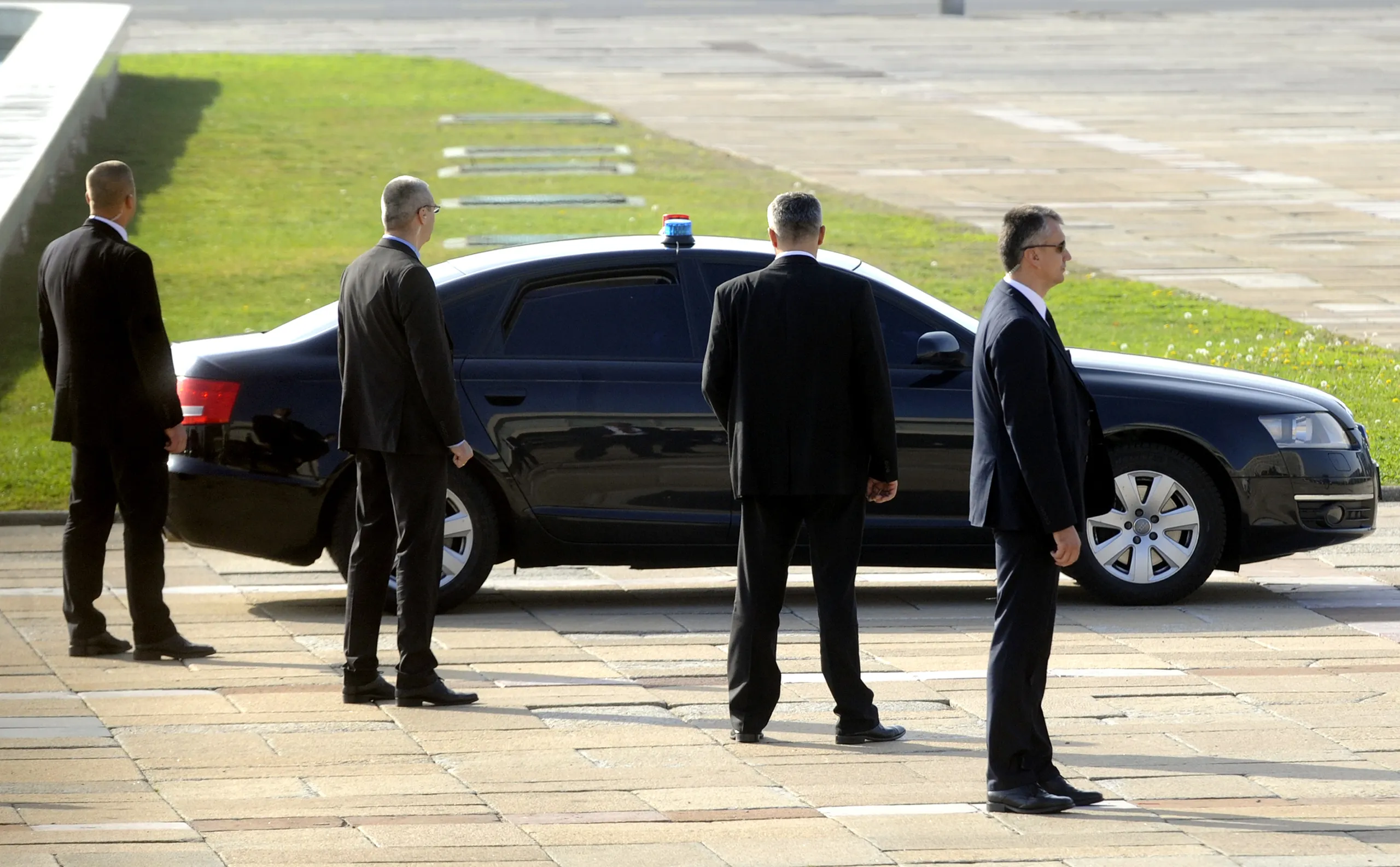
Visiting Ulaanbaatar? Request a vetted security driver for your visit.
Most requests for a security driver in Ulaanbaatar come down to one journey: the 52km run between Chinggis Khaan International Airport and the city, in a climate that can turn a routine transfer into a serious problem. The airport moved in 2021, the drive now takes 60 to 90 minutes rather than the short hop from the old city airfield, and between November and March it happens at temperatures around minus 30 to minus 40 degrees Celsius. Vetted transport here is bought less for protection against people than for competence against distance, cold and darkness.
The airport transfer
Chinggis Khaan International Airport (UBN) opened in 2021, replacing Buyant-Ukhaa, which sat within Ulaanbaatar itself. The new site is roughly 52km southwest of the centre, and the transfer to the central hotel district takes about 60 to 90 minutes depending on traffic. That change catches out visitors relying on older advice, and it is why first-day schedules so often fall apart before the first meeting.
A driver arrangement worth paying for treats the transfer as a planned movement rather than a pickup. Arrival time is tracked against the actual flight, the meeting point is agreed before landing, and the return leg is booked with enough margin that a slow road does not become a missed departure. In winter that margin is the point: the approach roads are the part of the journey most exposed to snow.
Roads, cold, and the point at which you stop
Winter driving here is a preparation problem. Vehicles need cold-rated fluids and battery, winter tyres, and a heater treated as safety equipment. Cold-weather clothing rides in the vehicle rather than staying at the hotel, because the scenario that matters is a stop on an open road. Dzuds close the airport and block roads outright, and summer dust storms cut visibility on the same routes, so a sensible journey plan names the conditions under which a movement is postponed and gets that agreed while everyone is still calm.
The long runs to Oyu Tolgoi, Erdenet and Tavan Tolgoi need their own treatment. They take a vehicle far outside the city’s response envelope on a schedule where a late start compounds through the day, so they are planned with fuel and recovery arrangements, a communications schedule assuming patchy coverage, a stated latest turnaround time, and a weather check taken on the morning of travel rather than from a forecast made days earlier.
Movement inside the city
Within Ulaanbaatar the driving task is mostly about low-grade opportunistic incidents and the after-dark risk. The FCDO records pickpocketing, bag snatching and opportunistic theft as the crimes most often affecting foreign visitors, concentrated around Sukhbaatar Square, the Narantuul Market, public transport and entertainment districts after dark, with alcohol-related violence documented in bar areas at night and more frequent in winter. Vetted transport removes the two moments that produce most trouble: the walk to find a taxi and the wait on the pavement afterwards. Late collections use a fixed point agreed earlier in the day, and journeys through the outer ger districts account for longer emergency response times if the vehicle stops.
For the underlying threat picture and regulatory detail, see the Ulaanbaatar city briefing. Arrivals handled as a standalone booking are covered on secure airport transfers in Ulaanbaatar, transport folded into a wider corporate programme on executive protection in Ulaanbaatar, and the general standard we work to on our security drivers service.
What does this cover in Ulaanbaatar?
The 52km Run from Chinggis Khaan International Airport
Chinggis Khaan International Airport (UBN) opened in 2021, replacing Buyant-Ukhaa, which sat inside the city. The new airport is roughly 52km southwest of central Ulaanbaatar and the transfer takes about 60 to 90 minutes depending on traffic. Visitors working from older guidance routinely underestimate this and set meetings too close to the landing time. Getting the transfer right is the single most useful thing on a short trip.
Winter Vehicle Preparation
Between October and April a vehicle used for principal movement needs preparation matched to temperatures routinely between minus 30 and minus 40 degrees Celsius: cold-rated fluids and battery, winter tyres, a cabin heater treated as safety equipment rather than comfort, and cold-weather clothing carried in the vehicle rather than left at the hotel. A breakdown on an open road in February is a survival problem before it is a security problem.
Blizzard and Dust Storm Contingency
Blizzards, known locally as dzuds, close the airport, block roads and can disrupt movement for extended periods, and summer dust storms cut visibility on the same routes. Journey planning sets a decision point at which a movement is postponed rather than attempted, agreed with the client before departure so the call is not being argued about with a principal already late.
Long Routes to Mining Sites
Trips to Oyu Tolgoi, Erdenet or the Tavan Tolgoi coal deposit involve significant travel time and take a vehicle well outside the city's response envelope. These movements are planned with fuel and recovery arrangements, a communications schedule that assumes patchy coverage, a stated latest turnaround time, and weather clearance checked on the morning of travel rather than the week before.
Night Movement and Entertainment Areas
Alcohol-related violence and assault is documented in Ulaanbaatar after dark, particularly around bar and entertainment areas, and becomes more frequent during the winter months. Foreign nationals have been assaulted following altercations with intoxicated individuals. Vetted transport removes the walk and the street hail that produce most of those encounters, and collections after midnight use a fixed pickup point agreed in advance rather than a call from the pavement.
Places Handled Differently on a Route Card
Two areas change how a journey is planned. The Narantuul Market, also called the Black Market, carries a high risk of theft and fraud and is not appropriate for unescorted foreign visitors, so the visit is escorted or declined. The outer ger districts have longer emergency response times, which matters most for a breakdown. Sukhbaatar Square is noted for pickpocketing, so drop-offs there are kept brief.
Sources for this page
Licensing, firearms and foreign-operator rules for Ulaanbaatar, checked : Lkhagvamaa G. and Lee J., 'A Comparative Study of Private Security Regulations of Mongolia, Belgium and the United Kingdom', Asian Journal of Social Sciences and Management Studies 4(1), June 2017 (secondary). The full rules are on our Ulaanbaatar security overview.
Travel advice quoted on this page: FCDO travel advice: Mongolia. Advice changes; read the current version before travel.
Frequently Asked Questions
How long is the airport transfer with a security driver in Ulaanbaatar?
How does winter weather change driving in Ulaanbaatar?
Can a security driver cover a trip to a mining site outside the city?
What licensing applies to secure transport in Mongolia?
Is informal transport a real risk in Ulaanbaatar?
This page is published by CloseProtectionHire.com and written to editorial standards overseen by James Calloway, Senior Security Consultant (regulation, licensing, vetting and risk frameworks) and Marcus Webb, Security Operations Adviser (operational close protection, secure transport and city-specific safety).
Threat, regulatory and emergency information is sourced to named, dated authorities such as the FCDO, the US State Department and national licensing bodies. Last updated . See how we verify.