
Request vetted security driver services for Minsk.
Security driver services in Minsk are structured around the high risk environment and the specific operational requirements of Minsk’s road network, airport, and principal movement corridors. FCDO advises against all travel to the whole of Belarus (updated 10 September 2026); arbitrary detention risk is explicitly cited; US State Dept Level 4 (Do Not Travel) for Belarus (2026).
All vetted security drivers for Minsk operations are licensed under the Decree No. 516 of 2010 on Private Security Activities; Ministry of Interior of Belarus and multi-point vetted for identity, criminal history, driving competence, and route knowledge of Minsk. Airport transfers from Minsk National Airport (MSQ) use pre-positioned vehicles with routes pre-surveyed to any destination. No app-based or informal transport is appropriate for principal movements in Minsk.
For additional security services, see our bodyguard hire in Minsk and our Minsk city security briefing. For regional context, see Bodyguard Hire Vilnius at Bodyguard Hire Vilnius.
What does this cover in Minsk?
Security Driver Assessment: Minsk
Minsk is rated high risk for executive transport operations. FCDO advises against all travel to the whole of Belarus (updated 10 September 2026); arbitrary detention risk is explicitly cited, and the US State Department assigns Level 4 (Do Not Travel) for Belarus (2026). Belarus is under comprehensive UK, EU, and US sanctions (UK OFSI, 2026). Communications and movements of foreign nationals may be monitored by Belarusian security services (FCDO, 2026). Minsk National Airport (MSQ) is 40km east of the city -- a significantly longer transfer corridor than most European capitals, requiring specific advance route planning. The professional requirements for a vetted security driver are not reduced by the ambient risk level: operator vetting, advance route survey, and pre-positioned vehicles are the baseline standard for principal movements regardless of the national threat picture. Any operation involving principals from the essential business operations only -- energy, logistics, and legal sector principals with unavoidable Belarus presence must be calibrated to the individual's profile, not the national average.
Belarus Driver Licensing and Vetting
Security drivers operating in Minsk for close protection assignments must hold a valid licence under the Decree No. 516 of 2010 on Private Security Activities; Ministry of Interior of Belarus, administered by the Ministry of Interior of Belarus. All security personnel are required to undergo criminal background checks and a competency assessment prior to authorisation. Driving licences must be current and valid for the vehicle class operated. Vetting requirements include: identity verification (passport-level), criminal record disclosure, professional references from prior close protection or executive transport roles, a practical route knowledge assessment of Minsk's road network, and current first aid certification. All CloseProtectionHire.com drivers additionally undergo multi-point proprietary vetting covering employment history, financial background indicators, and professional standing checks.
Airport Transfer Procedures: Minsk National Airport (MSQ)
Minsk National Airport (IATA: MSQ) is located approximately 40 kilometres from central Minsk. For principals requiring a discreet arrival profile, a meet-and-greet inside the arrivals hall or via a handling agent is the standard option where available. Private aviation arrivals require prior coordination with handling agents for airside positioning. The transfer route from MSQ to central Minsk should be pre-surveyed with primary and at least one alternative route confirmed before the driver departs for the airport. All transfer vehicles are confirmed mechanically serviceable, fuelled, and positioned before the principal is expected to exit customs. No app-based or informal transport is appropriate for executive principal movements.
Route Planning and Counter-Surveillance in Minsk
Route planning for security driver operations in Minsk requires advance survey of primary and alternative routes for each movement on the principal's itinerary. Belarus is under comprehensive UK, EU, and US sanctions (UK OFSI, 2026). Communications and movements of foreign nationals may be monitored by Belarusian security services (FCDO, 2026). Minsk National Airport (MSQ) is 40km east of the city -- a significantly longer transfer corridor than most European capitals, requiring specific advance route planning. Counter-surveillance awareness is appropriate for all principal movements in Minsk, with the intensity of active anti-surveillance protocols calibrated to the principal's individual risk profile. Route variation for repeated journeys between the same two points is a standard measure. Communications between the driver and the close protection team or principal must remain active throughout all movements. The driver must be briefed on emergency procedures, emergency contact numbers (102 Police / 103 Ambulance / 101 Fire), and the location of the nearest medical facility (the Republican Clinical Medical Centre, +375 17 543 3543) before each deployment.
Vehicle Selection and Maintenance
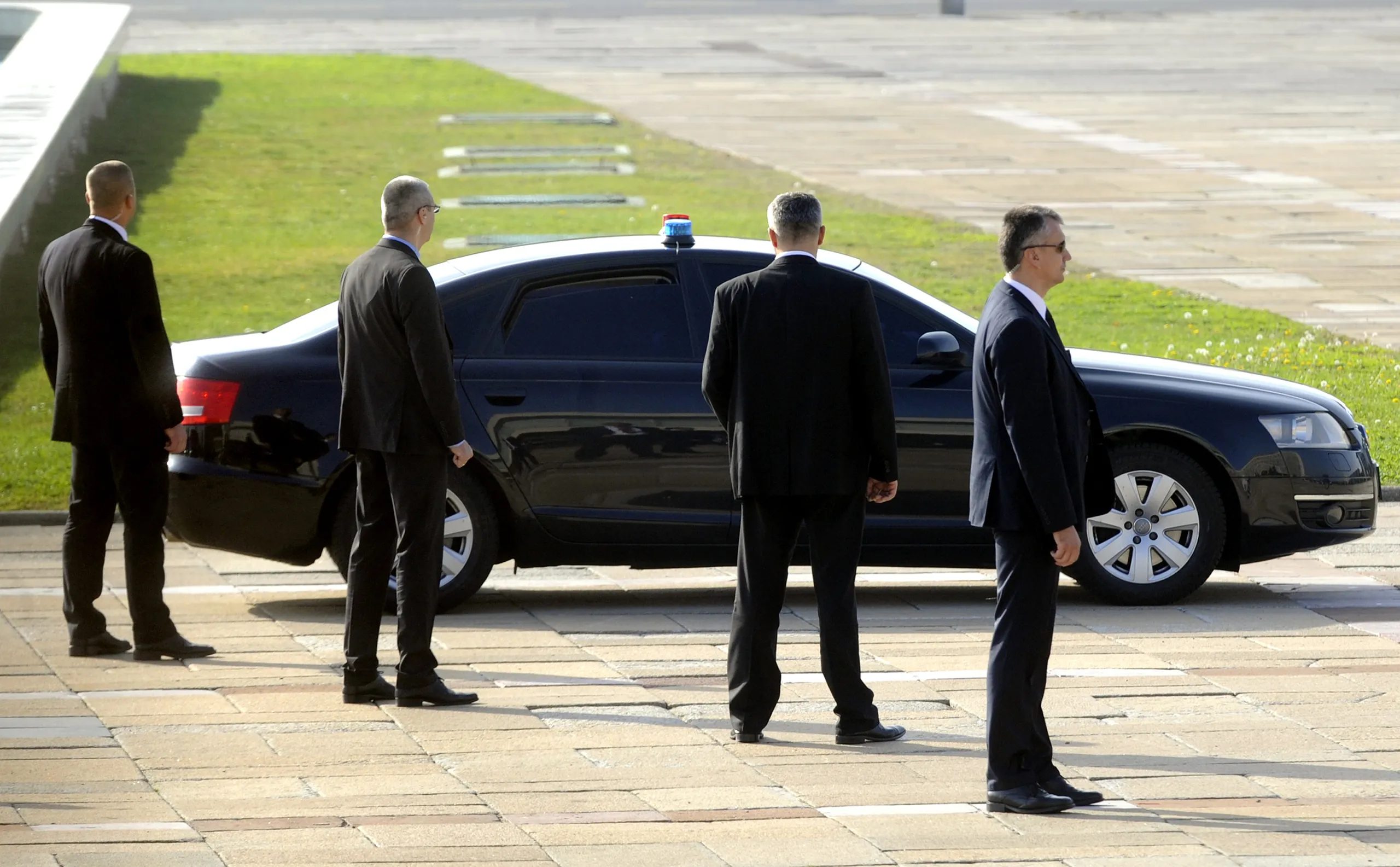
Vehicle selection for security driving in Minsk should prioritise discretion, reliability, and suitability for the local road and traffic environment. Locally registered vehicles that blend with the prevailing traffic profile are preferred over conspicuous or foreign-registered platforms. All deployment vehicles must be confirmed mechanically serviceable before each principal movement, carry a first aid kit, maintain communications capability with the close protection team or operator, and be fuelled for the planned route plus a meaningful contingency distance. For principals with elevated individual risk profiles, armoured vehicle options should be assessed on a case-by-case basis appropriate to the high risk environment. Personal mobile devices must not be used by the driver during principal movements.
Night and Extended Operations
Night movement in Minsk requires specific assessment as part of the deployment plan. Reduced police visibility, altered traffic patterns, and in some areas elevated opportunistic crime after dark mean that night movements should be individually risk-assessed rather than assumed to carry the same profile as daytime operations. All night principal movements are confirmed with a pre-surveyed route, a vetted vehicle, and active communications with the protection team or operator. For principals requiring multi-day coverage, driver shift management must ensure that no driver operates beyond a fatigue threshold that could compromise vehicle handling or situational awareness. Post-operation debrief is standard after any extended deployment.
Sources for this page
Licensing, firearms and foreign-operator rules for Minsk, checked : Ministry of Internal Affairs of Belarus, Security Department (Департамент охраны), 'Typical violations of security activity legislation' (cites Law No. 175-Z of 8 November 2006); Ekonomicheskaya Gazeta (neg.by), 'Licensing of security activity', 1 October 2019 (secondary: MVD Security Department licensing unit, Decrees No. 534/2007 and No. 326/2019). The full rules are on our Minsk security overview.
Travel advice quoted on this page: FCDO travel advice: Belarus; US State Department travel advisory: Belarus. Advice changes; read the current version before travel.
Frequently Asked Questions
What security driver services are available in Minsk?
How are security drivers vetted for Belarus operations?
What vehicles are used for security driving in Minsk?
What is the airport transfer procedure for Minsk National Airport (MSQ)?
This page is published by CloseProtectionHire.com and written to editorial standards overseen by James Calloway, Senior Security Consultant (regulation, licensing, vetting and risk frameworks) and Marcus Webb, Security Operations Adviser (operational close protection, secure transport and city-specific safety).
Threat, regulatory and emergency information is sourced to named, dated authorities such as the FCDO, the US State Department and national licensing bodies. Last updated . See how we verify.