
Planning travel to Minsk? Speak with a security consultant.
Minsk is one of the most operationally constrained European capitals for foreign nationals. The Lukashenko government’s violent suppression of the 2020 post-election protests, the forced diversion of a Ryanair flight to arrest a journalist in 2021, and Belarus’s facilitation of Russia’s 2022 invasion of Ukraine have resulted in FCDO advising against all travel to the whole of Belarus and US State Department Level 4 (Do Not Travel). For the overwhelming majority of corporate visitors, these advisories mean travel to Minsk is not appropriate. The combination of arbitrary detention risk, comprehensive EU, UK, and US sanctions, and pervasive communications surveillance creates an operating environment that requires specialist pre-deployment planning for any essential-travel mission.
For the narrow category of organisations with a legitimate basis for essential travel to Minsk - humanitarian bodies, diplomatic staff, legal professionals advising on sanctions or human rights matters - the security requirements are substantially higher than for any other city in Europe. All communications should be treated as surveilled; devices must be travel-clean; movement should be co-ordinated with vetted local contacts at all times. Medical evacuation planning is critical given the airspace restrictions on Belarus imposed by the EU and UK following the 2021 Ryanair incident: overland medevac to Vilnius or Warsaw is the standard protocol. Our risk assessment services include pre-deployment specialist assessments for high-risk essential-travel operations in Belarus. For comparison with the neighbouring operating environment, see our security briefings for Vilnius and Warsaw.
What are the main security threats in Minsk?
Arbitrary detention and authoritarian governance
FCDO Belarus travel advice (updated 10 September 2026) advises against all travel to Belarus and explicitly identifies the risk of arbitrary detention by Belarusian authorities including the KGB. Foreign nationals, dual nationals, and individuals with Belarusian heritage have been detained on politically motivated charges. Detention can occur with minimal notice and access to consular assistance has been impeded in documented cases.
Sanctions compliance risk
The UK, EU, and US have imposed comprehensive sanctions on Belarus in response to the Lukashenko government's actions following the disputed 2020 election and its role in facilitating Russia's 2022 invasion of Ukraine. The UK Office of Financial Sanctions Implementation (OFSI, 2026) maintains an extensive Belarus sanctions list. Any commercial operation in Minsk carries significant sanctions compliance exposure and requires specialist legal advice before commencement.
Surveillance of communications and movements
FCDO Belarus travel advice (2026) warns that communications and movements of foreign nationals in Belarus may be monitored by Belarusian security services. Hotel rooms, meeting venues, and vehicles should be treated as potentially surveilled. Encrypted communications devices and strict communications discipline are essential for any operation in Minsk.
Russian military presence and Union State integration
Belarus and Russia operate under the Union State framework, with deepened integration since 2022. Russian military forces have been present in Belarus and have used Belarusian territory for operations. The Belarusian armed forces and security services co-ordinate with Russian counterparts. This creates an elevated intelligence and operational security risk for any foreign national present in the country.
Restricted freedom of movement and assembly
Freedom of movement and assembly is severely restricted in Belarus. Public gatherings not authorised by the state are illegal and have been met with mass arrests since 2020. Foreign nationals participating in or proximate to any unauthorised public gathering face detention risk. Journalists and human rights workers face particular targeting under Belarusian law.
Vetted operators with direct experience in Minsk
What security services are available in Minsk?
Executive Protection
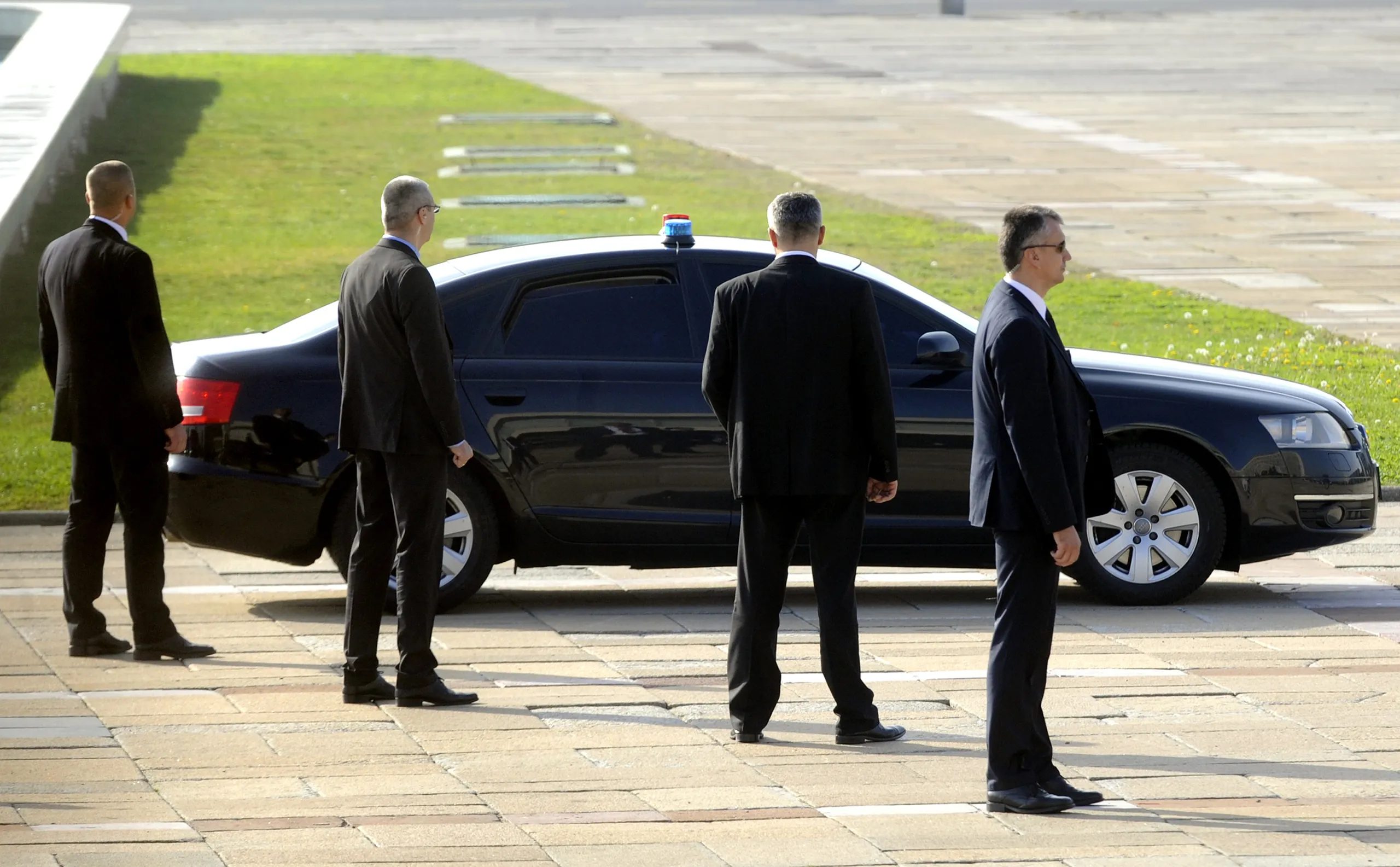
Specialist close protection for essential-travel operations in Minsk by humanitarian, diplomatic, or legal sector principals; requires pre-deployment specialist risk assessment.
Security Drivers
Vetted local transport for essential-travel visitors to Minsk; driver vetting and route security are non-negotiable in the Belarusian operating environment.
Residential Security
Static security and counter-surveillance support for principals in Minsk; operates under strict operational security protocols.
Risk Assessment
Pre-deployment specialist threat and sanctions compliance assessment for any organisation considering essential travel to Minsk.
What are the rules for private security in Minsk?
Key regulatory requirements for operating security services in Minsk.
Firearms Policy
The rules on weapons for private security organisations and their guards in Belarus could not be confirmed against a primary source on 14 October 2026. Armed security is uncommon in commercial operations, and the regulatory framework can change without notice in the current political environment.
Licensing
Security activity in Belarus is governed by Law No. 175-Z of 8 November 2006 'On security activity', which the Ministry of Internal Affairs' Security Department (Департамент охраны) cites as the source of the conditions and rules security organisations must follow. Licensing sits with the Security Department's licensing and control unit, under Presidential Decree No. 534 of 25 October 2007, as amended by Decree No. 326 of 2 September 2019 (Ekonomicheskaya Gazeta, 1 October 2019). The 2001 'Law on Private Detective and Security Activities' this page named until October 2026 could not be found. Ask any provider for its current licence.
Foreign Operators
The rules for foreign security companies and foreign protection officers in Belarus could not be confirmed against a primary source on 14 October 2026. EU, UK and US sanctions limit commercial relationships with Belarusian entities, so any security operation involving foreign nationals needs specialist legal and compliance review before deployment.
Sources, checked : Ministry of Internal Affairs of Belarus, Security Department (Департамент охраны), 'Typical violations of security activity legislation' (cites Law No. 175-Z of 8 November 2006); Ekonomicheskaya Gazeta (neg.by), 'Licensing of security activity', 1 October 2019 (secondary: MVD Security Department licensing unit, Decrees No. 534/2007 and No. 326/2019).
Which areas of Minsk carry elevated risk?
Lower-Risk Areas
- No zone in Minsk can be characterised as safe in the conventional sense for foreign nationals; FCDO advises against all travel to the whole of Belarus
- Diplomatic quarter and authorised hotel areas - marginally lower risk of random street-level crime but surveillance risk is unchanged
Elevated-Risk Areas
- All public spaces in Minsk carry detention risk if security services determine a foreigner's presence to be suspicious or politically inconvenient
- Minsk National Airport (MSQ) and border crossing points - heightened scrutiny of foreign nationals; device searches and detention on entry or exit have been documented
Deploying to Minsk? Get a vetted close protection detail.
Request ConsultationWho do you call in an emergency in Minsk?
Police
102
Fire service
101
Medical emergency
103
Republican Clinical Medical Centre
+375 17 543 3543
Emergency Services (112, answered by the nearest Ministry for Emergency Situations control centre, which transfers to 101, 102, 103 or 104)
112
What travel advisories apply to Minsk?
- FCDO Belarus travel advice (updated 10 September 2026) advises against all travel to Belarus; this is the FCDO's most restrictive advice and covers the whole country, including Minsk.
- US State Department Level 4 (Do Not Travel) for Belarus (2026), citing arbitrary enforcement of local laws and the risk of wrongful detention.
- UK OFSI and EU/US sanctions authorities maintain extensive Belarus sanctions lists (2026); any commercial engagement with Belarusian entities requires prior legal review and may be prohibited.
- Minsk National Airport (MSQ) is 42km from the city centre; several Western European airlines have suspended services to Minsk. Connectivity is limited primarily to Russian and Belarusian carriers. Entry and exit at MSQ involve heightened document and device scrutiny.
- Medical facilities: Republican Clinical Medical Centre (RCMC, +375 17 543 3543) is the main public hospital; international-standard private care is limited. Medical evacuation to Vilnius (approximately 180km by road) or Warsaw (approximately 350km) is the standard protocol, but air medevac is complicated by airspace restrictions imposed on Belarusian airspace by the EU and UK following the forced diversion of Ryanair flight FR4978 in May 2021.
Frequently Asked Questions
Should corporate visitors travel to Minsk?
What is the arbitrary detention risk for foreign nationals in Minsk?
What sanctions compliance obligations apply to operations in Minsk?
What are the communications security requirements for any visit to Minsk?
This page is published by CloseProtectionHire.com and written to editorial standards overseen by James Calloway, Senior Security Consultant (regulation, licensing, vetting and risk frameworks) and Marcus Webb, Security Operations Adviser (operational close protection, secure transport and city-specific safety).
Threat, regulatory and emergency information is sourced to named, dated authorities such as the FCDO, the US State Department and national licensing bodies. Last updated . See how we verify.