
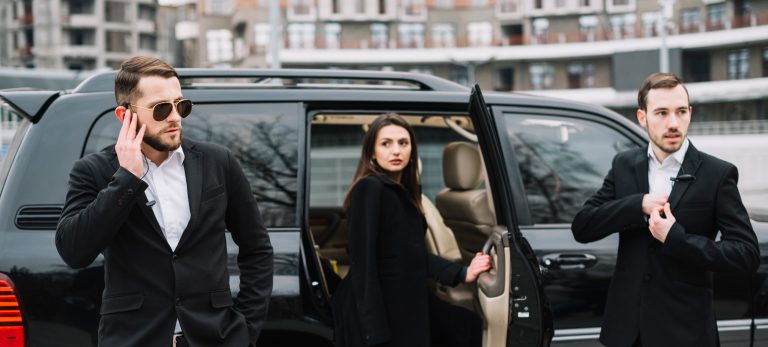
Visiting Jeddah? Request a vetted security driver for your visit.
Security drivers in Jeddah solve a transport problem that is specific to this city: it is Saudi Arabia’s second-largest city, its major Red Sea port, and the gateway through which Hajj and Umrah pilgrims arrive at King Abdulaziz International Airport, which means road conditions are shaped by a pilgrimage calendar as much as by rush hour. A vetted, licensed driver with pre-planned routes is the working baseline for international business visitors, and for most itineraries it is the only protective layer needed.
The airport and the Makkah gateway effect
King Abdulaziz International handles executive arrivals alongside pilgrim flows, and the difference shows at the kerb: terminal congestion varies enormously with the religious calendar. Transfers are therefore planned rather than improvised, with inside-terminal collection and departure timing set against the day’s traffic reality. The same gateway effect runs through the city’s roads. The southern districts along the Jeddah-Makkah corridor combine the heaviest traffic with the least expatriate-oriented infrastructure, so routes towards them are chosen deliberately, and during Hajj peaks some journeys are simply re-timed. For transfer-focused arrangements, see secure airport transfers in Jeddah.
What the driver actually manages
Beyond the wheel, the driver manages the legal and situational texture of moving through Jeddah: keeping cameras down near government and military sites where photography is prohibited, avoiding extended stops in the higher-crime districts around the port, and reading checkpoint interactions in Arabic. The Law requires staff of licensed security companies to be Saudi nationals, which turns a legal rule into an operational advantage. The zone-by-zone picture behind the routing decisions is set out in our Jeddah city briefing, and principals who need an officer in the vehicle as well can pair the driver with bodyguard hire in Jeddah.
What does this cover in Jeddah?
King Abdulaziz International Airport Transfers
King Abdulaziz International is both Jeddah's business gateway and the primary arrival point for Hajj and Umrah pilgrims, so terminal traffic runs heavy year-round and pickup windows are planned around it. The driver meets the principal inside arrivals with the vehicle positioned for prompt departure. The airport also sits within the documented Houthi missile and drone target envelope, so drivers are briefed on the local warning system. Source: FCDO Saudi Arabia travel advice (2026).
The Makkah Corridor and Pilgrimage Traffic
Jeddah is the road gateway to Makkah, and the southern districts along the Jeddah-Makkah corridor carry higher traffic volumes with less expatriate-oriented infrastructure. During Hajj and Umrah peaks, movements south and east of the city are re-timed or re-routed, and journey estimates across Jeddah are set against the pilgrimage calendar rather than a standard traffic model.
Route Planning Between the Business Zones
Routine client movements run between the Al Hamra and Al Naeem hotel zone, the Al Rawdah and Al Zahra business districts, and Al Balad for principals visiting the historic old city. Port and industrial-area runs are handled differently: the sites themselves are access-controlled, but the districts around them carry a higher crime profile, so those routes get a dedicated assessment before the journey.
Driver Licensing and Vetting
Jeddah security drivers hold Saudi commercial driving licences and work for companies licensed by the Minister of Interior. The Law of Private Security Services requires staff of licensed companies to be Saudi nationals, which in practice adds deep local road knowledge and Arabic-language handling of any checkpoint or traffic stop.
Armoured Vehicle Availability
Armoured vehicles are legal in Saudi Arabia for licensed operations and are in established use by banks and diplomatic missions, so armoured transport can be arranged in Jeddah where the threat assessment supports it. For most business visits, a discreet unarmoured vehicle with a trained driver is the appropriate baseline; the assessment, not the brochure, decides the specification.
Conduct Rules on the Road
Saudi photography law applies from the vehicle as much as the pavement: government buildings, military facilities, and individuals must not be photographed, and violations have led to detention and deportation. Drivers steer principals away from inadvertent breaches near sensitive sites and flag when cameras and phones should stay down during a route.
Sources for this page
Licensing, firearms and foreign-operator rules for Jeddah, checked : Law of Private Security Services, Royal Decree No. M/24 of 8/7/1426 H (King Khalid University copy of the official text); Saudi Central Bank Rulebook, Law of Private Security Services (status: in force); Law of Weapons and Ammunition, Royal Decree No. M/45, text (mohamah.net); Gulf News, All employees at security firms must be Saudis (23 June 2023); Gulf News, Saudi Arabia tightens private security law (18 May 2025). The full rules are on our Jeddah security overview.
Travel advice quoted on this page: FCDO travel advice: Saudi Arabia. Advice changes; read the current version before travel.
Frequently Asked Questions
Do security drivers in Jeddah cover King Abdulaziz International Airport?
How does Hajj season affect driving in Jeddah?
Are armoured vehicles available in Jeddah?
Is a security driver enough, or do I also need a close protection officer?
This page is published by CloseProtectionHire.com and written to editorial standards overseen by James Calloway, Senior Security Consultant (regulation, licensing, vetting and risk frameworks) and Marcus Webb, Security Operations Adviser (operational close protection, secure transport and city-specific safety).
Threat, regulatory and emergency information is sourced to named, dated authorities such as the FCDO, the US State Department and national licensing bodies. Last updated . See how we verify.