
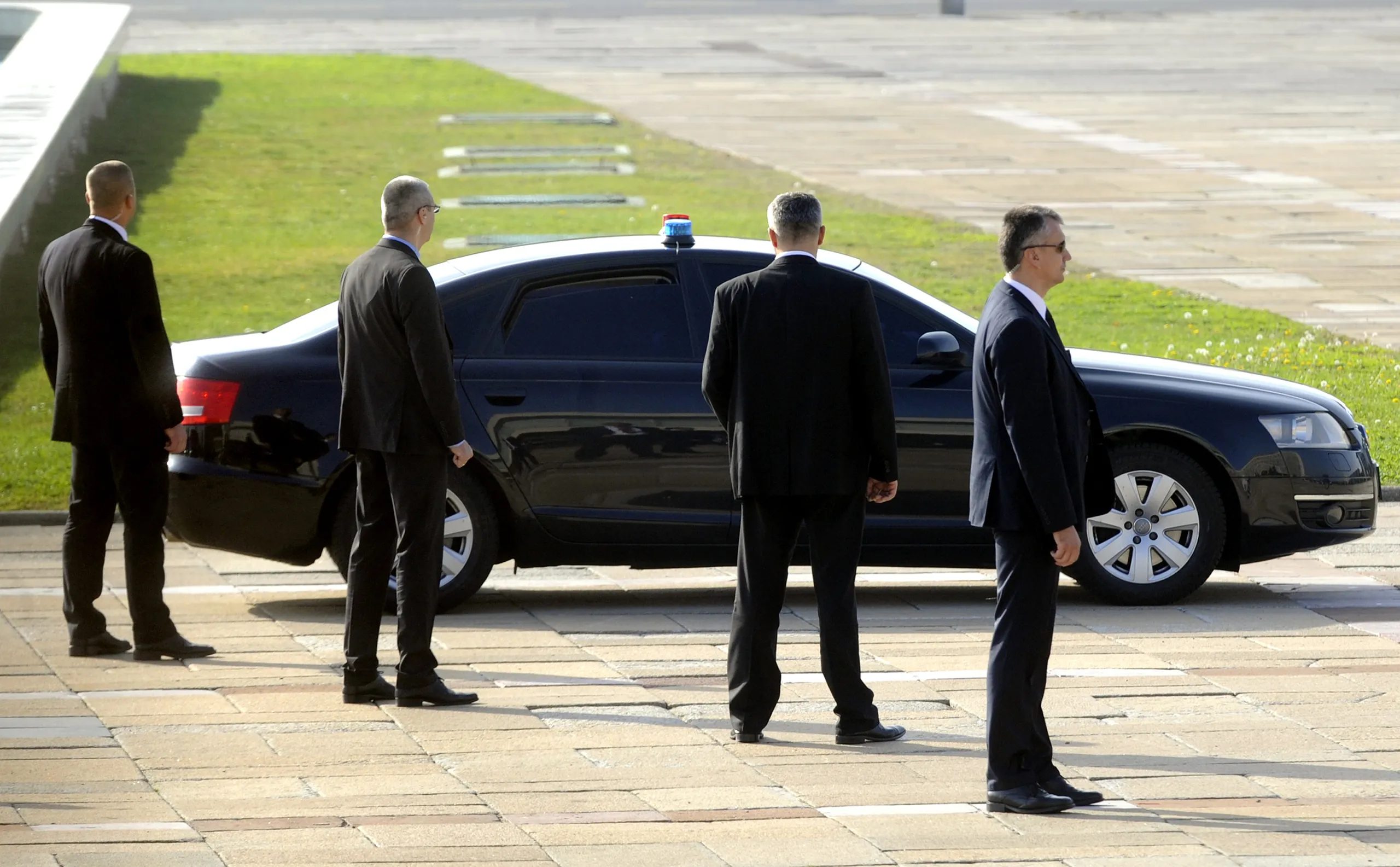
Arriving at Kotoka International? Request vetted security driver cover before you land.
Accra security driver operations are shaped by two operational realities: the Ministry of the Interior licensing framework under L.I. 1571 that defines compliant operators, and the traffic and vehicle crime environment documented in FCDO Ghana travel advice (2024). Kotoka International Airport’s 13-kilometre transfer to the main business districts is the defining arrival challenge, requiring inside-terminal collection protocols and current route intelligence to manage.
Licensing and operator verification
Ghana requires company-level licensing from the Ministry of the Interior under L.I. 1571. Clients should verify the company licence and the training records of deployed personnel before deployment. An unlicensed operator carries legal and insurance exposure for the engaging organisation, regardless of the actual service level delivered.
Accra operational environment
Corporate movements in Accra focus on the Airport Residential Area, Cantonments, East Legon, and Osu districts. The Kotoka transfer and peak-hour arterials require current route knowledge and departure timing discipline. Night movement protocols apply across all Accra districts in line with FCDO guidance.
For the broader Accra security picture, see the Accra city page and bodyguard hire in Accra.
What does this cover in Accra?
Ghana Private Security Licensing
Private security in Ghana is governed by the Police Service Act, 1970 (Act 350) and the Police Service (Private Security Organisations) Regulations, 1992 (L.I. 1571), and the Ministry of the Interior licenses private security organisations. Clients engaging security driver services in Accra should confirm the operating company's current Ministry licence and, for individual drivers, their training records. Due diligence at this stage protects the engaging organisation from the legal and insurance exposure of working with unlicensed operators.
Kotoka International Airport Transfer Operations
Kotoka International Airport (ACC) is located approximately 13 kilometres from the Accra Central Business District and the Osu and Cantonments districts that serve as the main commercial hub for international visitors. One international terminal handles all arrivals. FCDO Ghana travel advice (2024) notes theft and opportunistic crime at and around Kotoka, including in the immediate forecourt and arrival zones. Security drivers conduct inside-terminal collection from ACC, with pre-confirmed credentials communicated to the principal before departure. Transfer times to the Airport Residential Area, Cantonments, East Legon, or Osu range from 20 to 40 minutes under standard traffic conditions, extending to 60 minutes or more during morning peak periods on Liberation Road and Airport Road.
Accra Traffic Management and Peak-Hour Planning
Accra's ring road network, including Liberation Road, Independence Avenue, and Airport Road, is subject to severe congestion during morning peak (07:00 to 09:30) and evening peak (17:00 to 20:00) periods. Journey times between Kotoka and the main business and hotel districts can double during peak windows. Security drivers with current Accra route knowledge use departure timing, alternative corridor selection via the Ring Road Central and Graphic Road, and pre-planned diversions to manage journey-time risk. Planned meetings should build in a 30-minute buffer for peak-hour Accra movements, and security drivers communicate real-time traffic intelligence to the operations controller throughout each transfer.
Crime Profile and Vehicle Security Protocols
FCDO Ghana (2024) notes vehicle theft and opportunistic armed robbery in some Accra zones, particularly in areas with lower street lighting and police visibility at night. The Airport Residential Area, Cantonments, and East Legon are described as lower-risk zones for corporate principals, though movement to and from these districts via the outer roads carries some elevation in risk after dark. Security driver protocols address this through route selection that prioritises well-lit main arterials for night transfers, avoidance of prolonged stops at uncontrolled locations, and consistent GPS tracking with operations controller check-ins. Vehicle security checks before each departure are standard practice.
Principal Districts and Corporate Hotel Coverage
Corporate security driver operations in Accra concentrate on the Airport Residential Area (the primary international business hotel cluster, including the Kempinski Hotel Gold Coast City, Movenpick Ambassador Hotel, and Labadi Beach Hotel vicinity), Cantonments (embassy district and corporate offices), East Legon (HNWI residential area with increasing commercial presence), and Osu (commercial and restaurant district). Security drivers maintain route intelligence and alternative access options for all principal hotel and meeting venues in these zones. Longer-duration engagements in East Legon may incorporate residential security protocol supplements.
Operations Controller Support and Communications
All Accra security driver operations are backed by an operations controller providing continuous GPS tracking and scheduled check-in communications throughout each transfer. The operations controller maintains current intelligence on traffic incidents and any civil unrest or demonstration activity affecting Accra's main arterials. Check-in protocols are agreed before departure with defined intervals and contingency procedures for loss of primary contact. Multi-vehicle corporate engagements, such as those covering delegation visits or conference movements across multiple Accra locations, are coordinated centrally by the operations controller to maintain full situational awareness across the group.
Sources for this page
Licensing, firearms and foreign-operator rules for Accra, checked : Police Service Act, 1970 (Act 350), text (GhaLII); Ghana News Agency, Private security organisations prohibited from possessing firearms (23 June 2026); Ghanaian Times, Interior Ministry suspends Kantanka Security Services licence (21 June 2026); Ghana Police Service, Central Firearms Unit. The full rules are on our Accra security overview.
Travel advice quoted on this page: FCDO travel advice: Ghana. Advice changes; read the current version before travel.
Frequently Asked Questions
What legislation governs security drivers in Ghana?
What are the main vehicle crime risks for security drivers in Accra?
Which districts in Accra are covered by security driver services?
How does Accra traffic affect security driver planning?
This page is published by CloseProtectionHire.com and written to editorial standards overseen by James Calloway, Senior Security Consultant (regulation, licensing, vetting and risk frameworks) and Marcus Webb, Security Operations Adviser (operational close protection, secure transport and city-specific safety).
Threat, regulatory and emergency information is sourced to named, dated authorities such as the FCDO, the US State Department and national licensing bodies. Last updated . See how we verify.