
Attending Congressional or White House-adjacent meetings in DC? Request a multi-state-licensed EP brief.
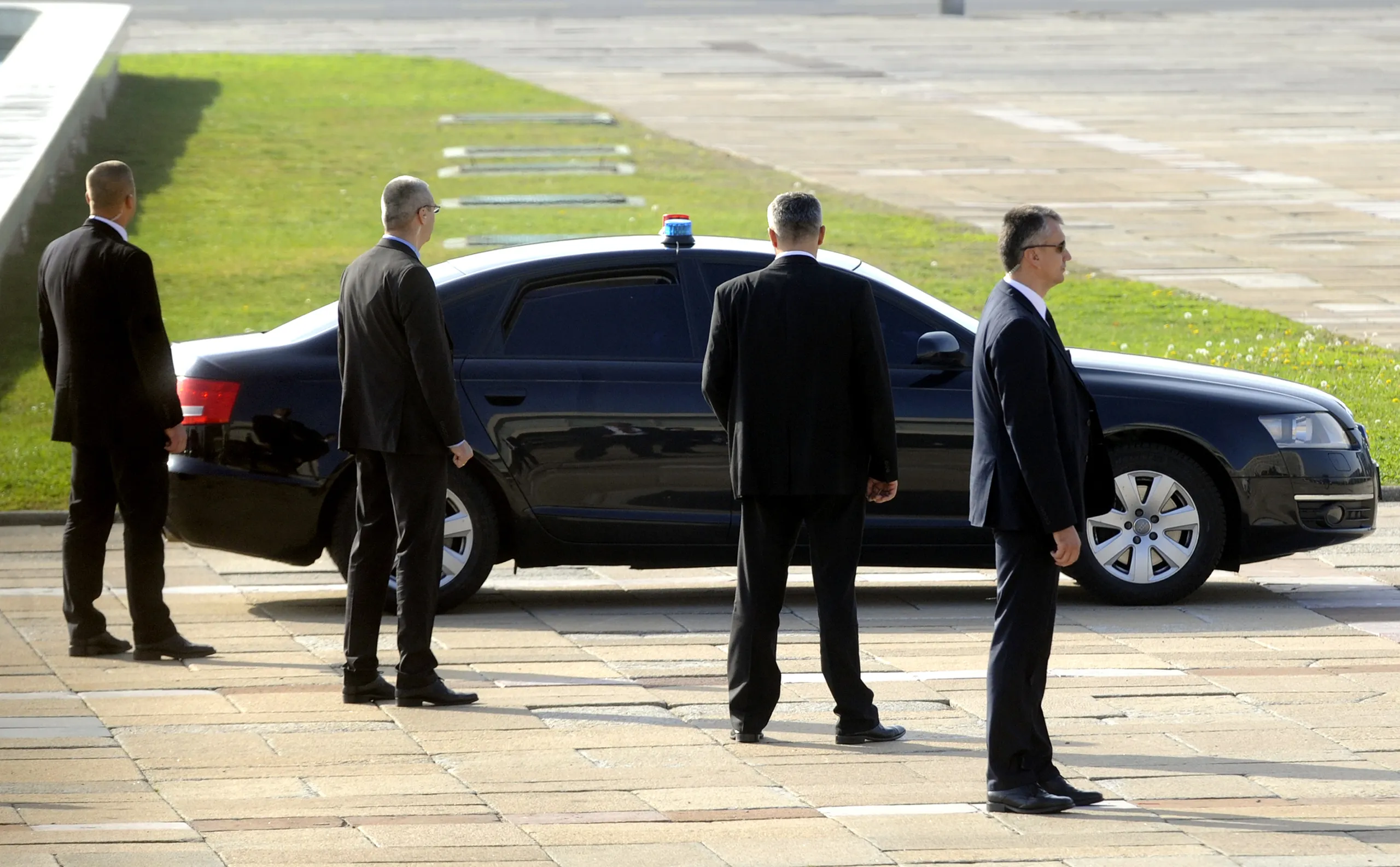
Executive protection in Washington DC is a programme, not a single officer. It is the discipline a company applies to protect a travelling executive against the political threat environment and foreign intelligence activity: advance work on venues and routes, a written threat assessment, an operations controller, and DC-licensed secure transport integrated with the corporate itinerary. This page is for security managers designing protection around a C-suite visit, where the need is layered, documented risk management.
Tri-state licensing compliance
DC CPOs hold DC, Maryland or Virginia licences, as applicable to the engagement territory. Multi-state compliance is confirmed before each deployment.
DC EP operational environment
Advance work covers Capitol Hill building security coordination, White House-adjacent venue logistics, K Street and Georgetown venue assessments, airport transfer planning across DCA, IAD, and BWI, and counter-intelligence awareness briefings for commercially sensitive engagements.
For the broader DC security overview, see our Washington DC city page and our security drivers in Washington DC and bodyguard hire in Washington DC pages.
For short-term, single-principal cover tied to one visit, see bodyguard hire in Washington DC. For the operators who staff the programme and how they are vetted, see close protection officers in Washington DC.
What does this cover in Washington DC?
DC Metro Multi-State EP Licensing
Executive protection in the Washington DC metropolitan area requires compliance with three separate state licensing frameworks. Security officers and agencies in the District of Columbia are licensed through the Department of Licensing and Consumer Protection (DLCP), with final sign-off by the Metropolitan Police Department's Security Officers Management Branch. Maryland licenses security work under its own law for operations in Maryland suburbs including Bethesda, Chevy Chase, Silver Spring, and the I-95 corridor. Virginia licenses security work under its own law for operations in Northern Virginia including McLean, Tysons Corner, Arlington, and Alexandria. EP operators in the DC metro area should hold all three jurisdictional licences and deploy only CPOs with the relevant state-by-state credentials for the territories covered in the engagement.
Political and Intelligence Threat Environment
Washington DC has an elevated political threat environment without parallel among US commercial cities. The concentration of government officials, foreign diplomats, senior policy figures, Congressional members, and high-profile corporate principals attending regulatory and lobbying engagements creates an EP operating context that differs materially from New York or Los Angeles. FCDO USA travel advice (2024) acknowledges the political environment and history of civil unrest at political flashpoints. The January 6, 2021 events demonstrated that the Capitol Hill area can become a rapidly escalating civil disorder environment with national-level consequences. Foreign intelligence services maintain active collection operations in DC targeting diplomatically and commercially sensitive information; corporate principals in defence, technology, and government-contracting sectors face a counter-intelligence consideration that is higher in DC than in comparable US cities.
Congressional and White House-Adjacent EP Logistics
EP operations accompanying principals to Congressional meetings, White House functions, or executive agency regulatory engagements require specific advance work not encountered in conventional corporate EP. Congressional office buildings (Russell, Dirksen, Hart Senate buildings; Cannon, Longworth, Rayburn House buildings on Capitol Hill) have their own Capitol Police security apparatus with access credential requirements for visitors and accompanying security personnel. White House complex visits involve USSS (US Secret Service) screening protocols for all visitors and accompanying personnel. EP teams accompanying principals to these venues coordinate in advance with the relevant federal security authorities, confirm CPO access status, and plan the principal handover and external waiting logistics that apply when private security cannot accompany a principal into a federally controlled secure environment.
Advance Work and DC Venue Assessment
Washington DC EP advance work covers the principal's hotel, Congressional and federal agency meeting logistics, K Street NW law firm and lobbying venue access, Georgetown private event venue assessments, and DCA, IAD, or BWI airport transfer logistics. The Four Seasons Hotel Georgetown, Mandarin Oriental Washington DC, and The Jefferson Washington DC are the principal luxury hotel venues for senior corporate and diplomatic arrivals. Georgetown hotel advance work covers the specific vehicle logistics of M Street NW and Wisconsin Avenue NW -- both narrow, busy commercial corridors where vehicle approach and departure for principal movements require pre-planned logistics. The Hay-Adams hotel, adjacent to the White House on Lafayette Square, requires specific awareness of White House security perimeter protocols affecting vehicle approach.
Counter-Intelligence Awareness for DC Principals
Counter-intelligence awareness is a standard component of Washington DC EP briefs for principals with commercially or politically sensitive engagements. US intelligence community assessments consistently identify DC as the highest-density foreign intelligence operations environment in the United States. EP briefs for principals in defence, technology, telecommunications, and government-contracting sectors cover: the avoidance of sensitive commercial discussions in hotel rooms, lobbies, and vehicles (all of which may be subject to collection attempts); device management and technical surveillance countermeasures awareness; and the recognition of elicitation attempts at Washington receptions and private events. This is not hypothetical: documented cases of foreign intelligence collection in the DC environment targeting corporate meetings have been recorded by the FBI and NCSC.
Sources for this page
Licensing, firearms and foreign-operator rules for Washington DC, checked : DC Department of Licensing and Consumer Protection, security licensing; Metropolitan Police Department, security officer licensing; D.C. Code section 5-129.02. The full rules are on our Washington DC security overview.
Travel advice quoted on this page: FCDO travel advice: USA. Advice changes; read the current version before travel.
Frequently Asked Questions
What multi-state licensing applies to DC EP CPOs?
How do Congressional building security requirements affect EP logistics?
What counter-intelligence considerations apply to DC EP principals?
What does executive protection cost per day in Washington DC?
This page is published by CloseProtectionHire.com and written to editorial standards overseen by James Calloway, Senior Security Consultant (regulation, licensing, vetting and risk frameworks) and Marcus Webb, Security Operations Adviser (operational close protection, secure transport and city-specific safety).
Threat, regulatory and emergency information is sourced to named, dated authorities such as the FCDO, the US State Department and national licensing bodies. Last updated . See how we verify.