
Planning travel to Rabat? Speak with a security consultant.
Rabat is not Casablanca with a different postcode. It is Morocco’s administrative capital: seat of parliament, home to the royal palace at Dar al-Makhzen, and host to the largest concentration of foreign embassies anywhere in the country. That distinction matters for security planning. Where Casablanca’s risk picture centres on commercial-district street crime, Rabat’s centres on government-quarter access, diplomatic-security protocols, and a heavier, more visible state security presence around ministries and embassies.
The city’s UNESCO listing, granted in 2012 for “Rabat, Modern Capital and Historic City: a Shared Heritage,” covers the historic medina, the 17th-century Kasbah of the Oudayas, and the Chellah necropolis, a walled site layering Roman ruins beneath a Marinid-era royal cemetery. These sites draw real tourist volume, and with it the ordinary pickpocketing risk that follows dense foot traffic anywhere. It is a minor risk next to Casablanca’s motorcycle drive-by theft problem, not an absent one.
Morocco’s national terrorism threat, rated likely by the FCDO, applies to Rabat without adjustment. What changes is the target profile. Government buildings, the royal palace, and foreign missions in the Souissi diplomatic quarter carry symbolic value that ordinary commercial premises don’t, and Moroccan security services station accordingly. Static checkpoints and a visible police and gendarmerie presence around these sites are routine, not a sign of an active incident. Visitors moving through the government quarter should expect and plan for this, rather than treat it as unusual.
Access to Casablanca Mohammed V International Airport (CMN), Morocco’s principal hub, remains the practical entry point for most international visitors, with a road or ONCF rail transfer to Rabat running roughly 70 minutes to 2 hours depending on method and traffic. Rabat-Sale Airport (RBA) offers a direct alternative, with 118 weekly international flights to 43 destinations including Paris, Madrid, and Istanbul, though its route network is narrower than Casablanca’s.
Security Services in Rabat
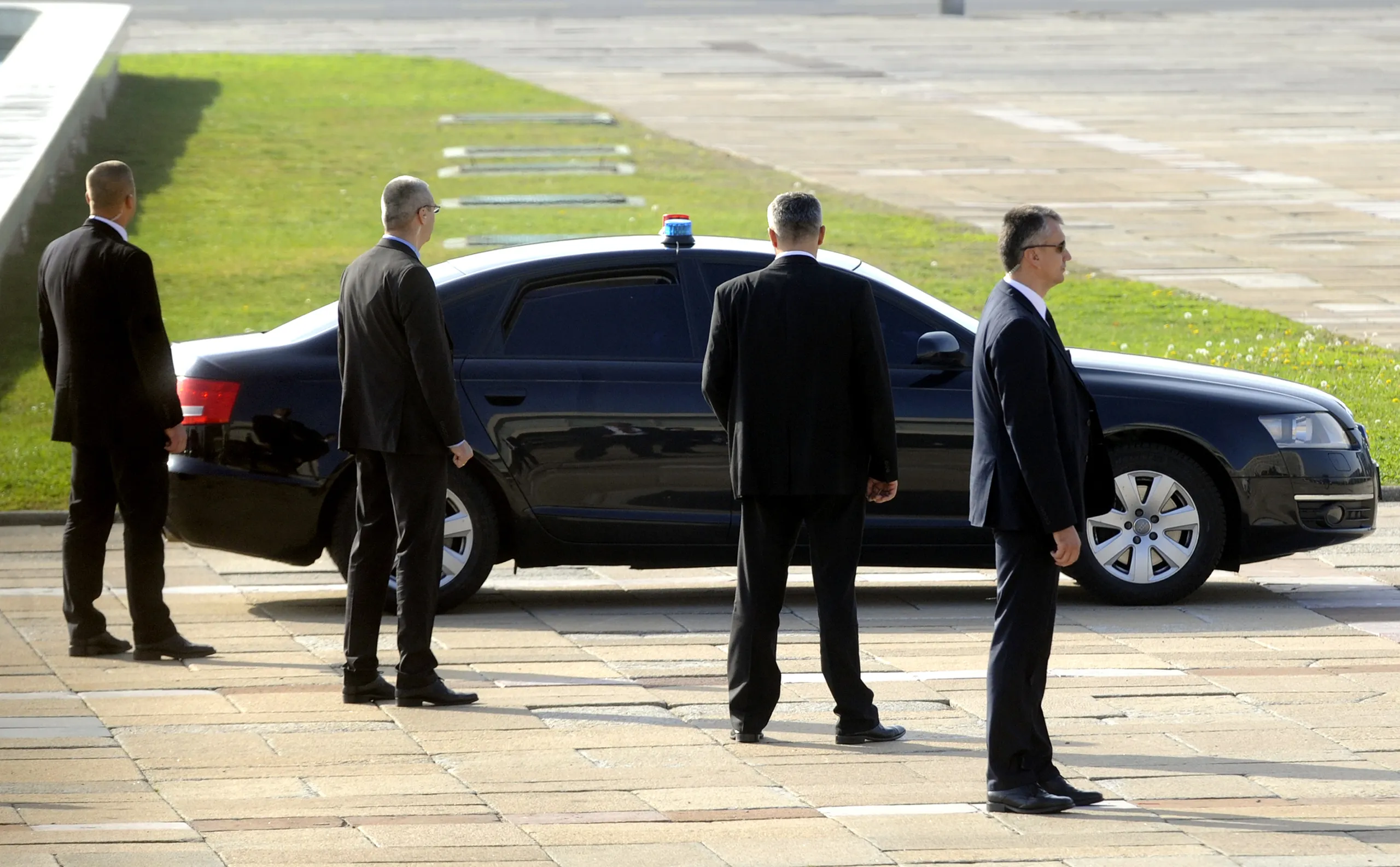
We deploy close protection officers, security drivers, and residential security teams in Rabat through our licensed Moroccan partner network. Assignments touching government or diplomatic premises are coordinated through the appropriate Moroccan authority or the client’s own embassy security office, a step that is more often required here than in Casablanca given the density of ministries and missions.
For the wider national picture, see our Morocco security briefing. For a comparable commercial-capital risk profile within the same country, see our Casablanca city briefing, and for a further North African diplomatic environment, our Cairo city briefing.
Source: FCDO Travel Advice for Morocco, updated 17 February 2026. US State Department Travel Advisory for Morocco, Level 2 (2026). UNESCO World Heritage listing “Rabat, Modern Capital and Historic City: a Shared Heritage” (2012). USGS seismic data, September 2023 Morocco earthquake, approximately 3,000 fatalities. British Embassy Rabat, gov.uk contact details.
What are the main security threats in Rabat?
Terrorism (National Threat, Diplomatic Concentration)
The FCDO assesses terrorism in Morocco as likely, a national rating that applies to Rabat as it does elsewhere. Rabat's status as the seat of government, the King's primary residence, and the country's largest diplomatic quarter concentrates a different kind of exposure: embassies, ministries, and government buildings are higher-value symbolic targets than the commercial districts of Casablanca. Moroccan security services maintain a visibly heavier and more static presence around these sites, which shapes route planning more than it does in Casablanca.
Petty Theft in the Medina and Kasbah
Rabat's medina and the Kasbah of the Oudayas draw dense tourist footfall, and pickpocketing and opportunistic theft follow that footfall. The pattern is less acute than Casablanca's motorcycle drive-by theft problem, but visible jewellery, phones held in the open, and unattended bags remain a straightforward risk in crowded lanes, particularly around the medina's main souk streets.
Counterfeit Spirits
Methanol poisoning from counterfeit alcohol has caused documented deaths in Morocco. The risk sits in informal and unlicensed outlets rather than hotel bars or licensed retail. Alcohol should only be bought or consumed at licensed premises, a national rule that applies in Rabat exactly as it does in Casablanca.
Seismic Risk (National Baseline)
Morocco sits on an active seismic zone. The September 2023 High Atlas earthquake, roughly 500km south of Rabat, killed approximately 3,000 people and is the country's clearest recent demonstration of this risk, though its direct physical impact on Rabat itself was limited. Business continuity planning for any Morocco operation, Rabat included, should account for seismic exposure as a baseline national factor.
Vetted operators with direct experience in Rabat
What security services are available in Rabat?
Close Protection
Close protection officers experienced in Rabat's government-quarter geography, working through our licensed Moroccan partner network.
Executive Protection
Security details for corporate and diplomatic principals attending ministry meetings, embassy functions, or investor engagements in Rabat's administrative and diplomatic districts.
Security Drivers
Trained drivers with Rabat route knowledge, including CMN and RBA airport transfers and government-quarter access protocols.
Residential Security
Property security and staff vetting for diplomatic-quarter accommodation and expatriate residences in Rabat, including the Souissi and Agdal districts.
What are the rules for private security in Rabat?
Key regulatory requirements for operating security services in Rabat.
Firearms Policy
Article 13 of Law 27-06 allows the staff of guarding and cash-transport companies to be armed, but only in line with the existing laws and regulations on weapons. Our close protection in Morocco is unarmed as standard. Ask the provider in writing which authorisation covers any armed officer.
Licensing
Private guarding and cash transport in Morocco are governed by Law 27-06 on guarding and cash-transport activities (Loi n° 27-06 relative aux activités de gardiennage et de transport de fonds, 2007). Companies need an authorisation from the competent authority; Hespress reported in April 2021 that the wilayas grant these authorisations and that most companies then operated without one. Staff with convictions incompatible with the work may not be employed. Ask any provider for its authorisation under Law 27-06.
Foreign Operators
The rules for foreign security companies and foreign personnel under Law 27-06 could not be confirmed against a primary source on 7 October 2026. Work through a Moroccan company authorised under the law, and take local legal advice before a foreign team carries out protective duties.
Sources, checked : Le Matin, La police privée encadrée par la loi (2008); Aujourd'hui le Maroc, Les agents de sécurité tenus de ne pas empiéter sur les prérogatives de la police; Hespress, Nouvelle vigie nationale, la sécurité privée saura-t-elle gagner en légitimité ? (12 April 2021); Médias24, Gardiennage: le secteur veut s'organiser pour faire appliquer la loi (23 December 2013).
Which areas of Rabat carry elevated risk?
Lower-Risk Areas
- Agdal: modern residential and commercial district, well-policed, popular with expatriates
- Hay Riad and Madinat Al Irfane: newer planned districts housing international schools, corporate offices, and Cheikh Zaid Hospital
- Souissi: the diplomatic quarter, home to most foreign embassies and a heavy static security presence
- Ville Nouvelle (the modern town centre): government ministries, banks, and business hotels
Elevated-Risk Areas
- Rabat medina and the souk streets around it: pickpocketing risk during busy daytime hours
- Kasbah of the Oudayas at peak visitor times: crowd density and bag-snatching risk in narrow lanes
- Bou Regreg riverfront and Sale side after dark: reduced lighting and lower police visibility in places
Deploying to Rabat? Get a vetted close protection detail.
Request ConsultationWho do you call in an emergency in Rabat?
Police (urban)
19
Gendarmerie Royale (rural/highway)
177
Ambulance (SAMU)
150
Fire and Civil Protection
15
Mobile-network emergency number
112
British Embassy Rabat
+212-537-633-333
Cheikh Zaid Hospital, Cite Al Irfane, Hay Ryad
+212 537 686 868
SAMU Rabat direct line, 4 rue Tunis, Hassan
+212 537 737 373
What travel advisories apply to Rabat?
- The FCDO rates terrorism in Morocco as likely. Rabat's concentration of government buildings and foreign embassies makes it a higher-symbolic-value environment than Casablanca's commercial districts, and static security presence around these sites is correspondingly heavier.
- Do not buy or consume alcohol from informal or unlicensed sources anywhere in Morocco. Methanol poisoning from counterfeit spirits has caused fatalities. Licensed hotel bars and international retail chains carry negligible risk by comparison.
- LGBT activity is illegal in Morocco, as is sex outside marriage. Drug possession carries long custodial sentences. Evangelical or proselytising material is illegal. These laws apply to foreign nationals without exception, including diplomatic visitors outside formal accredited functions.
- Photography of government buildings, the royal palace (Dar al-Makhzen), and other state or military installations should be avoided throughout Rabat. Security personnel around these sites take an active interest in cameras and drones.
- Female travellers report a documented pattern of unwanted attention when moving alone in Rabat, as elsewhere in Morocco. Conservative dress and route planning reduce, but do not remove, this exposure.
Frequently Asked Questions
How does Rabat's security profile differ from Casablanca?
Which airport should visitors use for Rabat?
Is close protection necessary for a Rabat visit?
What is the licensing framework for security providers in Rabat?
Are the medina and Kasbah of the Oudayas safe to visit?
This page is published by CloseProtectionHire.com and written to editorial standards overseen by James Calloway, Senior Security Consultant (regulation, licensing, vetting and risk frameworks) and Marcus Webb, Security Operations Adviser (operational close protection, secure transport and city-specific safety).
Threat, regulatory and emergency information is sourced to named, dated authorities such as the FCDO, the US State Department and national licensing bodies. Last updated . See how we verify.