
Planning travel to Casablanca? Speak with a security consultant.
Casablanca is the commercial capital of Morocco and North Africa’s most significant financial centre. For most corporate visitors, it presents a manageable security environment. The threat profile is more legal than physical for day-to-day operations. Two elements require specific attention: a genuine terrorism threat that Moroccan counter-terrorism services work continuously to contain, and a strict legal framework that catches foreign visitors who are not properly briefed before arrival.
The security landscape
Morocco’s counter-terrorism services are active and capable. Authorities regularly disrupt Daesh-inspired cells. The government has invested significantly in domestic intelligence capacity since the 2003 Casablanca bombings. That investment does not eliminate the threat. In December 2018, two Scandinavian tourists were murdered in the village of Imlil, near Marrakech, by attackers with documented Daesh links. The attack targeted foreigners at a rural tourist location. It demonstrates that the threat is real and extends beyond Casablanca to any location associated with foreign visitors.
The FCDO rates the terrorism threat in Morocco as likely. High-footfall areas, hotels, and transport hubs carry elevated exposure. Standard situational awareness applies throughout the country, not only in major cities.
The day-to-day crime environment in Casablanca is lower than many cities in this directory. Motorcycle drive-by theft is the most common risk for business visitors. Thieves target visible jewellery and handbags in medina areas and busy commercial streets. The attacks are fast, often involve physical force, and happen in daylight. Briefing all members of a visiting party before any medina visit is a basic operational requirement.
Counterfeit alcohol is a separate and potentially fatal risk. Methanol poisoning from fake spirits has caused deaths in Morocco. Alcohol should only be consumed at licensed establishments.
The legal environment
Morocco’s legal framework carries significant risks for foreign visitors who are not briefed in advance. Drug possession carries long prison sentences and substantial fines. There is no graduated response for small quantities. Alcohol is legal only in licensed establishments. LGBT activity and sex outside marriage are criminal offences. Evangelical or proselytising materials are illegal. Photography of military or government infrastructure should be avoided.
Foreign nationals are prosecuted under these laws. A legal briefing is part of any responsible pre-deployment package for Morocco, regardless of the purpose of the visit.
Operating in Casablanca
Casablanca Finance City (CFC) and the broader business district around Maarif and Gauthier provide a structured environment for corporate operations. International hotels in these areas have established security infrastructure. The risk profile in central business locations is manageable with standard precautions.
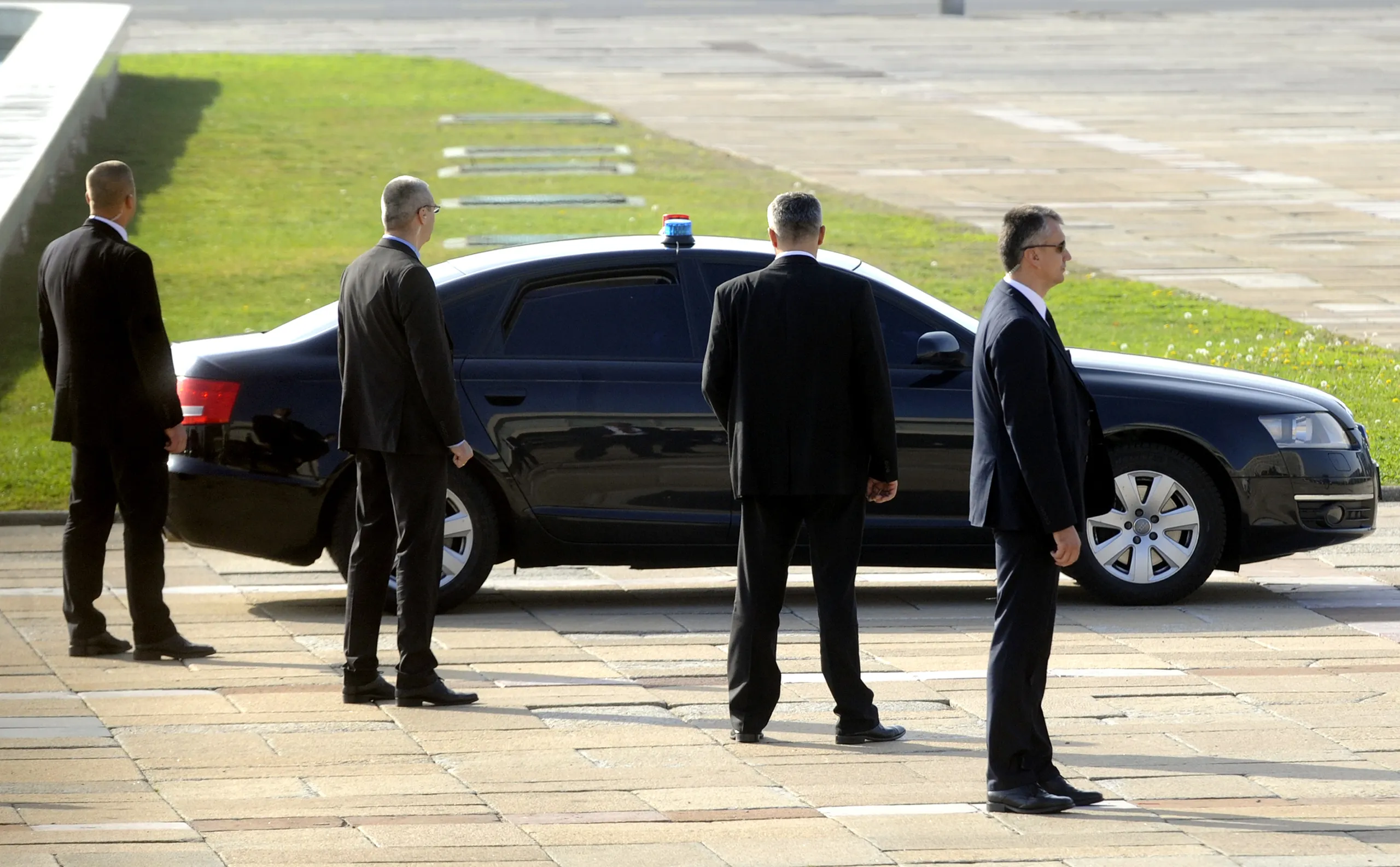
Outside these areas, and particularly in medina districts and tourist circuits, specific protocols apply. A security driver with Casablanca route knowledge is the baseline requirement. For UHNWI principals and any visit involving public-facing events, a close protection officer is the appropriate addition.
Female principals and senior female executives face a documented pattern of unwanted attention in Morocco, particularly outside formal business contexts. Security planning should address this explicitly, including dress guidance, route selection, and appropriate operator profile.
Our operations in Casablanca
We deploy security drivers, close protection officers, and residential security teams in Casablanca and across Morocco. All operators go through our internal vetting process in addition to local regulatory requirements.
All enquiries are handled with maximum discretion. Client details are not retained on any public-facing system.
Sources: FCDO Travel Advice for Morocco (April 2026). US State Department Travel Advisory for Morocco, Level 2 (April 2026). FCDO: December 2018 Imlil murders. USGS seismic data: September 2023 Morocco earthquake, approximately 2,946 confirmed fatalities. For comparable operating environments in our network, see our Cairo city briefing and Lagos city briefing.
What are the main security threats in Casablanca?
Terrorism
Moroccan authorities regularly disrupt Daesh-inspired cells. The threat is active. In December 2018, two Scandinavian tourists were murdered in the village of Imlil near Marrakech by attackers with documented Daesh links. The FCDO advises that terrorism is likely in Morocco. High-footfall areas, hotels, and transport hubs carry elevated exposure.
Motorcycle Drive-By Theft
Motorcycle drive-by theft of jewellery and handbags is common in medina areas and busy commercial streets. Thieves operate in pairs, targeting visible valuables. The attack is fast, often involves physical force, and the chance of recovery is negligible. Operational awareness and discreet dress significantly reduce exposure.
Counterfeit Spirits
Methanol poisoning from counterfeit alcohol has caused deaths in Morocco. Counterfeit spirits circulate through informal and unlicensed channels. Alcohol should only be consumed at licensed establishments. Methanol poisoning is potentially fatal, not a minor hygiene concern.
Seismic Risk
In September 2023, an earthquake struck the High Atlas region southwest of Marrakech, killing approximately 3,000 people. Morocco sits on an active seismic zone. The 2023 earthquake affected transport infrastructure and emergency services capacity across a wide area. Business continuity planning for Morocco should address this risk.
Vetted operators with direct experience in Casablanca
What security services are available in Casablanca?
Close Protection
Close protection officers with Casablanca operational experience and current local licensing through our Moroccan partner network.
Executive Protection
Security details for corporate executives conducting meetings, investor engagements, or multi-site operations across Casablanca and wider Morocco.
Security Drivers
Trained drivers with Casablanca and Morocco route knowledge. Secure vehicle options available for sensitive assignments.
Event Security
On-ground security teams for corporate events, private functions, and business gatherings in Casablanca.
Residential Security
Property security and guard force management for expatriate accommodation and corporate residences in Casablanca.
What are the rules for private security in Casablanca?
Key regulatory requirements for operating security services in Casablanca.
Firearms Policy
Article 13 of Law 27-06 allows the staff of guarding and cash-transport companies to be armed, but only in line with the existing laws and regulations on weapons. Our close protection in Morocco is unarmed as standard. Ask the provider in writing which authorisation covers any armed officer.
Licensing
Private guarding and cash transport in Morocco are governed by Law 27-06 on guarding and cash-transport activities (Loi n° 27-06 relative aux activités de gardiennage et de transport de fonds, 2007). Companies need an authorisation from the competent authority; Hespress reported in April 2021 that the wilayas grant these authorisations and that most companies then operated without one. Staff with convictions incompatible with the work may not be employed. Ask any provider for its authorisation under Law 27-06.
Foreign Operators
The rules for foreign security companies and foreign personnel under Law 27-06 could not be confirmed against a primary source on 7 October 2026. Work through a Moroccan company authorised under the law, and take local legal advice before a foreign team carries out protective duties.
Sources, checked : Le Matin, La police privée encadrée par la loi (2008); Aujourd'hui le Maroc, Les agents de sécurité tenus de ne pas empiéter sur les prérogatives de la police; Hespress, Nouvelle vigie nationale, la sécurité privée saura-t-elle gagner en légitimité ? (12 April 2021); Médias24, Gardiennage: le secteur veut s'organiser pour faire appliquer la loi (23 December 2013).
Which areas of Casablanca carry elevated risk?
Lower-Risk Areas
- Casablanca city centre (Maarif, Gauthier): commercial and residential areas with established security infrastructure
- Ain Diab: coastal area, international hotels, lower crime profile
- Anfa: upscale residential and business area
- CFC (Casablanca Finance City): international business district with private security management
Elevated-Risk Areas
- Medina areas: motorcycle theft is concentrated here. Avoid carrying visible jewellery or handbags in these streets
- Old Medina after dark: reduced police visibility and elevated opportunistic crime risk
- Bus stations and crowded market areas: pickpocket and distraction theft risk
Deploying to Casablanca? Get a vetted close protection detail.
Request ConsultationWho do you call in an emergency in Casablanca?
Police
190
Gendarmerie
177
Ambulance
150
Fire
15
UK Embassy Rabat
+212-537-633-333
Centre Hospitalier Universitaire Ibn Rochd, 1 Rue des Hopitaux (main public teaching hospital)
+212 522 470 063
Cheikh Khalifa Ibn Zaid Hospital, Hay El Hassani (private)
+212 529 004 466
Clinique Dar Salam, 728 Boulevard Modibo Keita (private)
+212 522 851 414
SAMU Casablanca (ambulance)
+212 661 301 534
UMA, Union Marocaine d'Assistance (air and land ambulance)
+212 522 450 000
What travel advisories apply to Casablanca?
- Moroccan authorities regularly disrupt Daesh cells. The 2018 murders in Imlil were carried out by individuals with documented Daesh links. The terrorism threat is not hypothetical. High-footfall tourist areas, hotels, and transport hubs require the same awareness applied in any elevated-risk environment.
- Do not consume alcohol or spirits purchased from informal or unlicensed sources. Methanol in counterfeit spirits has caused fatalities in Morocco. Alcohol is only legally sold at licensed establishments.
- LGBT activity is illegal in Morocco. Sex outside marriage is a criminal offence. Drug possession carries long prison sentences and substantial fines. Evangelical or proselytising materials are illegal. These laws apply to foreign nationals without exception.
- Motorcycle drive-by theft in medina areas is fast and often involves physical force. Do not carry visible jewellery, handbags, or a phone in your hand in these areas. Brief all members of a visiting party before entering medina districts.
- Female travellers experience significant unwanted attention in Morocco when travelling without a male companion or outside clearly defined business contexts. Conservative dress reduces exposure but does not eliminate it.
Frequently Asked Questions
Is Casablanca safe for business travel?
What are the key laws I need to know before visiting Morocco?
Do I need close protection in Casablanca?
Is motorcycle theft a serious risk?
This page is published by CloseProtectionHire.com and written to editorial standards overseen by James Calloway, Senior Security Consultant (regulation, licensing, vetting and risk frameworks) and Marcus Webb, Security Operations Adviser (operational close protection, secure transport and city-specific safety).
Threat, regulatory and emergency information is sourced to named, dated authorities such as the FCDO, the US State Department and national licensing bodies. Last updated . See how we verify.