
Planning travel to Hamburg? Speak with a security consultant.
Hamburg’s security environment is defined by geography: the city separates cleanly into a low-risk commercial and residential core (HafenCity, Alster, Eppendorf, the business district) and a more complex nighttime environment in St Pauli and around Hamburg Hauptbahnhof. For corporate visitors whose itineraries stay within daytime business operations, Hamburg presents minimal security challenge beyond standard European terrorism awareness. The port environment requires specific operational planning for principals visiting maritime and logistics facilities: the Hamburg Port Authority enforces rigorous ISPS Code access controls, and port-zone operations are not comparable to standard city movements.
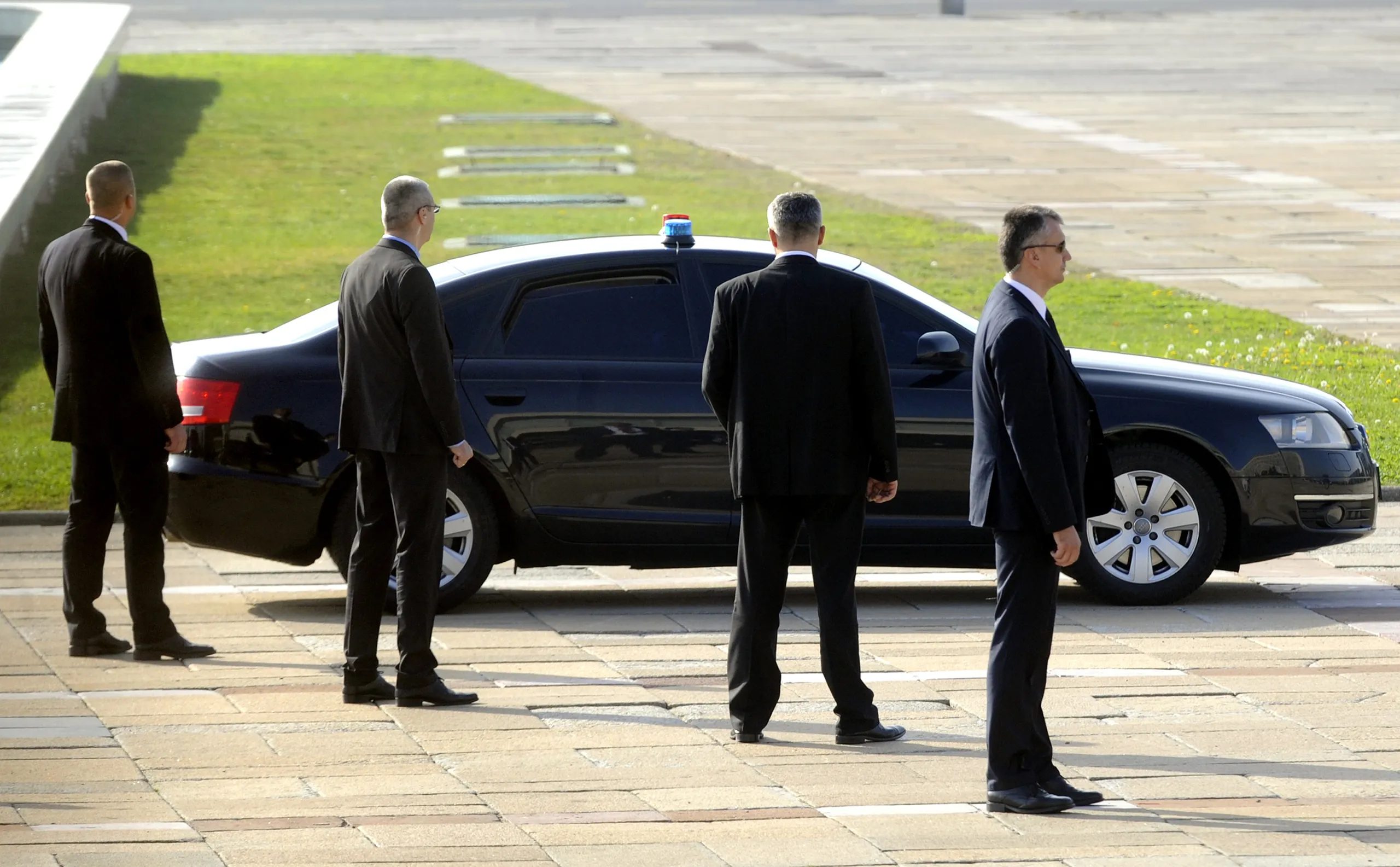
For principals requiring close protection in Hamburg, operators must hold IHK qualification under Section 34a of the Gewerbeordnung. Our executive protection services in Hamburg cover maritime industry visits, Airbus Hamburg operations, and Elbphilharmonie-area corporate events. Vetted security drivers in Hamburg cover HAM airport transfers and port-zone access logistics. For broader German context, see our briefings for Frankfurt and Berlin.
What are the main security threats in Hamburg?
Reeperbahn and St Pauli district at night
Hamburg's St Pauli district, centred on the Reeperbahn, generates the highest concentration of personal property crime and assault in the city after 22:00. Hamburg Police (Polizei Hamburg) annual crime statistics (2025) identify the Reeperbahn corridor as the highest-risk zone for opportunistic theft, drink-spiking, and minor assaults against visitors. Corporate entertainment events in this district require enhanced security awareness and pre-planned exit routes. The risk is time-bounded: daytime operations in St Pauli carry no significant elevated risk.
Port-area security awareness
Hamburg is Europe's third-largest seaport and one of its most important logistics hubs. The Port of Hamburg (HPA) covers 7,200 hectares with restricted-access maritime and logistics zones. Corporate visitors to port-area facilities, container terminals, and the HafenCity development require advance access confirmation and should not enter port operational areas unescorted. Drug and customs crime is a documented feature of the port environment (Zollkriminalamt 2025).
Terrorism awareness
Germany operates at an elevated terrorism threat level (BKA 2025). Hamburg has specific relevance as the city where several of the 9/11 hijackers were based (the Hamburg cell) and where a vehicle attack occurred at a Christmas market in 2023. FCDO Germany travel advice (2026) notes the risk at transport hubs, public events, and crowded areas.
Vetted operators with direct experience in Hamburg
What security services are available in Hamburg?
Executive Protection
Close protection for maritime industry executives, logistics sector principals, and corporate visitors attending Hamburg port-related business and Airbus Hamburg operations.
Security Drivers
Vetted transfers from Hamburg Airport (HAM) and across the city, with route knowledge of the B75 and A7 for port and HafenCity movements.
Event Security
Corporate event security for Hamburg port industry conferences, maritime trade events, and corporate functions in HafenCity and the Elbphilharmonie complex.
Residential Security
Property surveys and guard management for expatriate executives in Eppendorf, Winterhude, and the Alster lake residential belt.
What are the rules for private security in Hamburg?
Key regulatory requirements for operating security services in Hamburg.
Firearms Policy
Under section 28 of the Waffengesetz, a security business may acquire and hold firearms only where it takes on assignments that require them to protect an endangered person or object. Each guard who is to carry the firm's weapons must first be reported to the authority, which must approve that guard, and the weapon may be carried only while the specific assignment is being carried out. Most private close protection in Germany is unarmed.
Licensing
Anyone who guards the life or property of others commercially needs a permit under section 34a of the Gewerbeordnung from the competent local authority. The person running the business must pass the Sachkundeprüfung before the Industrie- und Handelskammer (IHK). Every guard needs at least the IHK Unterrichtung certificate, and the Sachkundeprüfung is also required for listed activities such as patrols in public areas, door work at nightclubs and leading roles at large access-controlled events. Since 1 June 2019 businesses and their guards are entered in the national Bewacherregister, run by the Federal Statistical Office since 10 October 2022.
Foreign Operators
The section 34a permit applies to anyone carrying on the business in Germany, wherever the firm is based. A provider established in another EU or EEA state that wants to serve clients in Germany temporarily must notify the authority under section 13a of the Gewerbeordnung, and the authority may check the provider's qualifications before the first service (Bewachungsverordnung, section 13). Ask any provider for its section 34a permit and each officer's IHK certificate.
Sources, checked : Gewerbeordnung, section 34a (text, dejure.org); Waffengesetz, section 28 (text, dejure.org); Bundesministerium für Wirtschaft und Energie, Bewacherregister; Bewachungsverordnung 2019, section 13 (text, lxgesetze.de).
Which areas of Hamburg carry elevated risk?
Lower-Risk Areas
- HafenCity - modern waterfront development, well-lit, active security presence, low crime
- Alster lake area (Innenalster, Aussenalster) - central but low-crime, preferred for executive accommodation
- Eppendorf and Winterhude - residential northern districts, very low ambient crime
Elevated-Risk Areas
- St Pauli (Reeperbahn) after 22:00 - highest crime concentration; operational awareness required for evening events
- Central Hauptbahnhof and Jungfernstieg during peak hours - elevated pickpocketing
- Port operational zones - access-controlled; escort required
Deploying to Hamburg? Get a vetted close protection detail.
Request ConsultationWho do you call in an emergency in Hamburg?
Police emergency
110
Fire and ambulance
112
UKE (Universitätsklinikum Hamburg-Eppendorf)
+49 40 7410 0
Asklepios Klinik St Georg
+49 40 1818 85 0
Out-of-hours medical service (aerztlicher Bereitschaftsdienst)
116117
What travel advisories apply to Hamburg?
- FCDO Germany travel advice (2026): normal precautions. Heightened awareness at transport hubs and crowded public events due to terrorism risk.
- US State Department Level 2 (Increased Caution - terrorism) for Germany (2026).
- Hamburg Airport (HAM) is 8km north of the city centre. Standard taxi and U-Bahn S1 transfer is available; executive transport requires a pre-positioned vetted vehicle.
- Reeperbahn area: policing is active but resource-intensive after midnight; avoid for executive accommodation regardless of proximity to evening events.
- Medical facilities: UKE (Universitätsklinikum Hamburg-Eppendorf, +49 40 7410 0) is the primary acute care and trauma facility. Asklepios Klinik St Georg is centrally located.
Frequently Asked Questions
Is Hamburg safe for executive and corporate travel?
What security considerations apply to the Port of Hamburg?
How should corporate events in the Reeperbahn area be managed?
What medical facilities serve international executives in Hamburg?
This page is published by CloseProtectionHire.com and written to editorial standards overseen by James Calloway, Senior Security Consultant (regulation, licensing, vetting and risk frameworks) and Marcus Webb, Security Operations Adviser (operational close protection, secure transport and city-specific safety).
Threat, regulatory and emergency information is sourced to named, dated authorities such as the FCDO, the US State Department and national licensing bodies. Last updated . See how we verify.