
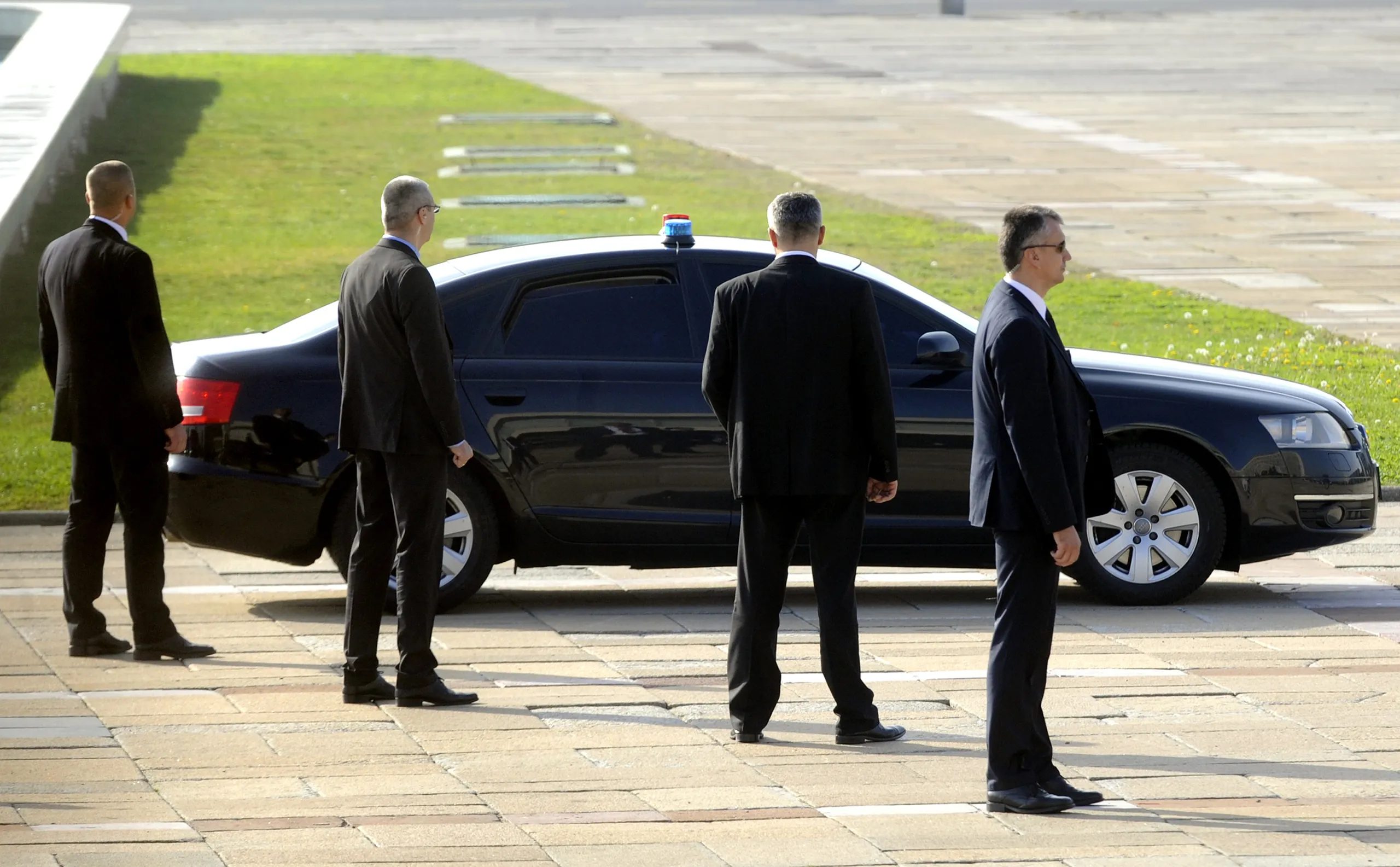
Planning travel to Cape Town? Speak with a security consultant.
Cape Town is one of the world’s most striking cities and one of the most operationally intensive close protection environments on the P2 list. Those two facts coexist permanently. Principals attracted by the business opportunity or the environment need to understand both clearly before any visit.
OSAC rates Cape Town crime as CRITICAL. The FCDO documents specific and recurring threat patterns that are not generic crime warnings. They are operationally relevant intelligence with named routes and named tactics.
The airport corridor
The most time-sensitive threat in Cape Town is the arrival. FCDO specifically warns that criminals follow visitors from Cape Town International Airport and rob them at gunpoint. This is a documented, recurring pattern: a team identifies a target at arrivals, follows the vehicle, and executes a robbery either on the route or at the destination.
The R300 and Borcherd’s Quarry Road are documented ambush corridors. FCDO advises using only the M3 and N2 for airport access. The operational instruction is clear: pre-book all airport transport with a vetted operator who knows the approved route. Confirm driver identity before getting in the vehicle. Do not accept any other vehicle.
Fake police: a documented tactic
Criminals in Cape Town operate vehicles with blue lights and impersonate police officers to create a traffic stop situation. FCDO advises that if you are suspicious of a police stop, do not stop immediately. Drive to the nearest police station. Call 10111 from the vehicle. A genuine police officer in uniform presenting ID operating an identifiable police vehicle is a legitimate stop. A plainclothes individual in an unmarked car with a blue light is not.
Brief every driver on this protocol before any Cape Town assignment begins.
PSIRA and the security industry
South Africa has one of the world’s largest private security industries per capita. PSIRA (Private Security Industry Regulatory Authority) licenses all operators. Officers may carry a firearm licensed to their employer if they hold a competency certificate under the Firearms Control Act 60 of 2000.
Cape Town is one of the few cities in the P2 portfolio where armed close protection is a standard available option for commercial clients. Given the crime environment, armed CP for UHNWI principals and senior executives is a rational baseline decision. Verify PSIRA registration for any operator before engagement. The register is publicly verifiable at psira.co.za.
Carjacking and the daily environment
Carjacking at traffic lights, junctions, petrol stations, and residential driveways is common. Tactics include road spiking, placing stones to create punctures, and car-jamming technology that prevents central locking. Smash-and-grab attacks through windows at junctions occur regularly.
Keep doors locked and windows up at all times while driving. Know the counter-carjacking protocol before departure. If confronted: comply. Do not resist. South African robbery statistics show a consistent correlation between resistance and serious injury or death. The vehicle and its contents are replaceable. The principal is not.
Sources: UK FCDO South Africa travel advice (April 2026). US State Department Level 2 advisory South Africa (April 2026). OSAC Crime Rating: CRITICAL. PSIRA (psira.co.za). For comparable operating environments in our network, see our Johannesburg city briefing and Nairobi city briefing.
What are the main security threats in Cape Town?
Carjacking and Armed Robbery
OSAC rates Cape Town crime as CRITICAL. Carjacking at traffic lights, junctions, petrol stations, and residential driveways is common. Spikes and stones are used to stop vehicles. Car-jamming technology blocks central locking so doors cannot be locked after parking. Criminals follow vehicles home from shopping centres and business districts. Resist a robbery and the probability of violence increases substantially. The rule is: comply and disengage.
Airport Follow-Home Robberies
FCDO specifically warns that criminals follow visitors from Cape Town International Airport and rob them at gunpoint. The R300 and Borcherd's Quarry Road airport approach routes are documented ambush corridors. FCDO advises staying on the M3 and N2 only for airport access. Pre-book all airport transport with a vetted operator. Do not use the R300 or Borcherd's Quarry Road. Source: FCDO South Africa travel advice, April 2026.
Fake Police and Impersonation
Criminals impersonate police officers using vehicles equipped with blue lights. The tactic involves pulling over drivers for a supposed traffic or documents check, then robbing the occupants. FCDO advises: if you are suspicious of a police stop, do not stop immediately. Drive to the nearest police station. Call 10111 to verify. Genuine police do not conduct plainclothes stops in unmarked vehicles with blue lights without additional means of identification.
Kidnapping
South Africa has an increasing kidnap risk profile. FCDO documents express kidnapping with victims held after dark until they make cash transfers. HNWI targeting for ransom kidnapping is documented. Children have been snatched from shops and shopping centres. All kidnap incidents should be assumed to carry high violence risk. Kidnap and ransom insurance is standard for extended South Africa deployments.
Trail and Outdoor Attacks
Table Mountain National Park trails have been the site of violent attacks on hikers, including tourists. Lion's Head and Signal Hill are specifically flagged by FCDO. Go in groups. Use official guided hikes. Avoid any trail at times of reduced other visitor numbers. Solo hiking on any Cape Town trail is not advisable.
Vetted operators with direct experience in Cape Town
What security services are available in Cape Town?
Close Protection
PSIRA-licensed close protection officers for personal security in Cape Town. Armed CP is legal and available through PSIRA-registered operatives holding Firearms Control Act competency certificates. Available for corporate visits, UHNWI principals, and extended deployments. One of the most operationally intensive CP environments in the P2 city portfolio.
Executive Protection
Full security details for visiting executives and UHNWI principals. Advance work, counter-surveillance protocols, carjacking contingency planning, and airport arrival management. Armed options available.
Security Drivers
Trained security drivers with Cape Town route knowledge and counter-surveillance training. Smash-and-grab protected vehicles. Strict airport transfer protocols avoiding the R300 and Borcherd's Quarry Road. All vehicles at a pre-confirmed meeting point with identity verification.
Event Security
Security planning and staffing for corporate events and private functions in Cape Town. Venue assessment and advance work for the V&A Waterfront, major hotels, and private event spaces.
Residential Security
Armed response coordination, property security, and guard force management for Cape Town residences. Perimeter security assessment. Immediate response protocols for house robbery incidents.
What are the rules for private security in Cape Town?
Key regulatory requirements for operating security services in Cape Town.
Firearms Policy
Armed protection is lawful in South Africa under the Firearms Control Act 60 of 2000. Section 20 lets the Registrar licence a security service provider to possess firearms for business purposes, and section 20(5)(b) says the company may only provide such a firearm to a security officer in its service who holds a competency certificate. Ask to see both the officer's competency certificate and the company's business licence for the firearm.
Licensing
Section 20(1) of the Private Security Industry Regulation Act 56 of 2001 bars anyone from rendering a security service for reward unless registered as a security service provider with the Private Security Industry Regulatory Authority (PSiRA). Security businesses register too, and everyone performing executive or managing functions in them must be registered. PSiRA offers online verification of individual and business registrations, so check both before engagement.
Foreign Operators
Under section 23(1)(a) of the Act, a person registering as a security service provider must be a South African citizen or hold permanent residence, and a security business can be registered only if its managers meet that test. Section 23(6) lets PSiRA register an applicant on good cause shown despite this. Protective work for reward in Cape Town therefore normally runs through PSiRA-registered South African operators; take local legal advice before a foreign team carries out protective duties.
Sources, checked : South African Government, Private Security Industry Regulation Act 56 of 2001; Private Security Industry Regulation Act 56 of 2001, text (SAFLII); Firearms Control Act 60 of 2000, section 20, text; Private Security Industry Regulatory Authority (PSiRA).
Which areas of Cape Town carry elevated risk?
Lower-Risk Areas
- V&A Waterfront: Security personnel present throughout. One of Cape Town's more managed visitor environments, though standard awareness still required.
- Camps Bay (daytime): Atlantic Seaboard residential and tourist area. Lower crime rate during daylight hours. Not recommended after dark.
- De Waterkant: Commercial area adjacent to Green Point. Manageable during business hours.
- Southern suburbs (Newlands, Constantia): Established residential areas with lower relative crime rates. Armed response networks well-established.
Elevated-Risk Areas
- Cape Flats townships (Khayelitsha, Gugulethu, Mitchells Plain): Some of the highest crime rates in South Africa. No reason for corporate visitors to enter these areas.
- Cape Town airport R300 and Borcherd's Quarry Road routes: Documented follow-home robbery corridors. Use M3 and N2 only.
- Table Mountain National Park trails: Violent attacks documented on Lion's Head, Signal Hill, and other trails.
- City centre after dark: Elevated robbery and carjacking risk.
- Any isolated beach after dark: High robbery risk with no security presence.
Deploying to Cape Town? Get a vetted close protection detail.
Request ConsultationWho do you call in an emergency in Cape Town?
Police (Emergency)
10111
Ambulance
10177
Fire (City of Cape Town)
021 480 7700
Metro Police
021 596 1999
Mediclinic Cape Town (private, 24 hour emergency unit, Oranjezicht)
+27 21 464 5500
Netcare Christiaan Barnard Memorial Hospital (private, Foreshore)
+27 21 441 0000
U.S. Consulate General Cape Town (Westlake)
+27 21 702 7300
What travel advisories apply to Cape Town?
- FCDO: criminals follow visitors from Cape Town airport and rob them at gunpoint. Use only the M3 and N2 for airport access. The R300 and Borcherd's Quarry Road are documented robbery corridors. Pre-book all airport transport with a vetted operator.
- If you suspect a vehicle is using blue lights to impersonate police, do not stop. Drive to the nearest police station. Call 10111 from the vehicle. Genuine police stops do not require drivers to comply with unverified plainclothes officers in unmarked vehicles.
- Car-jamming technology is used in car parks to prevent central locking. Wait until you can physically confirm the door is locked before walking away.
- If you are robbed, comply. Do not resist. South African robbery data shows significantly higher rates of violence against victims who resist. Comply and disengage. Debrief with your security team immediately.
- Cape Town is one of the most operationally intensive CP environments in the P2 list. Professional security management is the right baseline for UHNWI and senior executive visits.
Frequently Asked Questions
Is Cape Town safe for business travel?
What is the airport robbery risk in Cape Town?
Is armed close protection available in Cape Town?
How do I protect against carjacking in Cape Town?
Are the Cape Flats townships safe to visit?
This page is published by CloseProtectionHire.com and written to editorial standards overseen by James Calloway, Senior Security Consultant (regulation, licensing, vetting and risk frameworks) and Marcus Webb, Security Operations Adviser (operational close protection, secure transport and city-specific safety).
Threat, regulatory and emergency information is sourced to named, dated authorities such as the FCDO, the US State Department and national licensing bodies. Last updated . See how we verify.