
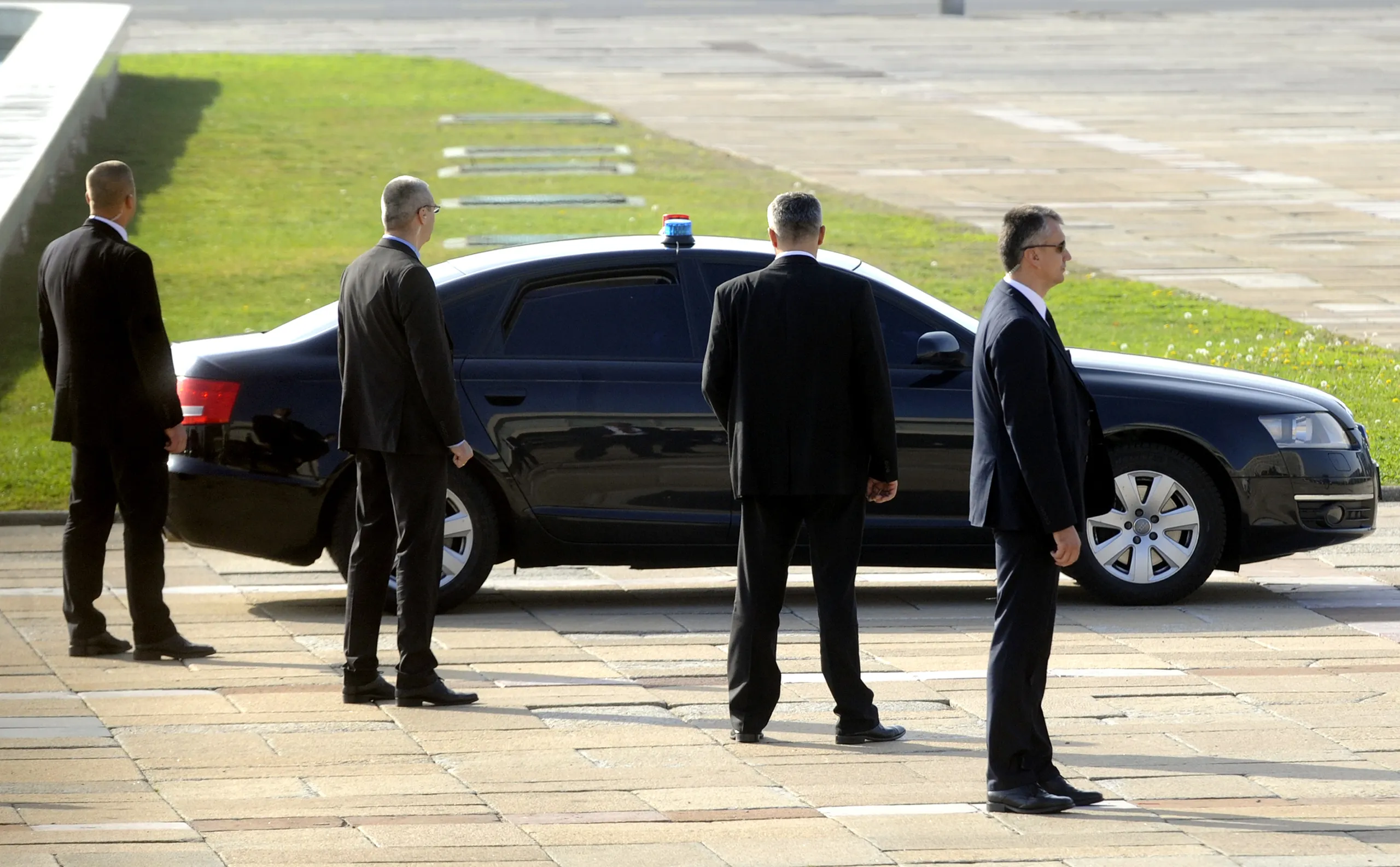
Requiring security-rated chauffeur services in Tokyo? Request a Security Business Act-approved driver.
Tokyo’s security driver market is defined by the inverse of most other high-demand markets: the ambient personal security risk for foreign executives is negligible, but the operational complexity of driving for senior executives in Tokyo is among the highest of any major business city. The expressway network requires real-time traffic monitoring to navigate effectively; Japanese language competency is genuinely operationally necessary; the Tokyo hotel and corporate venue environment has specific vehicle access constraints; and the dual licensing requirement (second-class driving licence plus employment by an approved security business) sets a high professional standard.
Security Business Act licensing
The Security Business Act (Keibigyo-ho, Act No. 117 of 1972) requires every security business to be approved by a prefectural Public Safety Commission. Drivers performing security functions work under their employer’s approval. The second-class driving licence (Daini-shu Menkyo) is required for all commercial passenger transport in Japan. Both are confirmable; operating companies should provide both licence details before engagement.
Haneda versus Narita as the Tokyo arrival airport
The choice between Haneda and Narita has a direct operational consequence for transfer quality. Haneda’s proximity to central Tokyo (20 km, 30 to 50 minutes) makes it materially preferable for senior executive arrivals. Narita’s 60 km distance creates transfer times that are sensitive to expressway congestion in ways that Haneda transfers are not. Where the principal has a choice of Tokyo arrival airport, the security driver recommendation is Haneda.
For complementary services in Tokyo, see our Tokyo city page and bodyguard hire in Tokyo.
What does this cover in Tokyo?
Security Business Act and Second-Class Licence
Commercial passenger transport in Japan (excluding personal ownership) requires a second-class driving licence (Daini-shu Menkyo). Security drivers performing a security function alongside driving must be employed by a security business approved by a prefectural Public Safety Commission under the Security Business Act (Keibigyo-ho, Act No. 117 of 1972). We engage only drivers holding the second-class licence who work for an approved security business.
Corporate Executive and Diplomatic Chauffeur Cover
Tokyo's corporate and diplomatic chauffeur market is among the most professionally developed in Asia. Security driver services in Tokyo primarily serve senior executives making sensitive commercial visits, visiting diplomatic delegations not covered by the Ministry of Foreign Affairs Protocol Division, HNWI visiting for art market or private banking purposes, and executives from higher-risk markets maintaining their home security standard in Japan.
Haneda and Narita Airport Transfers
Tokyo is served by Haneda International Airport (HND), approximately 20 km from the city centre, and Narita International Airport (NRT), approximately 60 km from central Tokyo. Haneda is significantly preferred for senior executive arrivals due to its proximity: the transfer to Minato or Chiyoda takes 30 to 50 minutes. Narita transfers take 60 to 90 minutes to the same destinations via the Wangan Expressway or the Narita Expressway. Pre-arranged inside-terminal collection is standard at both airports.
Tokyo Expressway Route Knowledge
Tokyo's expressway network (Shuto Kosoku) is complex and highly congested during peak hours: morning commute (07:30 to 09:30) and evening commute (17:30 to 20:00) on the C2 and C1 ring roads around central Tokyo. Security drivers use route optimisation based on real-time JARTIC (Japan Road Traffic Information Centre) data, alternating between expressway and surface road routes depending on congestion. Navigation apps alone are not sufficient for optimised Tokyo executive transfer routing.
Japanese Language and Protocol Competency
Effective security driving in Tokyo requires Japanese language ability for communication with hotel doormen, venue security, and parking attendants who may have limited English. Drivers for Tokyo engagements are selected for Japanese language competency and familiarity with the specific protocols of Tokyo's major hotels (Hotel Okura, The Aman Tokyo, The Capitol Hotel Tokyu) and corporate reception areas.
Vehicle Selection for Tokyo's Parking Environment
Tokyo has specific constraints on vehicle size in central urban areas, including low-clearance parking garages at many major hotels and the narrow street access in historic business districts (Marunouchi, Nihonbashi). Vehicle selection for Tokyo security driver engagements takes these constraints into account: full-size luxury SUVs may not be appropriate in all central Tokyo venues where a full-size executive sedan or smaller premium vehicle performs better operationally.
Sources for this page
Licensing, firearms and foreign-operator rules for Tokyo, checked : Security Business Act (Act No. 117 of 1972, as amended), hourei.net text; Act No. 6 of 1958 on the possession of firearms and swords, as enacted (House of Representatives). The full rules are on our Tokyo security overview.
Frequently Asked Questions
Why use a security driver in Tokyo given the extremely low crime rate?
What is the difference between a Haneda and Narita transfer?
Do Tokyo security drivers speak English?
What does a security driver cost per day in Tokyo?
This page is published by CloseProtectionHire.com and written to editorial standards overseen by James Calloway, Senior Security Consultant (regulation, licensing, vetting and risk frameworks) and Marcus Webb, Security Operations Adviser (operational close protection, secure transport and city-specific safety).
Threat, regulatory and emergency information is sourced to named, dated authorities such as the FCDO, the US State Department and national licensing bodies. Last updated . See how we verify.