
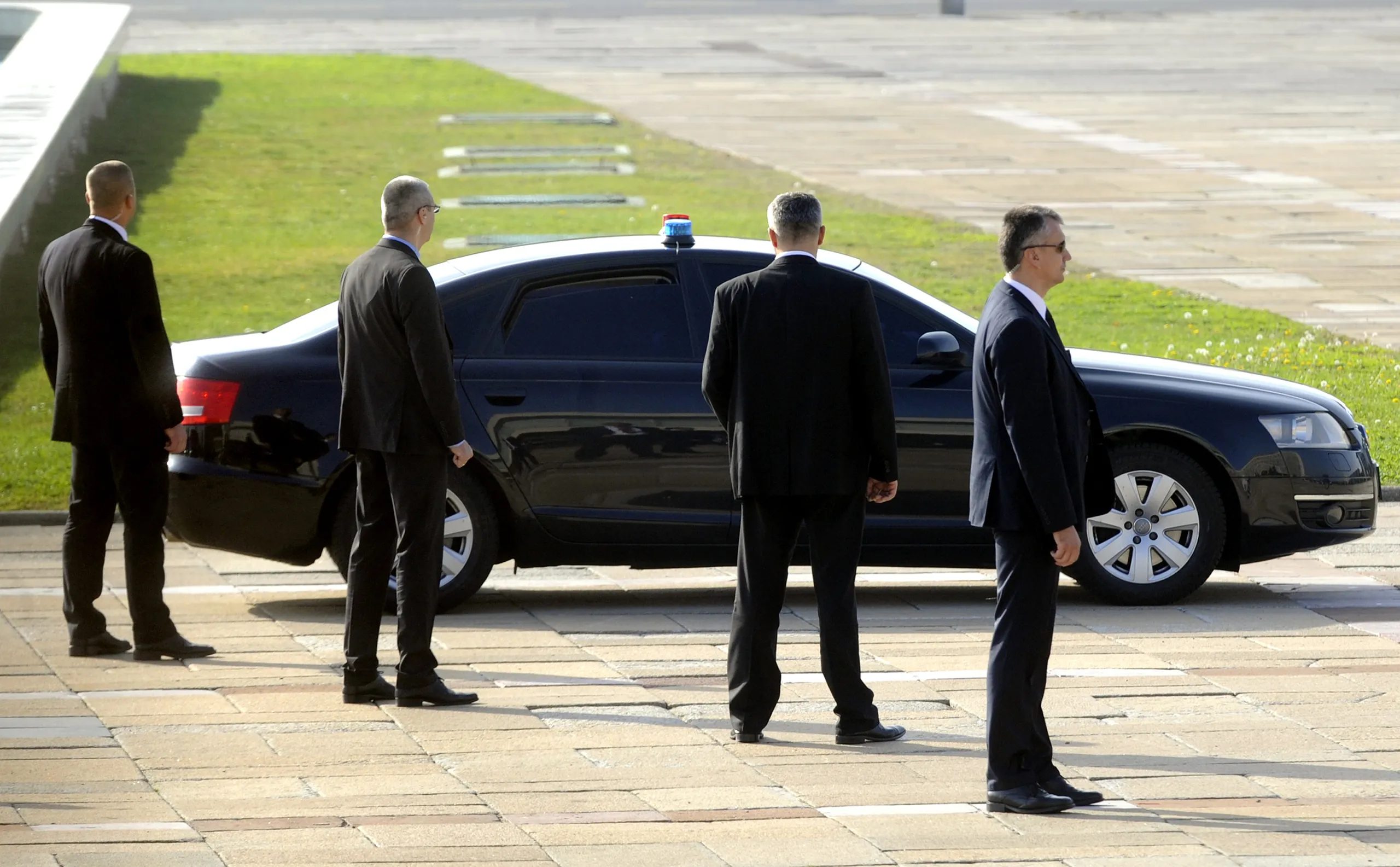
Travelling to Busan for a corporate programme or sensitive engagement? Request a vetted security driver.
Busan presents a security driver environment shaped by the local risk context: low. NPA Crime Statistics 2024 records low violent crime across the city; minor disorder in older port-adjacent entertainment areas after midnight; persistent geopolitical background risk from North Korea factored into contingency planning. For HNWI principals and corporate executives visiting Haeundae, Seomyeon, and the BEXCO convention precinct, vetted security drivers from police-licensed companies provide a materially different standard of vehicle cover from the standard hire vehicle market.
Licensing and compliance in Busan
Security driver companies operating in Busan are licensed under the Security Services Industry Act (경비업법). Confirming the operating company’s licence status and the individual driver’s credentials with the relevant authority is the standard due-diligence step before any engagement.
PUS and city movement
PUS is the main gateway for visiting principals, with 22km (Gimhae International Airport, PUS) and transfer times of 25-45 min under normal conditions. Security drivers apply route variation across Gyeongbu Expressway (Highway 1), Busan-Ulsan Expressway, and the Olympic Expressway and pre-plan alternative approaches to venues in Haeundae, Seomyeon, and the BEXCO convention precinct to reduce the predictability that fixed routing creates.
For complementary security services in Busan, see our Busan city page and bodyguard hire in Busan.
What does this cover in Busan?
Driver Licensing Under the Security Services Industry Act (경비업법)
Security drivers operating in Busan must hold a valid commercial driving licence and work for a company licensed under the Security Services Industry Act (경비업법). Principals should request written confirmation of both the individual driver's credentials and the operating company's registration before engagement. This dual-compliance framework distinguishes a vetted security driver from a standard hire vehicle.
PUS: Collection and Route Planning
PUS is 22km (Gimhae International Airport, PUS); allow 25-45 min under normal conditions. Security drivers conduct meet-and-greet at the designated arrivals collection point; inside-terminal collection with a name board is standard for HNWI and senior executive arrivals. Departure timing accounts for Busan's traffic patterns on Gyeongbu Expressway (Highway 1), Busan-Ulsan Expressway, and the Olympic Expressway, with at least one alternative route planned to avoid predictable exposure.
Counter-Surveillance and Route Variation
The primary security driver discipline in Busan is route variation across Gyeongbu Expressway (Highway 1), Busan-Ulsan Expressway, and the Olympic Expressway. Fixed routes at fixed times create a pattern that can be exploited; security drivers rotate approaches to Haeundae, Seomyeon, and the BEXCO convention precinct based on time of day, traffic conditions, and the specific threat level identified in the pre-travel assessment. Risk context: low. NPA Crime Statistics 2024 records low violent crime across the city; minor disorder in older port-adjacent entertainment areas after midnight; persistent geopolitical background risk from North Korea factored into contingency planning.
Driver Vetting and Background Screening
All security drivers deployed in Busan are subject to enhanced background screening: criminal records check, driving licence endorsement history, and reference verification. The vetting standard is documented and available on request. Screening is renewed on a periodic cycle; principals undertaking recurring visits to Busan may request a named driver retained across engagements.
Operations Controller Integration
Every security driver engagement in Busan is supported by a dedicated operations controller monitoring the vehicle's position and maintaining communication throughout each journey. The controller receives real-time updates at pre-agreed waypoints and holds a contingency protocol for route deviation, vehicle breakdown, and medical emergency. Emergency services in Busan: 112 (police) / 119 (fire/ambulance); hospital: Pusan National University Hospital 051-240-7000.
Vehicle Selection and Peak-Hour Protocols
Vehicle selection for Busan security driver operations balances comfort, discretion, and suitability for the road environment on Gyeongbu Expressway (Highway 1), Busan-Ulsan Expressway, and the Olympic Expressway. Executive saloons and mid-size SUVs are the standard platform; low-profile colour and specification choices reduce the visual signature. Peak-hour protocols increase following distances, add journey-time buffers, and ensure vehicle fuelling is maintained above the half-tank threshold.
Sources for this page
Licensing, firearms and foreign-operator rules for Busan, checked : Enforcement Rules of the Security Services Industry Act (Rule No. 512, 14 August 2024), taxcanvas.kr text; Act on the Safety Management of Guns, Swords, and Explosives (Korea Legislation Research Institute); Korea Times, two referred to prosecutors under the Security Services Industry Act over airport bodyguard conduct (22 October 2024). The full rules are on our Busan security overview.
Frequently Asked Questions
Why choose a security driver over a standard taxi or ride-share in Busan?
What licence must a security driver hold to operate in Busan?
How does PUS collection work in practice?
What does a security driver cost per day in Busan, as at June 2026?
This page is published by CloseProtectionHire.com and written to editorial standards overseen by James Calloway, Senior Security Consultant (regulation, licensing, vetting and risk frameworks) and Marcus Webb, Security Operations Adviser (operational close protection, secure transport and city-specific safety).
Threat, regulatory and emergency information is sourced to named, dated authorities such as the FCDO, the US State Department and national licensing bodies. Last updated . See how we verify.