
Request a close protection consultation for Tallinn
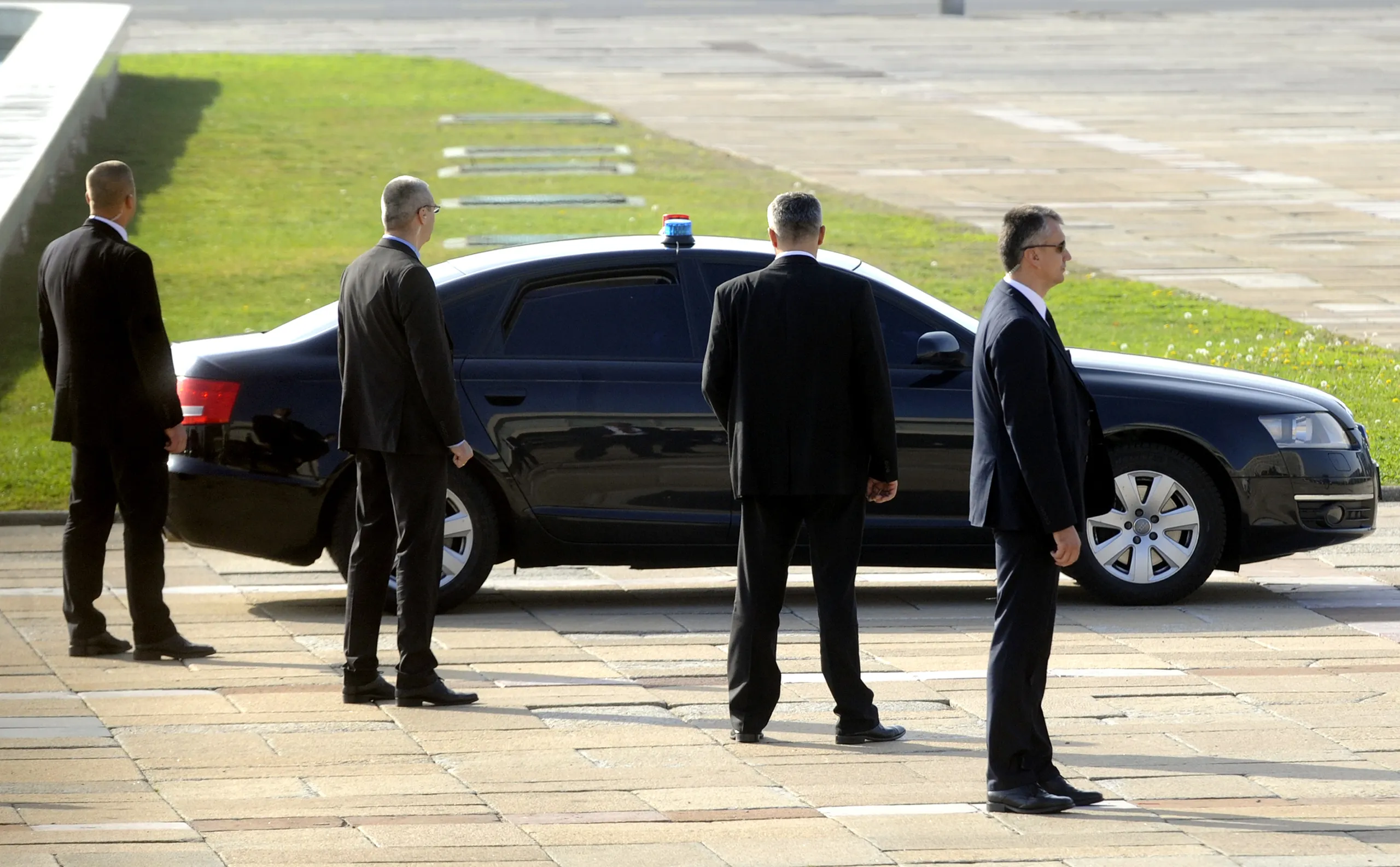
Hiring a bodyguard in Tallinn is typically about cyber and hybrid-threat awareness rather than violent street crime, which is low. This page covers how close protection hire works in Estonia, what a Police and Border Guard Board licensed operative does across a day of movements, and how quickly cover is arranged. Armed private security is uncommon in close protection, so hire pairs a licensed officer with secure transport, scaled to the itinerary rather than a fixed contract.
Arrivals at Tallinn Airport (TLL) benefit from the shortest capital airport transfer in the Baltics, minimising principal exposure during the arrival phase. Onward movement throughout Tallinn is managed most effectively with vetted security drivers in Tallinn familiar with Old Town vehicle access restrictions, the Ulemiste City campus layout, and the port arrival protocols for principals arriving by ferry from Helsinki. For principals covering the broader Baltic region, continuity of coverage is available across Latvia; our Bodyguard Hire Riga page sets out the operational parameters for that deployment.
Hiring for a wider corporate programme rather than a single trip? See executive protection in Tallinn. To check the credentials and vetting behind the officers, see close protection officers in Tallinn.
What does this cover in Tallinn?
Threat Assessment: Tallinn
Tallinn presents a low ambient threat environment for foreign principals. The FCDO advises normal precautions for Estonia (2026), and the US State Department assigns Level 1 (Exercise Normal Precautions) status as of 2026. Violent crime targeting foreign nationals is rare, and the city maintains an EU-standard law enforcement environment. Estonia's status as NATO's digital frontier adds a layer of strategic context that shapes the threat assessment for certain principal profiles. The NATO Cooperative Cyber Defence Centre of Excellence (CCDCOE) is headquartered in Tallinn, making the city a focal point for cybersecurity policy, defence sector events, and diplomatic engagement. Approximately 25% of Estonia's population is Russian-speaking, a demographic concentrated in Tallinn's Lasnamae district and the northeastern city of Narva, which borders Russia directly. Since 2022, Estonia has been one of the most vocal NATO members on eastern flank security, and the operational security posture across government, corporate, and technology sectors has been elevated accordingly. For technology sector executives, digital government visitors, cybersecurity professionals, and principals connected to NATO or EU institutions, anti-surveillance protocols are an appropriate and proportionate component of any Tallinn close protection deployment. The Old Town tourist district, the Ulemiste City technology campus, and the Rotermann Quarter business cluster are the primary operating environments for corporate protection work.
Estonia Close Protection Licensing and Vetting
Close protection officers operating in Estonia work for a company that holds an activity licence for personal protection from the Police and Border Guard Board (Politsei- ja Piirivalveamet, PPA). CloseProtectionHire.com operators undergo multi-point vetting including criminal record disclosure, identity verification, employment history checks, and professional qualification verification. All officers carry current SIA-equivalent or nationally recognised close protection qualifications and appropriate professional indemnity insurance.
Airport and Arrival Security
Tallinn Airport (IATA: TLL) is located approximately 4 kilometres southeast of the city centre in the Ulemiste district, making it the closest capital airport to a European city centre in the Baltic region. The proximity significantly simplifies arrival protocols and reduces principal exposure during the airport transfer. The airport handles approximately 3-4 million passengers annually. Commercial arrivals are processed through a single modern terminal. For principals requiring an enhanced arrival profile, a meet-and-greet inside the arrivals hall is the standard option. Private and business aviation at TLL is handled through a dedicated general aviation terminal with a separate landside vehicle approach. The primary transfer route from TLL to the Old Town and Rotermann Quarter follows Tartu maantee and Narva maantee, a journey of approximately 10-15 minutes. The Ulemiste City technology campus is immediately adjacent to the airport, reducing transfer risk for principals with meetings at tech companies headquartered there. Arrival timing should account for peak-hour congestion on Laagna tee and the Peterburi tee junction during the 07:30-09:00 and 16:30-18:30 windows. For principals arriving by ferry from Helsinki via Tallink, Eckeroline, or Viking Line at the Tallinn Passenger Port (D and A terminals), a harbour-side reception protocol can be arranged.
Movement and Route Security
Movement security in Tallinn operates across three primary zones: the medieval Old Town (Vanalinn), a UNESCO-listed walled city with significant pedestrianisation and vehicle restrictions; the Rotermann Quarter and Telliskivi Creative City, the modern business and tech district adjacent to the Old Town; and the Ulemiste City campus, the technology park immediately south of the airport. Vehicle access to the Old Town is restricted for non-residents; pedestrian cover is required for principal movements through Toompea (the upper town, where the Riigikogu parliament building and most diplomatic missions are located) and the lower Old Town. Anti-surveillance drills are a routine component of Tallinn deployments given Estonia's profile as the NATO CCDCOE host and the broader post-2022 security environment. Route surveys document police station locations, emergency medical facilities, and vehicle access constraints for each planned venue. The Ulemiste City campus offers more straightforward vehicle security, with controlled access roads and modern infrastructure. The port area (A, B, and D terminals) requires advance coordination for arrivals and departures by sea. Vetted security drivers with knowledge of Tallinn's road network, Old Town vehicle restrictions, and the TLL-Ulemiste corridor are a mandatory component of any deployment.
Residential and Hotel Security
Principal accommodation options in Tallinn include the Hotel Telegraaf (Old Town), the Swissotel Tallinn (city centre), the Hilton Tallinn Park (Ulemiste), and the Tallink Spa and Conference Hotel (city centre). The Hilton Tallinn Park is the most practical choice for principals with meetings in Ulemiste City or arriving at TLL, with direct access to the airport approach road and modern vehicle security infrastructure. The Swissotel Tallinn and the Hotel Telegraaf offer prestigious addresses in the central business and historic districts respectively, though vehicle access to the Telegraaf requires Old Town pedestrian protocols. For principals staying in private residences, particularly in the Kadriorg, Pirita, or Nommme suburbs, a residential security survey should cover access control, staff vetting, entrance monitoring, and evacuation route identification. Kadriorg, a presidential and diplomatic quarter adjacent to the presidential palace, has a higher inherent security infrastructure than most residential areas. The proximity of Helsinki (approximately 80 kilometres across the Gulf of Finland, reachable in 2.5 hours by ferry or approximately 30 minutes by air) makes it a practical medevac and emergency egress destination in time-critical scenarios.
Emergency Response and Medical Cover
The two primary acute care facilities in Tallinn are East Tallinn Central Hospital (Ida-Tallinna Keskhaigla, ITK, +372 666 6900), which provides 24-hour emergency care, and North Estonia Medical Centre (Pohja-Eesti Regionaalhaigla, PERH), the city's main trauma centre. Private clinics in Tallinn provide English-language GP and specialist consultation for non-emergency presentations. Medical evacuation for specialist care not available in Estonia is typically routed to Helsinki, 80 kilometres away and approximately 30 minutes by air or 2.5 hours by ferry, which is the closest major medical centre. Emergency contact numbers: European emergency number 112 covers Police, Ambulance, and Fire. CPO teams maintain a pre-briefed medical protocol for each principal and are briefed on the nearest facility for each venue on the deployment itinerary.
Sources for this page
Licensing, firearms and foreign-operator rules for Tallinn, checked : Police and Border Guard Board (PPA), Permits for economic activity: security services. The full rules are on our Tallinn security overview.
Travel advice quoted on this page: FCDO travel advice: Estonia; US State Department travel advisory: Estonia. Advice changes; read the current version before travel.
Frequently Asked Questions
What bodyguard hire options are available in Tallinn?
What is the close protection team configuration for Tallinn?
How do CPO licensing requirements work in Estonia?
What emergency procedures apply to bodyguard deployments in Tallinn?
This page is published by CloseProtectionHire.com and written to editorial standards overseen by James Calloway, Senior Security Consultant (regulation, licensing, vetting and risk frameworks) and Marcus Webb, Security Operations Adviser (operational close protection, secure transport and city-specific safety).
Threat, regulatory and emergency information is sourced to named, dated authorities such as the FCDO, the US State Department and national licensing bodies. Last updated . See how we verify.