
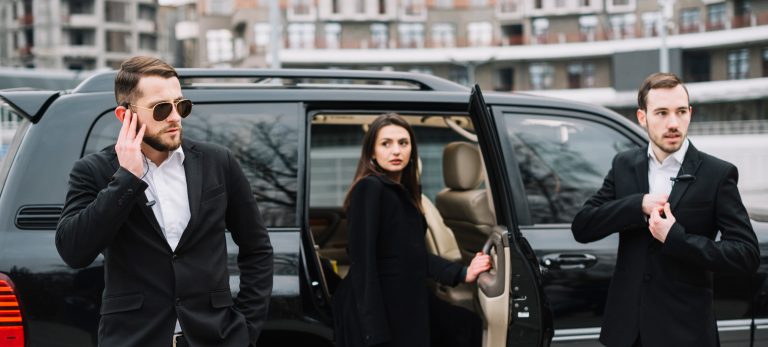
Arrange a licensed close protection officer in Guatemala City before your travel dates are confirmed.
Hiring a bodyguard in Guatemala City is usually tied to a specific visit, where kidnapping, gang violence, and cartel activity shape the plan, with corruption affecting police reliability. This page covers how close protection hire works in Guatemala, what a DIGESSP-authorised operator does across a day of movements, and how quickly cover is arranged. Weapons must be authorised by DIGECAM, so hire pairs an authorised officer with secure transport, scaled to the itinerary.
DIGESSP licensing and Guatemala compliance
Providers must hold a DIGESSP licence and each officer a DIGESSP credential under Decreto 52-2010. Both compliant and non-compliant operators exist in Guatemala’s large private security market; credential verification is essential. Firearms carried by escorts must be authorised by DIGECAM. We work through DIGESSP-licensed Guatemalan partners.
What licensed CP covers in Guatemala City
A vetted Guatemala City CPO team covers: advance assessment of La Aurora transfer routes and all confirmed venues, two-CPO formation with armoured vehicle recommendation, kidnap-avoidance counter-surveillance, zona-system route planning, K&R insurance coordination, emergency response with private medical facility contacts, and operations controller oversight throughout.
For a full security picture see our Guatemala City city briefing and executive protection in Guatemala City.
Hiring for a wider corporate programme rather than a single trip? See executive protection in Guatemala City. To check the credentials and vetting behind the officers, see close protection officers in Guatemala City.
What does this cover in Guatemala City?
Threat Assessment: Guatemala City
Guatemala City presents a well-documented close protection challenge for visiting executives. FCDO Guatemala travel advice (2024) advises a high degree of caution with specific zona warnings, and the US State Department classifies Guatemala as Level 3: Reconsider Travel (2026). Gang activity operates across multiple city zonas including Zonas 5, 6, 18, and 21, which carry the highest street violence risk and are avoided entirely for principal movement. Cartel influence from Mexican drug trafficking organisations is documented by the US DEA and UNODC; narco-related violence affects parts of the city beyond the traditional gang-controlled areas. Kidnap for ransom is a current and documented threat in Guatemala City for business executives, particularly in the agriculture (coffee, banana, sugar), mining, energy, and finance sectors. The Guatemala City business community routinely engages armed CP; a visiting executive without protection is conspicuously unprotected by local standards.
Guatemala CPO Licensing and Vetting
Close protection operations in Guatemala are regulated by DIGESSP (Direccion General de Servicios de Seguridad Privada) under the Ministry of Interior (Ministerio de Gobernacion). CPO companies must hold valid DIGESSP company licences and individual officers must carry current DIGESSP individual credentials. Guatemala has a large and active private security sector; both DIGESSP-compliant and non-compliant operators exist in the market, making credential verification essential before engagement. Under Article 48 of Decreto 52-2010, private escorts may carry only firearms authorised by DIGECAM. We work through DIGESSP-licensed Guatemalan partner companies.
Route Security and Movement Planning
Guatemala City CP route planning is organised around the zona system. The principal operating zones for business principals are Zona 10 (Zona Viva, the primary commercial, hotel, and restaurant district), Zona 14 (upscale residential and commercial), and selected Zona 15 and 16 residential areas. Zona 1 (historic centre, downtown) carries elevated street crime and is avoided unless operationally necessary with specific CP planning. Zonas 5, 6, 18, and 21 are absolute exclusion zones for all principal movement. La Aurora airport exit roads pass through or adjacent to elevated-risk areas; transfer routing from the airport to Zona 10 is pre-planned and approved by the operations controller before each arrival. Night movement outside the Zona 10 and Zona 14 corridors is avoided.
Residential and Hotel Security
International hotels in Guatemala City are concentrated in Zona 10, including internationally recognised properties in the Zona Viva. CPO teams assess hotel access control, lobby security, parking options, and room selection. Hotels outside the Zona 10 and Zona 14 zone are not recommended for executive principals. Armoured vehicles are routinely used for hotel pickup and drop-off across Guatemala City's business community. For extended or HNWI engagements in residential Zona 14 or Zona 15 properties, residential security assessment covers perimeter security, access control, guard deployment, and alarm systems.
Emergency Response and Medical Cover
Private medical facilities in Guatemala City include Hospital Herrera Llerandi and Centro Medico for acute private care. Public hospitals carry high occupancy and limited specialist capacity; private options are strongly preferred for executive principals. CPO teams carry first aid provisions and the operations controller holds current medical facility contacts. For complex trauma, medical evacuation to the United States is the appropriate plan; this is confirmed before deployment. Kidnap response protocol, including the K&R insurance contact chain, is included in the crisis plan for all Guatemala City engagements given the documented kidnap threat. Emergency contacts include Guatemala emergency services (110) and the principal's national embassy.
Close Protection Team Configuration
The recommended starting configuration for most executive visits to Guatemala City is a two-CPO team with dedicated security driver and operations controller oversight. The kidnap risk and the gang-active environment make a two-person team the appropriate baseline. Armoured vehicles are recommended and widely used in Guatemala City's business community. For higher-profile principals in targeted sectors, an armed two to three-CPO team with armoured vehicle is recommended. K&R insurance coordination is included in the pre-deployment planning for all Guatemala City engagements. The operations controller maintains current zona intelligence throughout all movements.
Sources for this page
Licensing, firearms and foreign-operator rules for Guatemala City, checked : Decreto 52-2010, Ley que Regula los Servicios de Seguridad Privada, Ministerio de Gobernación. The full rules are on our Guatemala City security overview.
Travel advice quoted on this page: FCDO travel advice: Guatemala; US State Department travel advisory: Guatemala. Advice changes; read the current version before travel.
Frequently Asked Questions
Is armed protection available in Guatemala City?
What threat level applies to Guatemala City?
Which districts are safest for international visitors in Guatemala City?
How do I arrange a bodyguard in Guatemala City?
This page is published by CloseProtectionHire.com and written to editorial standards overseen by James Calloway, Senior Security Consultant (regulation, licensing, vetting and risk frameworks) and Marcus Webb, Security Operations Adviser (operational close protection, secure transport and city-specific safety).
Threat, regulatory and emergency information is sourced to named, dated authorities such as the FCDO, the US State Department and national licensing bodies. Last updated . See how we verify.