
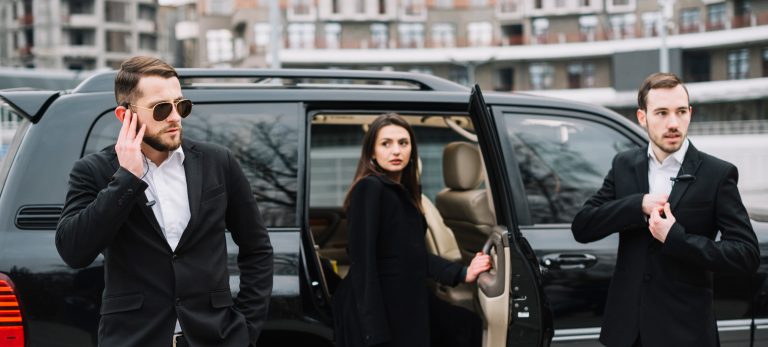
Request a close protection consultation for Brisbane.
Hiring a bodyguard in Brisbane is typically about opportunistic property crime and alcohol-related disorder in entertainment precincts rather than violent crime. This page covers how close protection hire works in Queensland, what a licensed bodyguard does across a day of movements, and how quickly cover is arranged. A Queensland bodyguard licence does not authorise carrying firearms, so hire pairs a licensed officer with secure transport, scaled to the itinerary rather than a fixed contract.
Detailed city context, including threat analysis and zone-by-zone risk notes, is available on the Brisbane city page. For transport security, see our vetted security drivers in Brisbane. For regional coverage, see our bodyguard hire in Sydney.
Hiring for a wider corporate programme rather than a single trip? See executive protection in Brisbane. To check the credentials and vetting behind the officers, see close protection officers in Brisbane.
What does this cover in Brisbane?
Threat Assessment: Brisbane
Risk: low. QPS Crime Statistics 2024 records low violent crime in the CBD and South Bank; opportunistic property crime and alcohol-related disorder occur in Fortitude Valley after dark. A pre-deployment threat assessment is standard before any Brisbane engagement.
Licensing and Operator Vetting in Australia
Queensland regulates private security under the Security Providers Act 1993 (Office of Fair Trading, Queensland). Operators are vetted through appropriate background checks, hold current licensing, and carry indemnity insurance. Clients should verify operator licence status before engagement.
Airport Arrival Security: 15km (Brisbane Airport, BNE)
BNE airport is 15km (Brisbane Airport, BNE); allow 25-40 min under normal conditions; up to 55 min during peak hours. The CPO is pre-positioned for terminal arrival, the vehicle is checked before collection, the route is pre-surveyed, and no informal or unvetted transport is used.
Movement and Route Security in Brisbane
Route planning covers the CBD, South Bank, and New Farm and applies counter-surveillance and route variation across Pacific Motorway (M3), Airport Link Tunnel, and Story Bridge approach routes. Predictable stopping points are avoided or managed; continuous team communications are maintained throughout all principal movements.
Residential and Hotel Security in Brisbane
Preferred accommodation zones include New Farm and Ascot. A hotel security survey covers room location, access control, and evacuation routes on arrival, with proximity to Royal Brisbane and Women's Hospital factored into accommodation selection where relevant.
Emergency Response and Medical Cover: Brisbane
Primary facility: Royal Brisbane and Women's Hospital (07-3646-8111). Secondary: Princess Alexandra Hospital (07-3176-2111). Emergency number: 000. CPOs hold current first-aid certification. Medical routing to the nearest appropriate facility is pre-planned as part of the operation order before deployment.
Sources for this page
Licensing, firearms and foreign-operator rules for Brisbane, checked : Queensland Government, Office of Fair Trading: apply for a bodyguard licence; Queensland Government, transfer to a Queensland security licence; Queensland Government, apply for a security firm licence; Queensland Government, check a security licence; business.gov.au (ABLIS), Queensland security provider licence (class 1); Weapons Act 1990 (Qld), section 11 (legislation.qld.gov.au). The full rules are on our Brisbane security overview.
Frequently Asked Questions
What bodyguard hire options are available in Brisbane?
What close protection licensing applies in Australia?
How are airport arrivals managed for bodyguard operations in Brisbane?
What emergency procedures apply to bodyguard deployments in Brisbane?
This page is published by CloseProtectionHire.com and written to editorial standards overseen by James Calloway, Senior Security Consultant (regulation, licensing, vetting and risk frameworks) and Marcus Webb, Security Operations Adviser (operational close protection, secure transport and city-specific safety).
Threat, regulatory and emergency information is sourced to named, dated authorities such as the FCDO, the US State Department and national licensing bodies. Last updated . See how we verify.