
Travelling somewhere high-risk? Speak with a security consultant.
Nairobi’s reputation among corporate travellers tends to centre on one word: terrorism. That is real, and the FCDO’s high-threat assessment following the 2013 Westgate Mall attack and the 2019 DusitD2 hotel complex attack is not overstated. But for the person actually deciding between a taxi app and a vetted security driver, the more immediate question is narrower and more mundane: what happens at the next set of traffic lights?
The carjacking pattern that matters more than headlines suggest
Carjacking and armed robbery in Nairobi cluster at traffic signals and roundabouts, and both increase substantially after dark. This is where a professional security driver earns their fee in the most literal sense: trained defensive positioning at junctions, awareness of which intersections carry the worst reputation, and a habit of maintaining an escape route rather than boxing the vehicle in. A standard taxi or ride-hailing driver, however competent behind the wheel, is not trained for any of this, and does not need to be for the vast majority of their trips.
Where the terrorism threat actually intersects with ground transport
Al-Shabaab’s demonstrated capability, most visibly at Westgate and DusitD2, targets venues rather than roads: international hotels, shopping centres, and places frequented by Western visitors. A security driver’s relevance here is less about the drive and more about the approach: varying arrival patterns at predictable venues, being alert to surveillance indicators near hotel entrances, and having a plan if a venue’s situation changes mid-visit. It is venue discipline wearing a driving job’s clothes.
What changes after dark, specifically
Nairobi’s central business district shifts meaningfully once the sun goes down, with a documented jump in street crime and carjacking exposure. The standard professional guidance, echoed across current risk reporting on the city, is not to walk between venues after dark in any district, and to treat vetted transport as the default rather than the exception for any evening movement.
The practical comparison
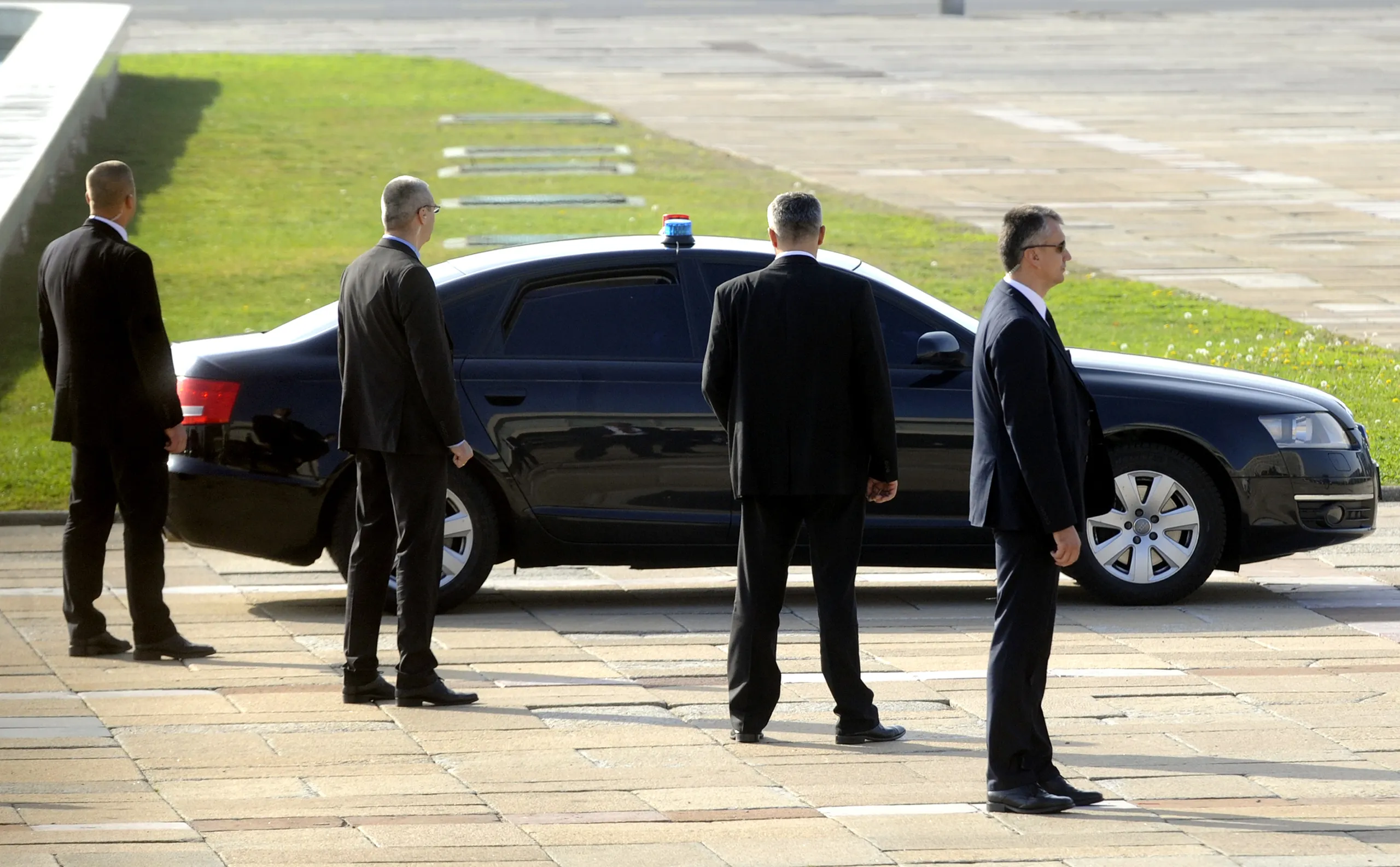
A ride-hailing app gets you from A to B. A vetted security driver in Nairobi adds route intelligence tuned to current protest activity and road closures, a discreet vehicle that does not read as a target, real-time contact with an operations controller, and defensive habits built specifically around this city’s known risk patterns rather than generic road safety. For a daytime Westlands-to-Gigiri run, the gap between the two options is modest. For anything after dark, during an election cycle, or involving a higher-profile principal, it is not.
For the wider Nairobi risk picture, see our Nairobi city briefing, and for how ground transport fits into a full protective package, our executive protection service overview sets out the options beyond a driver alone.