
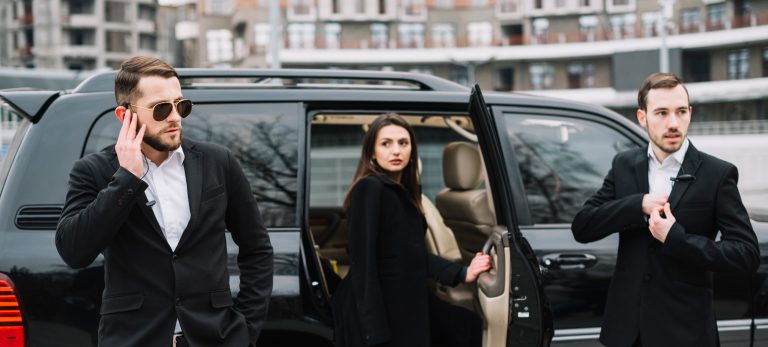
Visiting Vienna for a diplomatic or corporate engagement? Request a GewO-registered, vetted security driver for your programme.
Vienna’s security driver market is shaped by two converging factors that make it unique among European capitals: the concentration of major international organisations that creates a diplomatic principal client base unlike any other city, and a DSN Hoch terrorism threat assessment that post-dates the November 2020 attack. Security drivers in Vienna must work for companies licensed for the security trade under the Gewerbeordnung and operate for companies holding the appropriate GelverkG hire permit, with additional professional driver training from accredited Austrian providers. For diplomatic delegations visiting the Vienna International Centre and HNWI principals attending the cultural season, the combination of access protocol knowledge, intelligence-sensitive environmental awareness, and counter-surveillance capability distinguishes security drivers from Vienna’s premium commercial chauffeur market.
Austrian GewO and GelverkG compliance
Under the Gewerbeordnung 1994, security companies in Austria require a security trade licence; the hire-with-driver function requires a separate GelverkG permit. Individual drivers should hold professional driver training certification from WIFI Austria or equivalent. All three credentials should be confirmed before deployment.
Vienna’s diplomatic and HNWI vehicle security environment
The UN VIC campus, IAEA and OSCE approaches, Ringstrasse hotel belt, and Innere Stadt cultural venue departures are the four primary security driver planning environments in Vienna. Each has specific access requirements, route constraints, and operational awareness considerations that differ materially from standard commercial chauffeur work.
For complementary services in Vienna, see our Vienna city page and bodyguard hire in Vienna.
What does this cover in Vienna?
Austrian KFG and GewO Security Trade Framework
Commercial hire vehicle drivers in Austria operate under the Kraftfahrgesetz (KFG) and the Gelegenheitsverkehrsgesetz (GelverkG), which governs hire-with-driver vehicle operations and requires the appropriate commercial driving licence and business permit. The security function for a combined driver-security role falls within the regulated security trade under the Gewerbeordnung (GewO) 1994, which requires the employing company to hold a Gewerbeberechtigung (trade licence), and the security authorities check the reliability of each employee under section 130. Drivers combining security and transport roles should hold professional driver training certification from an accredited Austrian provider such as WIFI Austria, alongside the company's security trade licence.
Diplomatic and HNWI Chauffeur Context in Vienna
Vienna's unique position as host city for the United Nations (Vienna International Centre, VIC), the International Atomic Energy Agency (IAEA), the Organisation of Petroleum Exporting Countries (OPEC), and the Organisation for Security and Cooperation in Europe (OSCE) creates a security driver market unlike any other European capital. The concentration of diplomatic principals, international civil servants, and high-level government delegations visiting Vienna means security drivers must be familiar with the access protocols, security perimeters, and specific approach routes for each major international organisation campus. HNWI principals staying in the historic Innere Stadt hotels and attending cultural events at the Staatsoper or Musikverein represent a separate but equally specific client profile.
Vienna Road Network and Access Restrictions
Vienna's road structure is organised around the Ringstrasse inner ring, the Gurtel middle ring, and the A23 Sudosttangente connecting to Vienna International Airport at Schwechat. The Innere Stadt (1st district) has significant pedestrian-priority and access-restriction zones; vehicle approaches to Ringstrasse hotels and the historic centre require pre-planned permitted routes. The UN Vienna International Centre (VIC) on Wagramer Strasse in the 22nd district requires specific access credential verification for vehicle entry. Diplomatic residential concentrations in the 1st, 3rd, and 4th districts have specific approach constraints. Security drivers must maintain current knowledge of Vienna's Umweltzone (low emissions zone) requirements, which affect vehicle selection.
Counter-Surveillance in Vienna
Austria's Direktion Staatsschutz und Nachrichtendienst (DSN) maintains a Hoch (high) terrorism threat assessment for Vienna, informed in part by the November 2020 Vienna attack and the city's concentration of international organisation targets. For corporate and diplomatic principals in Vienna, the specific counter-surveillance context combines the terrorism awareness with the intelligence service activity that Vienna's status as a neutral diplomatic hub historically attracts. Security drivers operating with diplomatic principals at the UN VIC, IAEA, and OSCE campuses maintain operational awareness of surveillance activity typical in intelligence-sensitive environments; HNWI principals at the Ringstrasse luxury hotels require counter-surveillance awareness focused on criminal targeting in the art and jewellery sectors.
Vehicle Selection for Vienna Operations
Security driver engagements in Vienna use executive saloons appropriate to the Austrian and European market. Mercedes E-Class and S-Class, BMW 5 and 7 Series, and Audi A6 and A8 are the standard platforms. Vehicles must comply with Vienna's Umweltzone emissions requirements; older diesel vehicles may be restricted in the city centre. Low-profile selection is appropriate for diplomatic and intelligence-sensitive operational environments; conspicuous luxury specification is less suitable for principals with visibility in the international organisation context. Armoured vehicles are available through Vienna specialist operators for principals requiring enhanced protection following a threat assessment.
Vienna International Airport Transfer Coverage
Vienna International Airport (VIE) at Schwechat, approximately 18 km from the Innere Stadt, is the primary arrival and departure point for corporate and diplomatic principals. The A23 Sudosttangente and A4 motorway provide the standard transfer route; journey time is typically 25 to 40 minutes depending on traffic. The VIP arrival service at Vienna Airport offers private landside collection with separate processing from the main terminal flow. Security driver meet-and-greet at VIE is conducted at the designated arrivals collection area; for principals using private or government aviation, the general aviation terminal at Vienna-Schwechat provides a dedicated landside collection environment.
Sources for this page
Licensing, firearms and foreign-operator rules for Vienna, checked : Gewerbeordnung 1994, section 129 (RIS, Federal Chancellery); Verwaltungsgerichtshof, Ra 2024/03/0052, 7 May 2025 (text, gesetzefinden.at); Unternehmensserviceportal, Dienstleistungsanzeige (updated 20 March 2026); WKO Kärnten, Allgemeine Informationen zum Sicherheitsgewerbe in Österreich. The full rules are on our Vienna security overview.
Frequently Asked Questions
What licences must a security driver hold to operate in Vienna?
What does a security driver cost per day in Vienna, as at 2026?
What makes Vienna's security driver environment different from other European capitals?
What is the risk context created by the November 2020 Vienna attack for security drivers?
This page is published by CloseProtectionHire.com and written to editorial standards overseen by James Calloway, Senior Security Consultant (regulation, licensing, vetting and risk frameworks) and Marcus Webb, Security Operations Adviser (operational close protection, secure transport and city-specific safety).
Threat, regulatory and emergency information is sourced to named, dated authorities such as the FCDO, the US State Department and national licensing bodies. Last updated . See how we verify.