
Reserve island transport for your Palma stay
Palma works two very different arrival gates at once. Palma de Mallorca Airport handles the bulk of general visitor traffic, while the cruise terminal brings its own surge of disembarking passengers during the Mediterranean season, and a security driver here needs a plan for both rather than treating one as an afterthought. Add the superyacht arrivals at Real Club Nautico de Palma and STP Shipyard Palma, and the range of collection scenarios on a single island is wider than it first appears.
Licensing sits under the Ley de Seguridad Privada 5/2014: company registration in the Registro Nacional de Seguridad Privada, a TIP credential for the individual driver, unarmed deployment as standard given how tightly Spain restricts firearms in this sector. The practical risk picture, per FCDO Spain’s 2024 advice, centres on organised distraction-theft teams working the airport, car rental desks, the cruise terminal, and the cathedral-Born core, not violent crime. Son Vida and Portixol remain the calmer options for accommodation-based collections, while Playa de Palma and the cathedral area on cruise-arrival days call for tighter timing. Recurring “Menys Turisme, Mes Vida” demonstrations, running since 2024, add periodic road closures worth checking before setting off.
Magaluf and Puerto Portals, though often assumed to be part of Palma, actually sit in the neighbouring Calvia municipality about 15 kilometres away, and Palma-based drivers cover both as an extension of standard service. See our Palma de Mallorca city page for the fuller picture, and compare security drivers in Tenerife or security drivers in Barcelona for other Spanish coastal and island markets.
What does this cover in Palma de Mallorca?
Licensing Under Spanish Law
Security drivers in Palma de Mallorca operate under the Ley de Seguridad Privada 5/2014. Firms must be registered in the Registro Nacional de Seguridad Privada, and drivers combining a security and driving role hold a TIP (Tarjeta de Identidad Profesional) credential issued by the Dirección General de la Policía. Firearms are tightly restricted and standard island deployments are unarmed. This licensing baseline applies equally to airport, cruise terminal, and marina work.
Route Planning Across the Island
Palma sits at the centre of an island road network that includes winding interior and mountain routes very different from mainland motorway driving, so drivers plan timing generously for anything beyond the immediate coastal strip. Quayside transfers to Real Club Nautico de Palma and STP Shipyard Palma serve the superyacht arrivals that are a fixture of the Mallorca season, and Son Vida, the hillside estate district above the city, requires its own access familiarity for residential collections.
Fleet Standards for Island and Marina Work
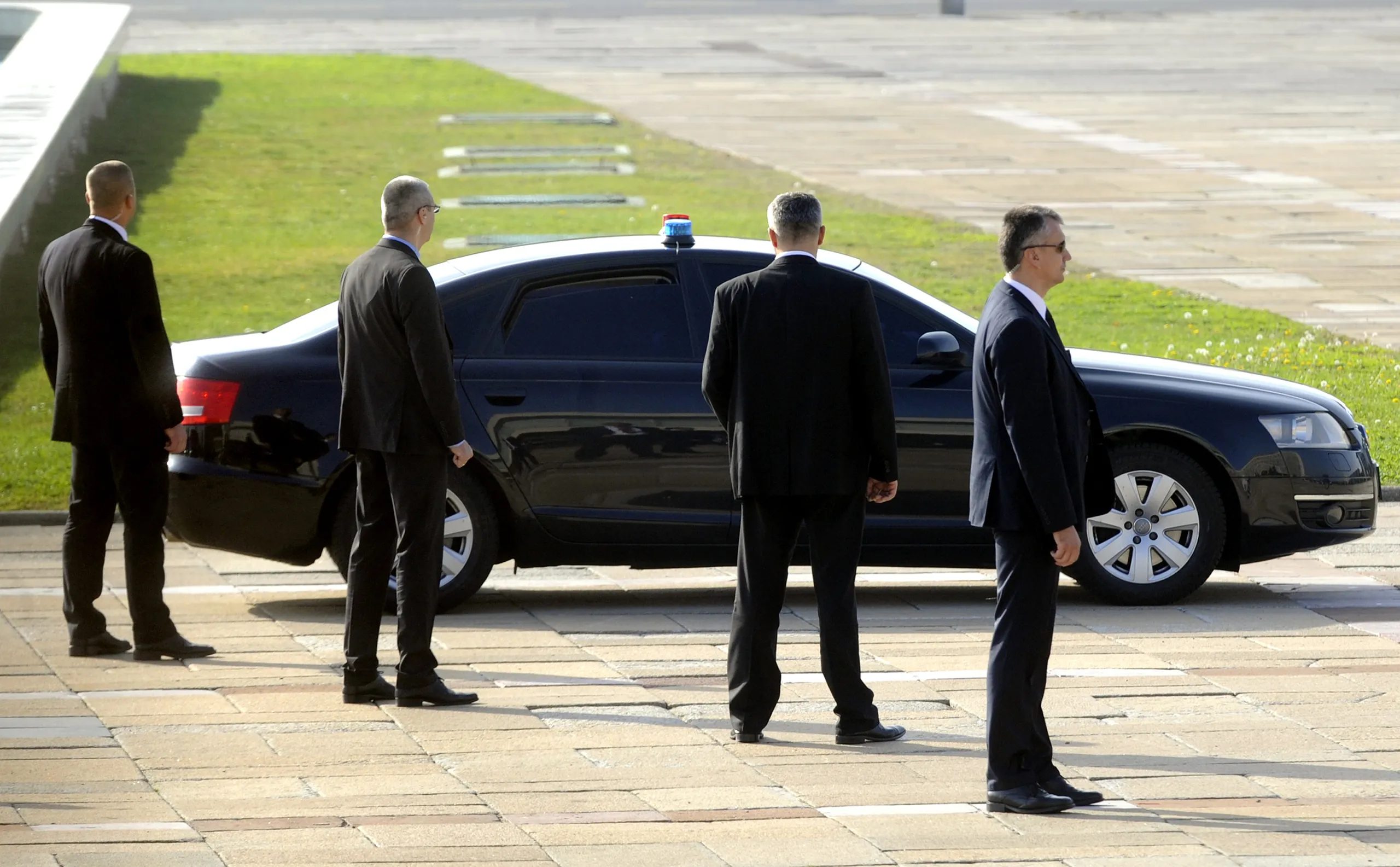
Executive saloons and SUVs are standard for Palma assignments, with SUVs favoured for the interior and mountain roads that many hillside residences and rural estates require. Audi A6 and Range Rover platforms are common choices. Vehicles serving marina and shipyard transfers are kept ready for the quayside access procedures at STP Shipyard Palma and the Real Club Nautico, both of which apply visitor controls around superyacht berths.
Driver Training and Local Knowledge
Palma-based drivers hold their TIP credential and are trained on PMI airport procedures, the cruise terminal's arrival-day traffic patterns, and the winding interior roads that connect the capital to inland towns and hillside estates. FCDO Spain (2024) documents organised distraction-theft teams operating around airports, car rental desks, the cruise terminal, and the cathedral-Born core, and drivers factor this into how and where they meet arriving principals. Awareness of drink-spiking risk at nightlife venues also informs evening collection planning.
Airport and Cruise Terminal Transfers
Palma de Mallorca Airport (PMI) is the island's main air gateway, and drivers meet principals at arrivals for the transfer into the city, Son Vida, or coastal residences. The cruise terminal is a second major arrival point during the Mediterranean cruise season, and drivers plan collection timing around scheduled disembarkation to avoid the peak crowd at the terminal exit. Recurring anti-tourism demonstrations under the banner "Menys Turisme, Mes Vida", ongoing since 2024, have periodically closed roads and are checked before finalising a route on any given day.
Emergency Protocols
Spain's general emergency number is 112, with 091 for Policia Nacional and 062 for the Guardia Civil, and 061 for ambulance services. Hospital Universitari Son Espases is the reference hospital for serious incidents, on +34 871 20 50 00. British nationals contact the Consulate in Palma on +34 933 666 200; US nationals contact the Consular Agency in Palma on +34 971 403 707. Drivers hold these details alongside hospital contacts for the airport, the cruise terminal, and marina areas.
Sources for this page
Licensing, firearms and foreign-operator rules for Palma de Mallorca, checked : BOE, Ley 5/2014, de 4 de abril, de Seguridad Privada (consolidated text); Ley 5/2014, articles 40 and 43, text (Papelea); Ley 5/2014, articles 26 to 28, text (Papelea); Ministerio del Interior, protección de personas; Policía Nacional, autorización de servicios de protección personal; Ministerio del Interior, armas y explosivos, normativa básica reguladora. The full rules are on our Palma de Mallorca security overview.
Travel advice quoted on this page: FCDO travel advice: Spain. Advice changes; read the current version before travel.
Frequently Asked Questions
What licence do security drivers need in Palma de Mallorca?
Is Magaluf covered by Palma-based security drivers?
What theft risks should principals be aware of around Palma?
Can a security driver arrange collection for a superyacht arrival?
Do anti-tourism demonstrations in Palma affect transport planning?
This page is published by CloseProtectionHire.com and written to editorial standards overseen by James Calloway, Senior Security Consultant (regulation, licensing, vetting and risk frameworks) and Marcus Webb, Security Operations Adviser (operational close protection, secure transport and city-specific safety).
Threat, regulatory and emergency information is sourced to named, dated authorities such as the FCDO, the US State Department and national licensing bodies. Last updated . See how we verify.