
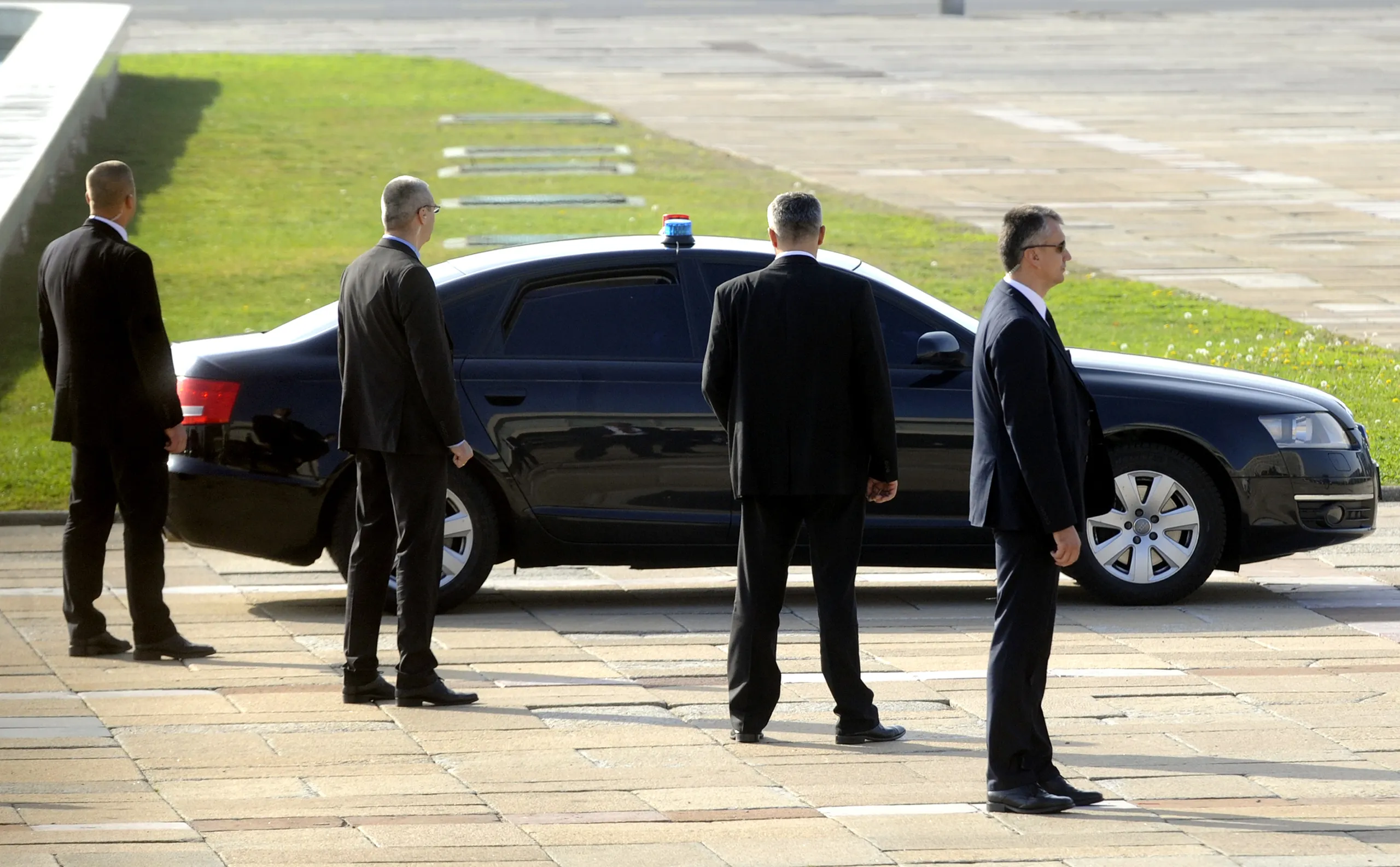
Speak to us about secure transport in Liege
Liege Airport rarely appears on a passenger’s itinerary, yet it is the fifth-largest cargo airport in Europe by volume and runs a full 24-hour operation as an ASL Airlines Belgium hub. That contradiction sums up the city: heavy industrial and logistics weight, but a passenger gateway that most executives bypass in favour of Brussels, 97 kilometres off, or Charleroi, 78 kilometres away, before finishing the journey by road on the E40 or E25.
Licensing follows the national Belgian framework, the Loi du 2 octobre 2017, with firms holding an SPF Interieur authorisation and drivers carrying an SPF Interieur badge; firearms stay tightly controlled and deployments are unarmed. What a Liege-based driver adds beyond the paperwork is regional judgement. This is a strike-prone industrial area, and demonstrations do periodically disrupt motorway approaches, so contingency time gets built into transfers as a matter of course rather than an afterthought. Sainte Marguerite and the area around Liege-Guillemins station and the Carre nightlife strip warrant more caution than Cointe or Angleur, and OCAM/CUTA’s national threat level of 3 through 2026 keeps general vigilance a standing feature of any assignment here.
Cross-border runs are routine given Liege’s position near the Dutch, German, and Luxembourg borders. Visit our Liege city page for the fuller risk assessment, and see security drivers in Brussels or security drivers in Luxembourg City for the connecting legs.
What does this cover in Liege?
Licensing Under Belgian Law
Security drivers in Liege operate under the same Loi du 2 octobre 2017 that applies across Belgium, requiring firms to hold an SPF Interieur authorisation and individual drivers to carry an SPF Interieur badge. Firearms are tightly controlled, so standard deployments are unarmed. Given OCAM/CUTA's national threat level of 3 through 2026, drivers maintain routine vigilance without this changing the fundamentals of an unarmed driving role.
Route Planning for an Industrial and Logistics Hub
Liege Airport (LGG) is the fifth-largest cargo airport in Europe by volume and runs a 24-hour operation as an ASL Airlines Belgium hub, but passenger travellers more often fly into Brussels (BRU), around 97 kilometres away, or Charleroi (CRL), roughly 78 kilometres, and complete the journey by road via the E40 or E25. Liege is a strike-prone industrial region, and drivers build contingency time into the schedule for periodic demonstrations that can affect these motorway approaches.
Fleet Standards
Executive saloons and SUVs suited to E40/E25 motorway distances are standard for Liege work, since most principals arrive via road transfer from Brussels, Charleroi, Maastricht, or Luxembourg rather than flying directly into the city. Audi A6 and Mercedes E-Class platforms are common. Vehicles are kept prepared for occasional detours where industrial action affects planned routes, which drivers treat as a standing possibility in this region rather than an exception.
Driver Training and Local Knowledge
Liege drivers hold their SPF Interieur badge and are trained on the E40 and E25 corridors linking Brussels, Maastricht, and Luxembourg, alongside LGG's cargo-zone access procedures for site visits. Local knowledge covers Liege's higher documented crime rate relative to smaller Belgian cities, with Sainte Marguerite flagged for caution after dark and the area around Liege-Guillemins station and the Carre nightlife district requiring a similar level of awareness. Cointe and Angleur are the preferred districts for calmer collections.
Airport and Cross-Border Transfers
LGG's own passenger schedule is limited, so most executive transfers into Liege begin at Brussels Airport or Charleroi Airport, with drivers managing the E40 or E25 leg into the city. For cargo-sector visits directly to LGG, drivers coordinate site access given the airport's round-the-clock freight operation. Liege-Guillemins station, the striking glass-and-steel terminus designed by Santiago Calatrava, is also a common collection point for principals arriving by rail from Brussels or Cologne.
Emergency Protocols
Belgium's general emergency number is 112, with 101 for police and 100 for ambulance and fire directly. CHU de Liege at Sart Tilman, on +32 4 323 00 00, is the reference hospital for serious incidents. British nationals contact the Embassy in Brussels on +32 2 287 62 11; US nationals contact the Embassy in Brussels on +32 2 811 4000. Drivers carry these numbers along with the nearest hospital details for LGG and the city centre.
Sources for this page
Licensing, firearms and foreign-operator rules for Liege, checked : FPS Interior (BeSafe), Autorisations et activités; FPS Interior (BeSafe), Législation sécurité privée; FPS Interior (BeSafe), Agent de gardiennage brochure; Belgian Chamber of Representatives, bill 52K0474 amending the Law of 8 June 2006 on weapons. The full rules are on our Liege security overview.
Frequently Asked Questions
What licence do security drivers need in Liege?
Why do so many visitors fly into Brussels or Charleroi instead of Liege itself?
Are demonstrations a factor in route planning around Liege?
Which areas of Liege carry elevated risk for route planning?
Can a security driver in Liege cover a Luxembourg or Maastricht trip?
This page is published by CloseProtectionHire.com and written to editorial standards overseen by James Calloway, Senior Security Consultant (regulation, licensing, vetting and risk frameworks) and Marcus Webb, Security Operations Adviser (operational close protection, secure transport and city-specific safety).
Threat, regulatory and emergency information is sourced to named, dated authorities such as the FCDO, the US State Department and national licensing bodies. Last updated . See how we verify.