
Travelling to Abuja? Request NSCDC-compliant security driver cover before your Nnamdi Azikiwe arrival.
Abuja security driver operations address a documented risk environment: FCDO Nigeria (2024) and US OSAC Abuja (2024) both record kidnapping threats and vehicle crime targeting corporate principals during ground movements. The Nnamdi Azikiwe Airport approach through Lugbe, the Three Arms Zone checkpoint protocols, and the outer residential districts all require specific operational knowledge that distinguishes a vetted security driver from a standard chauffeur service.
NSCDC licensing and compliance
Operating companies must hold a valid NSCDC licence under the Private Guard Companies Act (Cap P30 LFN 2004). Individual drivers need an approval under the same Act. Verification of both credentials before deployment is essential and protects the engaging organisation.
Anti-kidnapping vehicle operations in Abuja
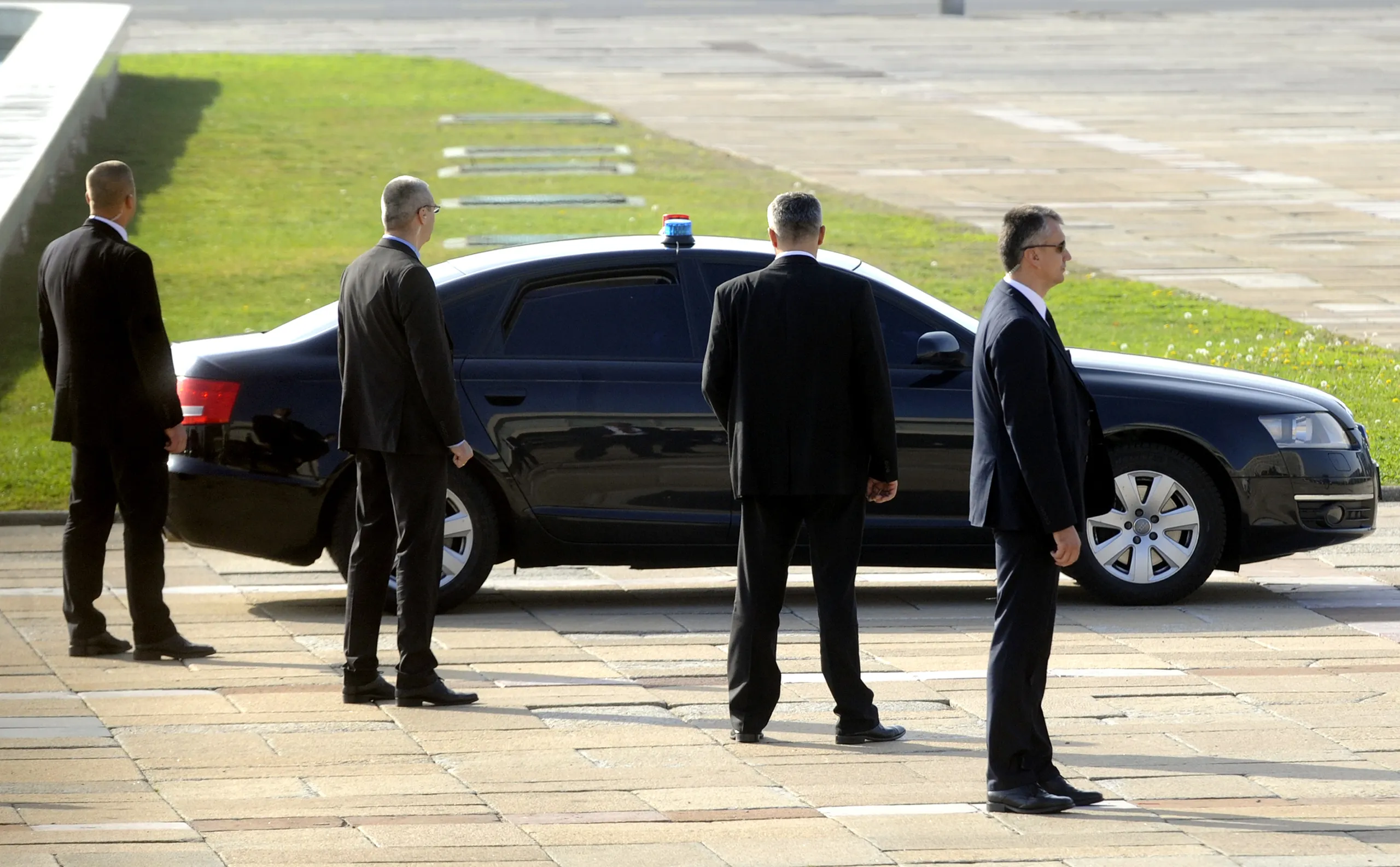
Inside-terminal ABV collection, continuous GPS tracking, route variation on risk corridors, and practised vehicle interception responses are standard for all Abuja engagements. Armoured vehicle options are available following threat assessment.
For the Abuja security overview, see the Abuja city page and bodyguard hire in Abuja.
What does this cover in Abuja?
NSCDC Licensing and Nigerian Regulatory Framework
Private security companies in Nigeria are licensed by the Nigeria Security and Civil Defence Corps (NSCDC) under the Private Guard Companies Act (Cap P30 LFN 2004) and the NSCDC Act 2003. A company licence lasts 2 years. Each driver or guard employed by a licensed company needs an individual approval under the Act. Clients should request sight of the company NSCDC licence and the individual driver's approval and identity card before deployment, as unregistered operators carry significant legal and insurance exposure for the engaging organisation.
Kidnapping and Vehicle Crime Risk in Abuja
FCDO Nigeria travel advice (2024) and the US OSAC Abuja Crime and Safety Report (2024) document kidnapping risk in Abuja and on the Abuja-Kaduna road corridor, including express kidnappings targeting corporate executives during vehicle movements. Vehicle crime, including armed robbery and carjacking, is documented in outer districts of Abuja, particularly during night movement and in areas with lower police visibility. The Abuja city centre and the Three Arms Zone (the presidential, National Assembly, and Supreme Court precinct) have heightened security presence that provides some mitigation, but movements between the airport and outlying business areas, hotels on the outskirts, and residential estates in Phase 1-4 districts require specific route planning awareness.
Nnamdi Azikiwe Airport Transfer Operations
Nnamdi Azikiwe International Airport (ABV) is located approximately 45 kilometres northwest of Abuja city centre, connected via Airport Road passing through the Lugbe district and the Municipal Area Council and AMAC zones. The airport approach through Lugbe has been identified in OSAC reporting as requiring route awareness due to criminal activity on the outer approach roads. Security driver collections at ABV are conducted inside the arrivals hall with pre-confirmed credentials, avoiding extended curbside exposure. For early morning and late night arrivals, route timing is particularly important given reduced police visibility outside peak hours. GPS tracking and operations controller check-in protocols are maintained throughout all ABV transfers.
Three Arms Zone and Diplomatic District Protocols
Abuja's principal government and diplomatic precinct, encompassing the Presidential Villa, the National Assembly Complex, and the Supreme Court, requires specific vehicle access procedures. Security drivers operating in this zone must be familiar with checkpoint protocols, permissible waiting areas, and temporary closure patterns linked to presidential or legislative movements. The diplomatic mission zone along Aguiyi-Ironsi Street in the Maitama district also has specific access and waiting protocols near embassy compounds. For corporate principals meeting government counterparts or attending diplomatic functions in the Three Arms Zone, security drivers brief on access procedures in advance to avoid delays at security checkpoints.
Anti-Kidnapping Vehicle Protocols
Anti-kidnapping vehicle protocols in Abuja are calibrated to the documented kidnapping threat in FCDO Nigeria (2024) and OSAC Abuja (2024) reporting. Protocols include: confirmed inside-terminal collection at ABV rather than curbside waiting, continuous GPS tracking by an operations controller throughout all transfers, route variation on identified risk corridors to avoid predictable movement patterns, avoidance of prolonged stops in uncontrolled environments, and practised responses to vehicle interception scenarios. For principals with a publicly known Abuja schedule, enhanced counter-surveillance measures are incorporated as a standard component. Armoured vehicle options are available through Abuja-based specialist operators following a threat assessment for the specific engagement.
Communications and Operations Controller Support
All Abuja security driver engagements are backed by an operations controller providing continuous GPS tracking and scheduled check-in communications. The operations controller maintains current intelligence on traffic incidents, security incidents, and any civil unrest or protest activity affecting Abuja's main arterials and approach roads. Check-in protocols are agreed before departure with defined intervals and contingency communication procedures for loss of primary contact. Multi-vehicle corporate engagements, such as those accompanying delegation visits or conference movements of multiple principals across Abuja, are coordinated centrally by the operations controller to maintain full situational awareness across the group.
Sources for this page
Licensing, firearms and foreign-operator rules for Abuja, checked : Private Guard Companies Act, Cap P30, Laws of the Federation of Nigeria 2004 (PLAC copy); Nigeria Security and Civil Defence Corps, requirements for registration of a private guard company; Firearms Act, Cap F28, Laws of the Federation of Nigeria 2004 (PLAC copy); 21st Century Chronicle, Police withdrawal from VIPs: can NSCDC, private guards fill the gap? (15 December 2025). The full rules are on our Abuja security overview.
Travel advice quoted on this page: FCDO travel advice: Nigeria. Advice changes; read the current version before travel.
Frequently Asked Questions
What licensing must security drivers hold in Abuja, Nigeria?
What kidnapping risk applies to security driver operations in Abuja?
Why is the ABV airport approach route significant for security drivers?
Which districts do security driver operations focus on in Abuja?
This page is published by CloseProtectionHire.com and written to editorial standards overseen by James Calloway, Senior Security Consultant (regulation, licensing, vetting and risk frameworks) and Marcus Webb, Security Operations Adviser (operational close protection, secure transport and city-specific safety).
Threat, regulatory and emergency information is sourced to named, dated authorities such as the FCDO, the US State Department and national licensing bodies. Last updated . See how we verify.