
Arrange your Maracaibo airport transfer
Maracaibo is Venezuela’s second city and the operational centre of the country’s oil and gas industry, drawing energy sector workers, contractors, and foreign company representatives who often have no alternative but to visit despite the high-risk environment. FCDO Venezuela travel advice (2024) advises against all but essential travel to the country, and the Maracaibo area specifically has a documented history of kidnapping, express kidnapping, and robbery targeting individuals perceived to have commercial wealth or foreign affiliation. An airport transfer in this environment is not a comfort measure: it is an operational requirement that meaningfully affects safety. Full background on the Maracaibo security environment is available on the Maracaibo city page.
La Chinita Airport is a documented exposure point. InSight Crime reporting (2023 and 2024) identifies the airport arrivals area as a location where individuals are observed and criminal approaches occur. Pre-arranged collection by a verified and briefed driver, with identity confirmation by secure channel before travel, is the baseline standard for this environment. No client should accept any approach from an unmarked or unverified vehicle at La Chinita under any circumstances.
Clients who require a fully integrated risk management programme for Maracaibo, covering advance work, compound liaison, daily movement planning, and the airport transfer as one element of a wider plan, should speak to the Maracaibo close protection team at the earliest planning stage. In a high-risk environment, the transfer and the on-the-ground programme cannot be treated as separate engagements.
What does this cover in Maracaibo?
La Chinita Airport Route and Logistics
La Chinita International Airport (IATA: MAR, ICAO: SVMC) is located approximately 25 kilometres southwest of Maracaibo city centre, accessed via Avenida Las Delicias and the Circunvalacion Sur ring road. The airport serves as the primary commercial aviation gateway to the Maracaibo Basin, the centre of Venezuela's oil and gas industry, and the great majority of international business travellers arriving at MAR are oil sector personnel, energy contractors, or representatives of foreign companies with commercial interests in the basin. A single main terminal handles all commercial traffic. Under normal road conditions the journey time from MAR to the city centre is 30 to 50 minutes, but this range is highly variable due to road surface conditions, fuel shortages that can cause localised disruption and detours, and security considerations that may require route adjustment or holding at the vehicle rather than proceeding at a scheduled time. Road infrastructure in Maracaibo has suffered from chronic underinvestment and the physical condition of some routes between the airport and the main compound and hotel areas is poor. All transfer itineraries should treat the 30 to 50 minute range as a planning baseline rather than a reliable estimate and build in additional contingency. Pre-travel route assessment based on current conditions is standard for all MAR transfers.
Vehicle and Driver Standards
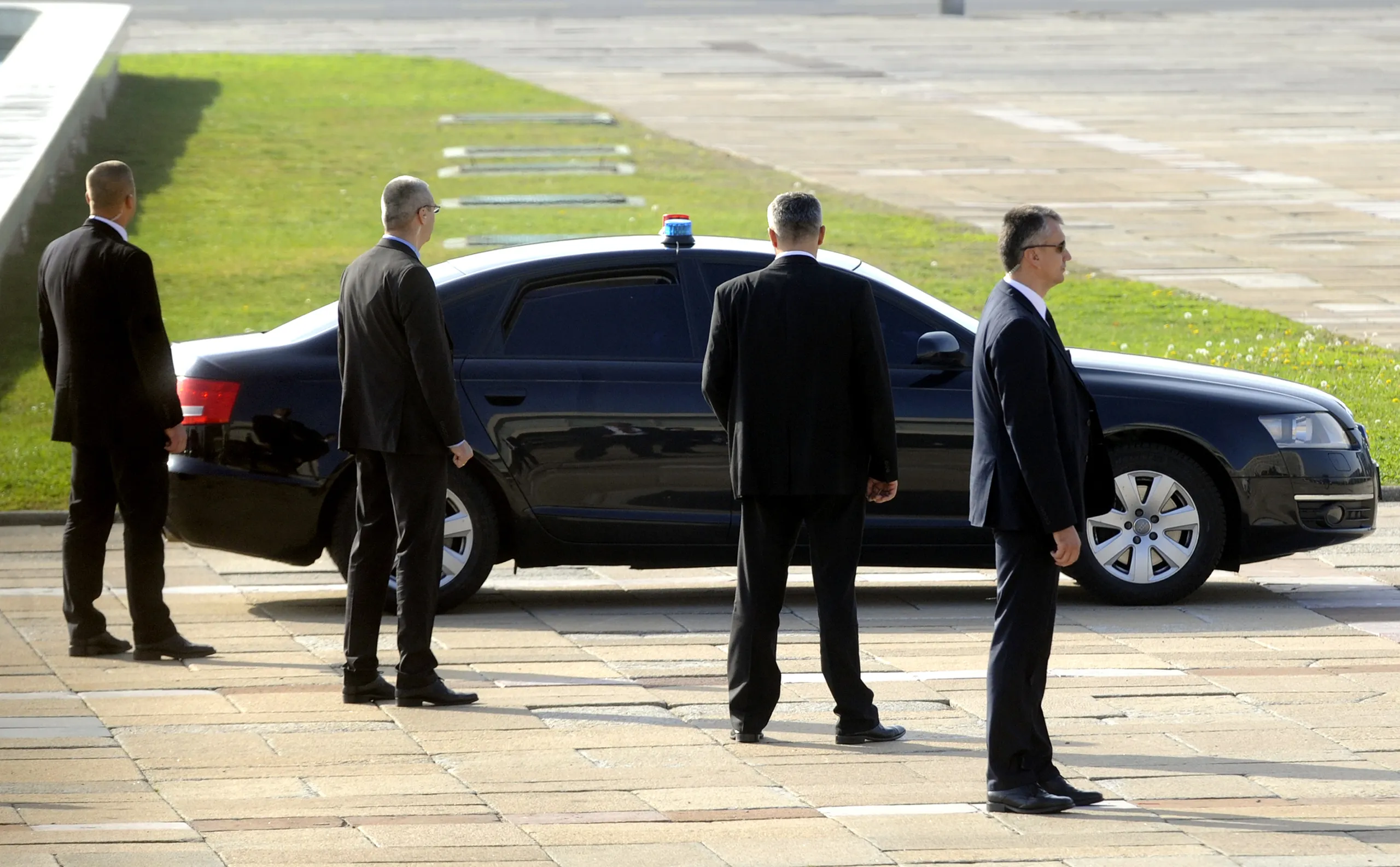
Vehicle and driver selection for Maracaibo transfers is substantially more complex than for low or moderate risk environments. Standard commercial taxi services from La Chinita Airport carry a significant risk profile: unsolicited taxi approaches at the airport are documented as a kidnapping and express kidnapping exposure point by InSight Crime and Venezuelan security analysts. All vehicles used for client transfers must be pre-arranged through verified local operators with documented security vetting, and no client should enter an unverified vehicle at any point during the MAR arrival process. Vehicles should be low-profile in appearance and avoid any markings, insignia, or livery that signals commercial wealth or foreign affiliation. Anti-surveillance glass tinting appropriate to local norms is used. Drivers hold Venezuelan professional transport licences and are locally recruited through trusted networks with personal security references. All driver backgrounds are verified through the operator's local security officer or through a client-nominated in-country contact before the assignment begins. Vehicles are maintained in operational condition with verified fuel supply (a practical constraint given Venezuela's fuel distribution issues) and carry communications equipment for contact with the security operations centre throughout the transfer.
Arrival Hall Protocols and Risk Management
The arrival process at La Chinita Airport in Maracaibo requires a risk management posture considerably more attentive than that applied at standard European or North American airports. FCDO Venezuela travel advice (2024) advises against all but essential travel to parts of Venezuela, and the Maracaibo area specifically carries an elevated risk of kidnapping, express kidnapping, and robbery targeting individuals perceived to have commercial wealth, foreign affiliation, or oil sector employment. The airport arrivals area has been identified as a specific exposure point: individuals exiting the terminal are observed, and unsolicited approaches from unmarked vehicles carry a meaningful risk of being criminal interdiction rather than informal taxi service. All collection arrangements must be pre-arranged, verified, and confirmed by secure channel before travel. The collecting driver and vehicle must be described to the principal in writing before departure, including the driver's full name, a physical description, and the vehicle's make, colour, and registration. The driver must display a clearly printed name board inside the terminal. The principal must not respond to any approach from a person who cannot match this pre-briefed description. If the pre-arranged vehicle is not present, the principal should retreat to a secure holding area inside the terminal and contact the security operations centre by phone before taking any further action.
Route Security Assessment
Routes between La Chinita Airport and Maracaibo city centre, compound accommodation, and the oil sector operational areas require real-time security intelligence assessment before each transfer. InSight Crime reporting (2023 and 2024) documents kidnapping incidents targeting energy sector workers in the Maracaibo area, with some incidents occurring on or near the principal arterial routes between the airport and the city. Predictable patterns, including consistent use of the same route at the same time of day, create avoidable interdiction risk. Route selection for each transfer should vary where tactically possible and should be determined in part by current intelligence on any reported incidents or police activity on the route in the preceding 24 hours. Avenida Las Delicias and the Circunvalacion Sur are the primary route options; sector-specific local intelligence from the operator's in-country network informs the choice between these and any available alternatives. Timing of transfers to avoid peak congestion periods reduces stationary time on arterial roads. All transfers maintain radio contact with the security operations centre throughout. For oil sector compound arrivals with security perimeter access, the transfer plan includes the specific gate access procedure and the verification phrase required for compound entry.
Principal Hotel and Compound Drop-off
Accommodation for international business visitors to Maracaibo falls into two principal categories: oil sector company-operated compounds, which provide a managed security perimeter and are the preferred option for oil and gas sector personnel, and commercial hotels serving the wider business market. Company-operated compound accommodation is the strongly preferred option for oil sector visitors; the transfer terminates at the compound's security checkpoint, where personnel undergo gate access protocols and vehicle inspection before entry. The driver remains in the vehicle and does not enter the compound. Venetur Maracaibo is one of the few commercial hotel properties that meets a baseline international standard, but its security infrastructure is not equivalent to a managed compound and individual room security awareness is required during a stay there. Movement between the airport, accommodation, and work sites should be planned in advance, with departure times varied to avoid establishing a predictable daily pattern. The FCDO (2024) advises against displaying signs of wealth and against non-essential movement after dark in Maracaibo. Transfer planning should incorporate these constraints into the daily movement schedule. Clients should carry the security operations centre contact number and their K&R insurer emergency line on their person at all times during the visit.
Emergency and Medical Protocols
Medical facilities in Maracaibo are significantly constrained by Venezuela's broader healthcare infrastructure crisis. Private capacity is limited and the supply of medications, blood products and imaging equipment may be intermittent; public facilities hold very limited resource for international visitors. For any medical emergency beyond first aid, the appropriate pathway is medical evacuation rather than local hospital treatment in most circumstances. All personnel visiting Maracaibo should hold active medical evacuation insurance with an operator that has established routes from Venezuela. The insurer emergency line must be on file with the security operations centre and carried by the individual at all times. Venezuela's emergency number is 171, but reliability is inconsistent and response times are not comparable to European or North American emergency services. The British Embassy in Caracas can be reached on +58 212 263 8411 and provides consular assistance, though there is no dedicated British representation in Maracaibo; the Embassy's consular emergency line covers the whole of Venezuela. All transfers are coordinated with the Embassy's emergency contact on file.
Sources for this page
Licensing, firearms and foreign-operator rules for Maracaibo, checked : vLex Venezuela, Decree No. 3.278, Regulation of Private Surveillance and Security Services, text; Norton Rose Fulbright, Venezuela's private surveillance and security services regulation. The full rules are on our Maracaibo security overview.
Travel advice quoted on this page: FCDO travel advice: Venezuela. Advice changes; read the current version before travel.
Frequently Asked Questions
How far is La Chinita Airport from Maracaibo city centre?
What is the kidnapping risk at Maracaibo airport?
Should oil sector workers stay in a compound or a hotel in Maracaibo?
What medical evacuation options are available from Maracaibo?
What are the emergency contacts for Maracaibo?
This page is published by CloseProtectionHire.com and written to editorial standards overseen by James Calloway, Senior Security Consultant (regulation, licensing, vetting and risk frameworks) and Marcus Webb, Security Operations Adviser (operational close protection, secure transport and city-specific safety).
Threat, regulatory and emergency information is sourced to named, dated authorities such as the FCDO, the US State Department and national licensing bodies. Last updated . See how we verify.