Risk Assessments
Manila Security Assessment
Pre-travel risk assessment for Manila, Philippines. Abu Sayyaf kidnapping, IS-Philippines terrorism, armed hold-ups, and BGC vs high-risk areas assessed.
Travelling to Manila? Request a security assessment.
Manila is the capital of the Philippines and the centre of a metropolitan region of over 14 million people. Bonifacio Global City (BGC) has established itself as a modern business district attracting the regional headquarters of major multinationals and the country’s most developed commercial infrastructure.
The Philippines presents a wide range of security risks in a relatively compact geographic area. Manila proper and the established business districts have manageable threat profiles with appropriate security arrangements. The southern islands (Mindanao, Sulu) are categorically different environments that FCDO advises against all travel to. Understanding this geographic distinction is the starting point for any Philippines security assessment.
The terrorism picture
Multiple groups maintain capability to conduct attacks in Manila. IS-Philippines, Abu Sayyaf Group, and Bangsamoro Islamic Freedom Fighters (BIFF) have all demonstrated intent to strike soft targets. The December 2023 Marawi explosion confirmed ongoing capability.
Shopping malls, which are central to Manila’s commercial and social life, are the primary soft target. Security at major malls (SM Malls, Ayala Malls) includes vehicle checks and bag scanning. The DFS from pre-attack security measures is not zero-risk but it is meaningfully better than unmanaged access.
Operating in the zone division
Corporate visitors who stay in BGC and Makati, use Grab rideshare for urban movement, and use vetted private drivers for any travel outside these zones are operating in a substantially more manageable threat environment than the overall Manila OSAC rating suggests.
The critical principle is not to improvise transport or wander into unassessed areas. Manila’s risk gradient between districts is among the steepest in the P1 network. A risk assessment is the first step. See our Manila city security briefing for the operating picture, and our executive protection service for deployment options.
Assessment Components
Terrorism and Kidnapping by Abu Sayyaf
Abu Sayyaf Group (ASG) and IS-Philippines maintain intent to conduct attacks in Manila and specifically target Western nationals for kidnapping. FCDO notes that British nationals are viewed as legitimate targets. The December 2023 explosion at a Catholic mass in Marawi (4 killed) demonstrates ongoing capability. Shopping malls and transport hubs are assessed as primary soft targets.
Armed Street Crime
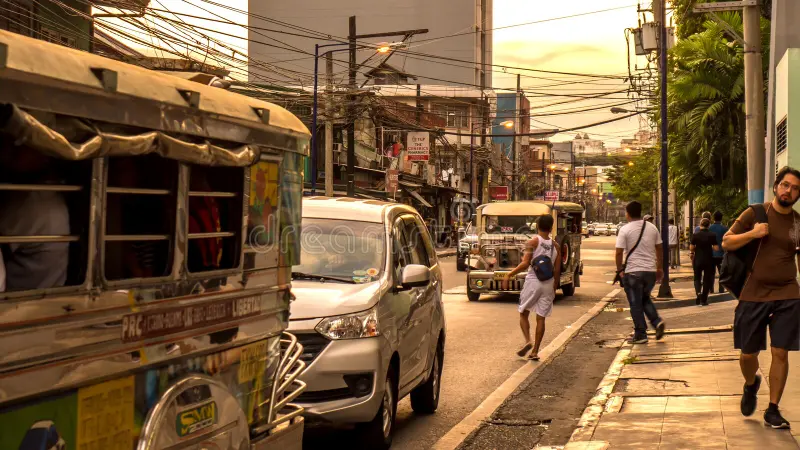
OSAC rates Manila crime as critical. Armed hold-ups on jeepneys and buses, some resulting in fatalities, are documented by FCDO. Taxi robberies where drivers or accomplices harm passengers occur. Phone snatching, pickpocketing, and bag theft are prevalent. Weapons, including firearms, are used in street robberies.
Zone Risk
Makati (business district) and Bonifacio Global City (BGC) have good private security infrastructure and are the recommended operating areas for corporate visitors. Tondo, Quiapo, and Manila CBD at night carry high crime risk. Ermita and Malate red-light areas carry both crime and reputational risk. Typhoon season creates infrastructure collapse risk.
Drug Laws
The Philippines has extremely severe drug laws. Penalties range from long imprisonment to death for trafficking. Police conduct raids on venues popular with foreigners for drug checks. Zero tolerance should be understood as absolute. Any association with drug activity, even peripheral, creates serious legal jeopardy.
Police Reliability
Philippine National Police (PNP) has a mixed reputation. Corruption is present at multiple levels. The drug war under the previous administration involved documented extrajudicial killings. Private security is the reliable baseline for corporate clients. Most commercial buildings in BGC and Makati have security checkpoints with metal detectors and bag scanning as standard.
Typhoon and Natural Disaster Risk
The Philippines experiences around 20 typhoons per year. Category 5 events have caused catastrophic infrastructure failures. Business continuity planning must include typhoon protocols: shelter-in-place procedures, alternative evacuation routes, communication failover, and hotel resilience assessment.
Data-led risk analysis from verified sources
Frequently Asked Questions
Request a Consultation
Describe your security requirements below. All enquiries are confidential and handled by licensed consultants.
Your enquiry has been received. A security consultant will contact you within 24 hours to discuss your requirements.