
Travelling to Toronto for high-profile financial or corporate meetings? Request a pre-visit EP brief from PSISA-licensed professionals.
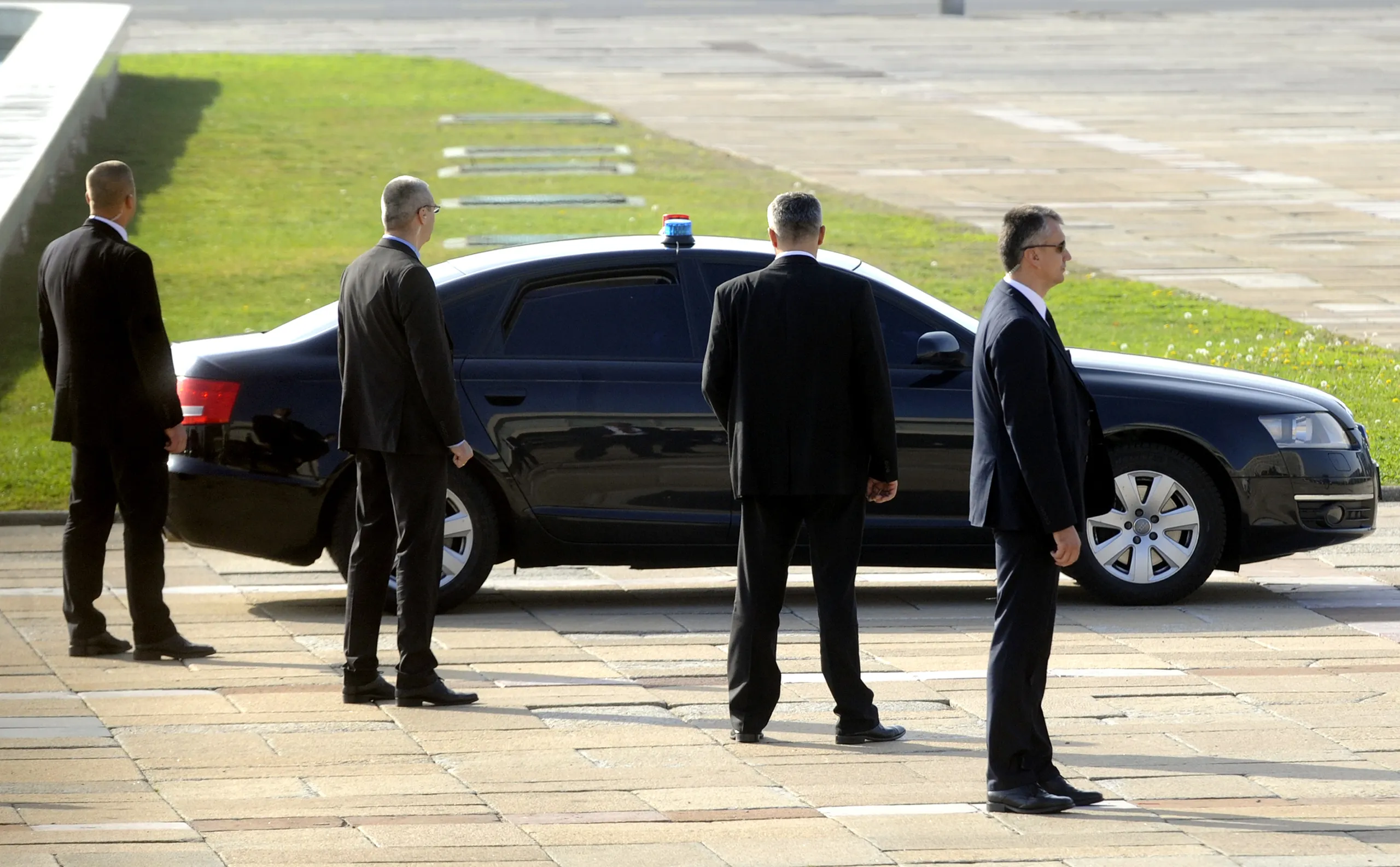
Executive protection in Toronto is a programme, not a single officer. It is the discipline a company applies to protect a travelling executive against corporate espionage and foreign state interference: advance work on venues and routes, a written risk assessment, an operations controller, and provincially licensed secure transport integrated with the corporate itinerary. This page is for security managers designing protection around a C-suite visit, where the need is layered, documented risk management rather than ad-hoc cover.
The Bay Street PATH underground network, Bloor-Yorkville’s HNWI retail corridor, and Pearson International Airport are the three environments that distinguish competent Toronto EP planning from a generic close protection brief. Local CPO knowledge of all three is a material operational advantage.
For broader security context in Toronto, see our Toronto city page and our bodyguard hire Toronto and security drivers Toronto service pages.
For short-term, single-principal cover tied to one visit, see bodyguard hire in Toronto. For the operators who staff the programme and how they are vetted, see close protection officers in Toronto.
What does this cover in Toronto?
PSISA Licensing and Ontario Regulatory Framework
Executive protection in Ontario is governed by the Private Security and Investigative Services Act, 2005 (PSISA), administered by Ontario's Ministry of the Solicitor General, which requires all commercial close protection officers to hold a current Security Guard licence before any EP engagement. There is no separate CPO licence category in Ontario; EP professionals typically hold the PSISA Security Guard licence alongside voluntary professional certifications such as the ASIS International Certified Protection Professional (CPP) designation, which provides additional assurance of EP-specific competence. Operating companies must hold a PSISA agency licence, also issued by the Ministry of the Solicitor General, and clients should verify both company licence and individual CPO Security Guard licence status before engagement.
CSIS Threat Assessment and Pre-Travel Brief
The Canadian Security Intelligence Service (CSIS) assesses the terrorism threat to Canada at Medium, level 2 of 5, reflecting an assessed risk from religiously and ideologically motivated violent extremism. For Toronto specifically, pre-travel briefs cover the current CSIS threat level, targeted crime against HNWI individuals in Bloor-Yorkville and high-end residential areas (documented in Toronto Police Service annual statistical reports), Pearson International Airport arrival surveillance risk for high-profile principals, and sector-specific considerations for financial services and technology executives. The CSIS annual public report is updated yearly and should be consulted for the current assessment at time of briefing.
Bay Street Financial District Corporate EP
Toronto's Bay Street financial district is Canada's primary corporate EP operating environment, hosting the headquarters of the major Canadian chartered banks (RBC, TD, Scotiabank, BMO, CIBC), TSX Group, and the Canadian offices of major international financial and professional services firms. EP operations in the financial district require advance work on the PATH underground pedestrian network - which connects most major Bay Street towers below ground and is a significant movement environment that counter-surveillance planning must address - vehicle logistics at Union Station and the major corporate tower drop-off points, and awareness of the high-volume pedestrian traffic that characterises Bay Street at peak business hours.
Bloor-Yorkville HNWI and Residential Coverage
Bloor-Yorkville is Toronto's primary luxury retail and HNWI environment, hosting the flagship boutiques of international luxury brands, high-end hospitality including the Four Seasons Toronto and the Hazelton Hotel, and the primary social venues for Toronto's UHNWI community. Toronto Police Service incident data has documented targeted theft and robbery incidents in the Yorkville and Bloor Street West corridor that are relevant to EP planning for HNWI principals. Rosedale and Forest Hill - the primary HNWI residential neighbourhoods north of the downtown core - require a low-visibility residential EP profile consistent with the high-value suburban environment.
Pearson International Airport Arrival Protocol
Pearson International Airport is Canada's busiest airport and a documented exposure point for high-profile arriving principals. EP advance work for Pearson arrivals covers surveillance indicator awareness in Terminal 1 and Terminal 3 arrivals halls, secure vehicle positioning at the designated commercial pick-up zones, and the express LINK train corridor as an alternative transit option for specific itineraries. The 427-401 highway corridor from Pearson to downtown Toronto is the primary transit route and requires route analysis incorporating congestion management and alternative routing via the Gardiner Expressway or Don Valley Parkway depending on itinerary.
Operational Profile and Cultural Discretion
Toronto EP operations default to a low-visibility, professional profile consistent with one of North America's most cosmopolitan business cities. Business attire appropriate to the Bay Street and Bloor-Yorkville environments is the standard CPO dress profile; discreet vehicle selection and unobtrusive foot coverage are expected in both corporate and HNWI residential settings. Toronto's multicultural environment - with significant South Asian, East Asian, Middle Eastern, and Caribbean communities - means CP teams should hold the cultural awareness to conduct operations discreetly across a wide range of social settings without signalling disproportionate visibility.
Sources for this page
Licensing, firearms and foreign-operator rules for Toronto, checked : Government of Ontario, security guard or private investigator licence; Government of Ontario, private security and investigative services; Government of Ontario, security guard study guide; Authorizations to Carry Restricted Firearms and Certain Handguns Regulations (SOR/98-207), sections 2 and 3 (Justice Laws). The full rules are on our Toronto security overview.
Frequently Asked Questions
What licence is required for executive protection in Ontario, Canada?
What does the CSIS Medium terrorism threat mean for Toronto EP planning?
What makes EP in Toronto operationally distinct from other North American cities?
How is the Pearson Airport arrival handled as part of EP planning for Toronto?
This page is published by CloseProtectionHire.com and written to editorial standards overseen by James Calloway, Senior Security Consultant (regulation, licensing, vetting and risk frameworks) and Marcus Webb, Security Operations Adviser (operational close protection, secure transport and city-specific safety).
Threat, regulatory and emergency information is sourced to named, dated authorities such as the FCDO, the US State Department and national licensing bodies. Last updated . See how we verify.