
Request an executive protection detail in Tbilisi
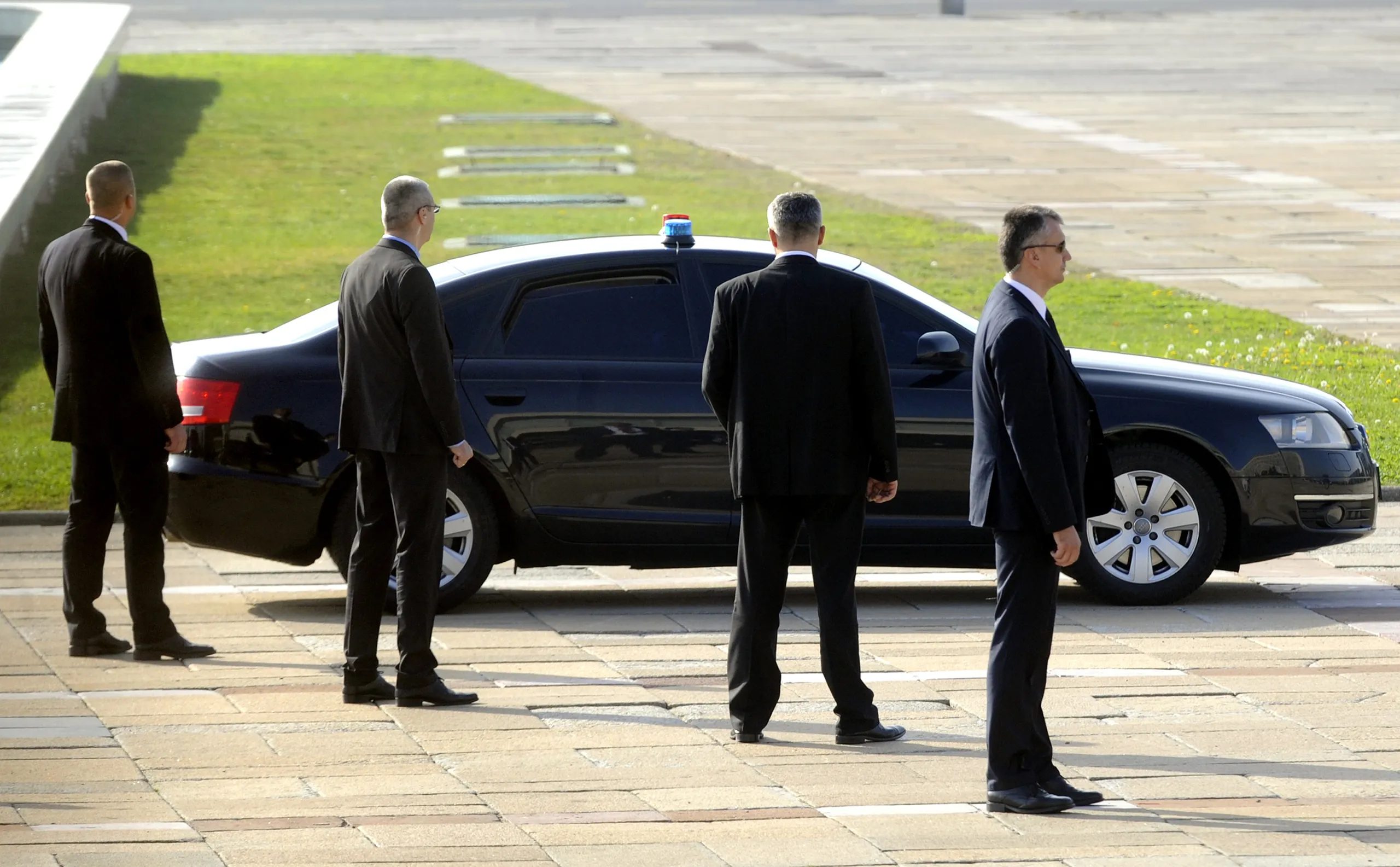
Executive protection in Tbilisi is a programme, not a single officer. It is the discipline a company applies to protect a travelling executive against regional instability and intelligence and surveillance risk: advance work on venues and routes, a written risk assessment, an operations controller, and licensed secure transport integrated with the corporate itinerary. This page is for security managers designing protection around a C-suite visit, where the need is layered, documented risk management rather than ad-hoc cover.
For the full Tbilisi security picture and Georgia travel advisory, see our Tbilisi city page. For principals whose primary need in Georgia is vetted transport, security drivers in Tbilisi covers the licensed chauffeur programme across Georgia and the South Caucasus.
For short-term, single-principal cover tied to one visit, see bodyguard hire in Tbilisi. For the operators who staff the programme and how they are vetted, see close protection officers in Tbilisi.
What does this cover in Tbilisi?
Threat Assessment
Tbilisi carries a medium risk rating for executive protection purposes. The primary concerns are: Russian-occupied South Ossetia and Abkhazia as absolute exclusion zones for all principal itineraries; political instability following Georgia's disputed 2024 elections, with significant protest activity including police tear gas deployments around Parliament on Rustaveli Avenue; and petty crime in tourist areas. Georgia is not a high-crime environment; the primary EP complexity is the occupied territory exclusion mapping and the political protest monitoring requirement. Source: FCDO Georgia travel advice, 2025.
Georgia Private Security Licensing
Executive protection in Georgia is governed by the Law on Private Security Activities, with licences issued by the Public Safety Command Center '112', a legal entity under the Ministry of Internal Affairs. Security companies must hold its licence, and security guards need its certificate, valid for up to one year. The Georgian regulatory framework has developed significantly post-Rose Revolution and is more structured than some neighbouring jurisdictions. Our Tbilisi partners hold current licences; documentation is provided before each deployment.
South Ossetia and Abkhazia Exclusion Protocol
The administrative boundary lines (ABLs) with Russian-occupied South Ossetia and Abkhazia are the hard exclusion limits for all Georgia EP itineraries. FCDO advises against all travel to both territories. The South Ossetia ABL runs approximately 100 kilometres north of Tbilisi on the Gori corridor (S1/E60 highway); the Abkhazia ABL is at the Inguri River in north-west Georgia. EP advance work maps all itinerary elements against ABL proximity and excludes any route approaching within the FCDO-defined exclusion zone. The Georgian military incursion of 2008 and Russia's subsequent recognition of both territories make these boundaries a live operational concern, not a historical footnote.
Political Protest Monitoring and Rustaveli Avoidance
Georgia's post-2024 election protest environment has generated significant demonstration activity on Rustaveli Avenue, around Parliament, and in the Vake district. Police have deployed tear gas and water cannon at multiple protest events. EP operations during active protest periods: monitoring of demonstration timings and locations, avoidance of Rustaveli Avenue and the Parliament approaches, alternate east-west routing through Freedom Square or the Agmashenebeli Avenue corridor, and a contingency extraction plan from the principal's Old Town hotel if protest activity moves into adjacent areas.
Tbilisi International Airport and City Management
The EP team meets the principal at Tbilisi International Airport (TBS, 18 kilometres east of centre). Transfer to the Old Town, Vera, or Mtatsminda hotel zone takes 25 to 40 minutes on the David Agmashenebeli highway. Old Town hotel access requires driver knowledge of the specific cobbled street and pedestrian zone approach routes for each property. The Rooms Hotel, Stamba Hotel, and Tbilisi Marriott are the primary EP-appropriate accommodation options.
South Caucasus Regional EP Coverage
Tbilisi is the logistics hub for South Caucasus EP programmes. Our Georgia partners cover: Kazbegi and the Georgian Military Highway (HNWI Caucasus visits, 2.5 hours north, mountain driving requirement); Batumi on the Black Sea (5 hours west, business and HNWI leisure); land crossings to Armenia (Sadakhlo crossing, Armenian side covered by partner network); and coordination with the Baku team for Azerbaijan elements of the same itinerary.
Sources for this page
Licensing, firearms and foreign-operator rules for Tbilisi, checked : Law of Georgia on Private Security Activities, Legislative Herald of Georgia (consolidated 9 December 2025). The full rules are on our Tbilisi security overview.
Travel advice quoted on this page: FCDO travel advice: Georgia. Advice changes; read the current version before travel.
Frequently Asked Questions
What is the South Ossetia and Abkhazia exclusion zone for EP purposes?
What licensing applies to Tbilisi EPOs?
How is the political protest risk managed in the Tbilisi EP brief?
Does EP coverage extend to Armenia and Azerbaijan?
What advance work applies to the Tbilisi Old Town hotel zone?
This page is published by CloseProtectionHire.com and written to editorial standards overseen by James Calloway, Senior Security Consultant (regulation, licensing, vetting and risk frameworks) and Marcus Webb, Security Operations Adviser (operational close protection, secure transport and city-specific safety).
Threat, regulatory and emergency information is sourced to named, dated authorities such as the FCDO, the US State Department and national licensing bodies. Last updated . See how we verify.