
Request an executive protection assessment for Managua that addresses the political risk environment.
Executive protection in Managua is a programme built around political risk rather than gang crime, not a single officer. It is the discipline a company applies to manage the Ortega government’s arbitrary-detention risk and surveillance of foreign nationals: advance work on venues and meeting-association planning, a written risk assessment, an operations controller, and Policia Nacional licensed secure transport integrated with the corporate itinerary. This page is for security managers designing protection around a visit, where political exposure is the leading factor.
Policia Nacional licensing under Ley No. 903
EP companies hold a Policia Nacional operating licence and individual officers carry a personal accreditation under Ley No. 903 (2015). Given the Policia Nacional’s government alignment, operators with demonstrated political neutrality are essential for foreign executive deployments. Foreign operators work through Policia Nacional-authorised Nicaraguan partners.
Managua EP: what a programme covers
A Managua EP programme covers a political risk pre-advance assessing all planned venues and meeting hosts, discreet low-profile vehicle arrangements adapted to the surveillance environment, counter-surveillance calibrated for state rather than criminal actors, pre-arranged legal representation contact for detention scenarios, and an extraction plan that accounts for the possibility of immigration delay.
For the full Managua security picture, see the Managua city briefing and close protection officers in Managua.
For short-term, single-principal cover tied to one visit, see bodyguard hire in Managua. For the operators who staff the programme and how they are vetted, see close protection officers in Managua.
What does this cover in Managua?
Executive Risk Profile: Managua
Managua's executive protection environment is defined primarily by political risk rather than street crime. The Ortega government has pursued systematic political repression since the 2018 protests, including mass arbitrary detention, surveillance of foreign nationals, restrictions on civil liberties, and expulsion of NGOs and international organisations. FCDO Nicaragua advice (2024) and US State Department Level 3 designation (2026) both emphasise political risk as the primary threat to foreign nationals. Arbitrary detention of executives, particularly those with business associations that the government interprets as political, is a documented risk. Street crime exists but is secondary to the political threat in Managua's current EP risk profile.
Pre-Advance and Venue Assessment
Pre-advance for Managua EP includes a specific political risk layer not present in other Central American capitals. Venue assessment covers not only physical security but also the political associations and legal status of host organisations: meetings with civil society groups, media outlets, religious organisations, or private sector associations that have been designated oppositional by the government carry specific detention and harassment risks for the executive. Pre-advance confirms the current political status of all planned meeting hosts and identifies any venues or organisations that would create association risk for the principal.
Protective Intelligence in Nicaragua
Protective intelligence for Managua deployments must track both the street-level security environment and the political risk environment under the Ortega government. Intelligence draws on FCDO Nicaragua advice (updated periodically), US State Department reporting, Freedom House Nicaragua assessments, and operator network intelligence in Managua. Political intelligence monitoring covers any government announcements, detention campaigns, or regulatory actions in the period before and during the deployment that may affect the principal's planned activities. The operator maintains a current picture of which business sectors and associations are under active government scrutiny.
Motorcade and Movement Security
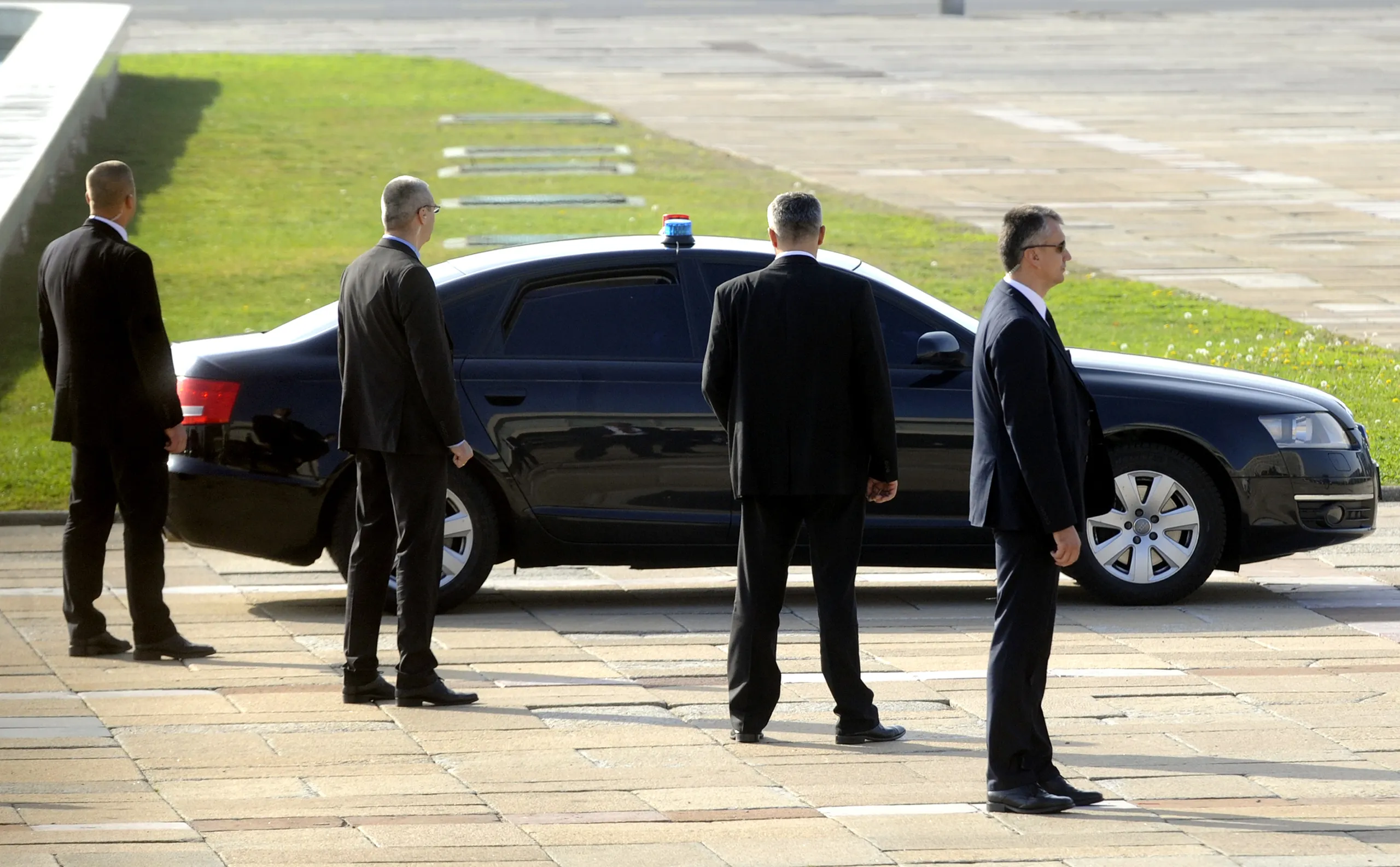
Managua EP movements prioritise political discretion over visible security profile. Overtly armoured vehicles or large security formations can attract state surveillance attention and create complications in a political risk environment. The standard configuration is a principal vehicle and a discreet follow car, both unmarked and without security-visible features. Movements are confined to the Carretera Masaya and Metrocentro corridors; the historic centre and western barrios are avoided. Counter-surveillance is adapted to the Nicaraguan context: the risk is state surveillance, not criminal surveillance, and the response must be discreet rather than evasive.
Nicaragua EP Operator Licensing
Executive protection operations in Nicaragua are regulated by the Policia Nacional under Ley No. 903, the Ley de Servicios de Seguridad Privada (2015). The company holds a five-year operating licence (licencia de operacion) issued by the Policia Nacional through its public security speciality, and individual officers carry an accreditation issued after the approved training course. Check both before deployment. The Policia Nacional's close alignment with the Ortega government is a contextual factor; EP operators must demonstrate political neutrality and no government affiliation to be appropriate for foreign executive deployments. Armed EP operations require specific Policia Nacional authorisation. Foreign operators work through Policia Nacional-authorised Nicaraguan partner companies.
Crisis Response and Evacuation Planning
Managua EP crisis plans have a distinctive political element: the primary crisis scenario is not armed attack but arbitrary detention or harassment by state authorities. Crisis plans include: a pre-agreed legal representation contact in Nicaragua (established before deployment), an emergency contact at the principal's national embassy confirming current embassy support capacity for detained nationals, and an extraction protocol that accounts for the possibility that normal airport departure may be delayed by immigration authorities. Medical emergency plans cover Hospital Militar (+505 2222 2763) for acute care, with private clinics in the city for initial stabilisation. Extraction by scheduled or chartered departure from Augusto C. Sandino International Airport to a regional hub is the standard first extraction option, with the destination fixed at the time against current flight availability.
Sources for this page
Licensing, firearms and foreign-operator rules for Managua, checked : Ley No. 903, Ley de Servicios de Seguridad Privada, La Gaceta Diario Oficial No. 141, 29 July 2015 (text via LeyBook): arts. 5, 11, 13 and 14. The full rules are on our Managua security overview.
Travel advice quoted on this page: FCDO travel advice: Nicaragua; US State Department travel advisory: Nicaragua. Advice changes; read the current version before travel.
Frequently Asked Questions
What makes Managua an elevated-risk EP environment?
Is kidnap risk relevant to business executives visiting Managua?
Should EP in Managua be armed or unarmed?
What is a pre-advance and why is it essential for Managua?
This page is published by CloseProtectionHire.com and written to editorial standards overseen by James Calloway, Senior Security Consultant (regulation, licensing, vetting and risk frameworks) and Marcus Webb, Security Operations Adviser (operational close protection, secure transport and city-specific safety).
Threat, regulatory and emergency information is sourced to named, dated authorities such as the FCDO, the US State Department and national licensing bodies. Last updated . See how we verify.