
Travelling to Bangkok with security requirements? Request a pre-visit EP brief tailored to Thailand's regulatory and threat environment.
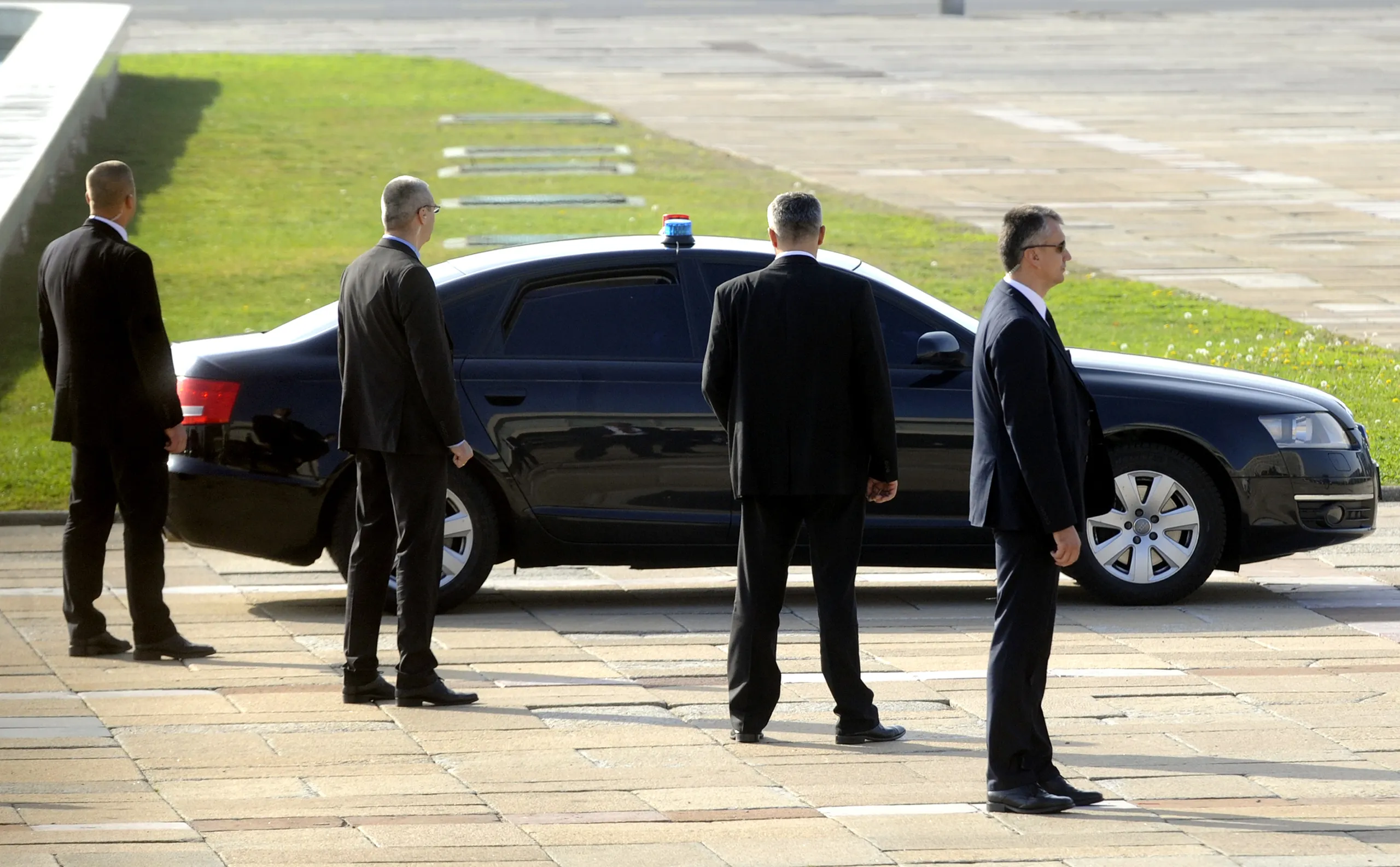
Executive protection in Bangkok is a programme, not a single officer. It is the discipline a company applies to protect a travelling executive against periodic political unrest and a residual terrorism threat: advance work on venues and routes, a written threat assessment, an operations controller, and secure transport integrated with the corporate itinerary. This page is for security managers designing protection around a C-suite visit, where the need is layered, documented risk management rather than ad-hoc cover.
The company licence and each officer’s licence under the Security Business Act B.E. 2558 are the baseline quality filter for EP engagements in Thailand. Beyond regulatory compliance, Bangkok EP requires operational expertise in the city’s movement environment - the Sukhumvit and Silom corridors, the elevated transit network, and the high-traffic hotel and conference belt - alongside the cultural discretion and low-visibility profile that Thai business environments require.
For broader security context in Bangkok, see our Bangkok city page and our bodyguard hire Bangkok and security drivers Bangkok service pages.
For short-term, single-principal cover tied to one visit, see bodyguard hire in Bangkok. For the operators who staff the programme and how they are vetted, see close protection officers in Bangkok.
What does this cover in Bangkok?
Thai Private Security Regulatory Framework
Executive protection in Thailand operates under the Security Business Act B.E. 2558 (2015), which gives the Royal Thai Police authority over security companies and security officers. A security business must be a company licensed by the registrar, and each security officer needs an individual licence, which the Act grants only to Thai nationals who have completed approved training. Ask any provider for its company licence and each officer's licence before an assignment starts.
Threat Level and Pre-Travel Brief
The UK Foreign, Commonwealth and Development Office (FCDO) advises heightened awareness for Thailand, primarily reflecting ongoing political instability and the risk of protest disruption. Bangkok has experienced politically-driven demonstrations and military interventions, including coups in 2006, 2010, and 2014, making itinerary planning around government and protest areas a standing component of any EP brief. Active terrorism risk in Bangkok itself is assessed as low for corporate principals, but the Southern Thailand insurgency (primarily within the SBPAC area) remains relevant for any travel outside the capital.
Sukhumvit and Silom Corporate and Hotel Coverage
Bangkok's primary corporate and HNWI hotel zone runs along the Sukhumvit and Silom corridors, hosting the majority of international five-star hotels, regional headquarters, and private equity and financial services offices. EP operations in this zone typically involve close protection during hotel egress and ingress, secure vehicle movements between meeting venues, and advance work confirming access protocols at embassy row and major corporate towers. The Lumphini Park business district and adjacent Wireless Road (Witthayu) embassy area add a diplomatic dimension that requires awareness of local policing and security protocols.
Corporate EP and Espionage Awareness
Bangkok is a significant regional hub for technology, energy, and financial services, sectors that carry elevated corporate espionage risk for senior visiting executives. EP planning for technology-sector and energy-sector principals should include an information security component alongside physical protection: recommendations on device handling in hotel environments, awareness of third-party approach patterns, and secure meeting venue assessment. Bangkok's position as a major regional conference city means high-value business meetings routinely attract competitive intelligence activity.
Counter-Surveillance and Advance Work
Route analysis in Bangkok must account for the city's significant traffic infrastructure variability: BTS Skytrain and MRT Metro corridors offer predictable movement patterns that can create static observation opportunities, while road congestion makes vehicle timing harder to control. Advance work should confirm venue security arrangements and identify alternative egress at major hotels such as the Mandarin Oriental, Peninsula, and Rosewood, where HNWI visitors are concentrated. Regular route variation using both road and elevated transit is a standard mitigation for principals with elevated profiles.
Operational Profile and Cultural Discretion
Bangkok's EP culture strongly favours low-visibility profiles: overt security presence in hotel lobbies, restaurants, and business venues is conspicuous and counterproductive in the Thai social environment, where discretion is culturally significant. Business attire or smart casual consistent with the venue, discreet communication equipment, and culturally informed behaviour are expected standards for CPOs operating in Bangkok. Wai (greeting) protocol awareness and deference to local customs during venue interactions reduces friction and maintains the operational effectiveness of a low-profile engagement.
Sources for this page
Licensing, firearms and foreign-operator rules for Bangkok, checked : Tilleke & Gibbins, Thailand's Security Business Act (13 May 2016); Thai Journals Online article, legal measures under the Security Business Act B.E. 2558 (sections 16 and 34); Firearms, Ammunition, Explosives, Fireworks and Imitation Firearms Act B.E. 2490, Office of the Council of State translation (text). The full rules are on our Bangkok security overview.
Travel advice quoted on this page: FCDO travel advice: Thailand. Advice changes; read the current version before travel.
Frequently Asked Questions
What licence is required for executive protection in Thailand?
How does the FCDO threat assessment affect EP planning in Bangkok?
What makes executive protection in Bangkok operationally distinct?
How is information security handled during Bangkok EP engagements?
This page is published by CloseProtectionHire.com and written to editorial standards overseen by James Calloway, Senior Security Consultant (regulation, licensing, vetting and risk frameworks) and Marcus Webb, Security Operations Adviser (operational close protection, secure transport and city-specific safety).
Threat, regulatory and emergency information is sourced to named, dated authorities such as the FCDO, the US State Department and national licensing bodies. Last updated . See how we verify.