
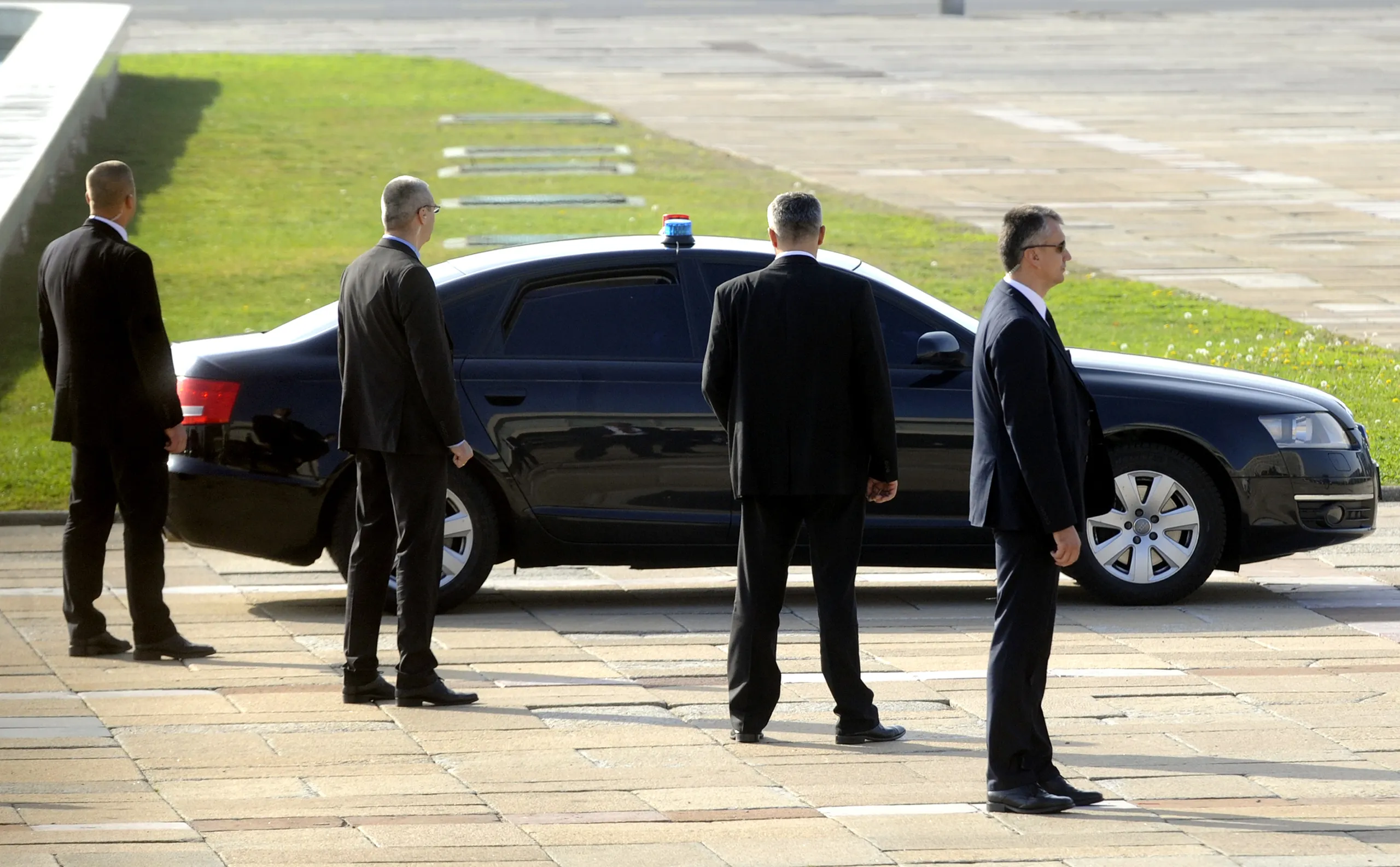
Arrange close protection cover for your next Antwerp visit
Antwerp runs on two industries that shape almost every executive itinerary here: diamonds and cargo. The Antwerp World Diamond Centre still carries the memory of its 2003 vault heist, and access into the Diamond District reflects that history with tight, deliberate control rather than open pedestrian flow. A short distance away, the Port of Antwerp-Bruges anchors the largest integrated petrochemical cluster in Europe, drawing a steady stream of industrial and supply-chain visitors who need site accreditation before they can set foot past the gate.
For corporate travellers, the practical risk picture is milder than either sector suggests. FCDO Belgium (2026) attributes most organised crime in the city to cocaine trafficking through the port, a problem that sits mainly with those in the trade rather than with visiting executives. What does affect ordinary business travel is petty theft concentrated around Antwerpen-Centraal, De Keyserlei, and Pelikaanstraat, plus Belgium’s standing OCAM/CUTA threat level of 3 out of 4, which has brought reinforced patrols to the Jewish quarter without materially changing the risk to a diamond-trade or petrochemical delegation.
Close protection officers here operate under SPF Interieur authorisation and an individual badge, standard and unarmed, in line with the Loi du 2 octobre 2017. For the wider city picture, see the Antwerp city page. Groups running a Benelux itinerary alongside Antwerp will also want executive protection in Ghent and executive protection in Rotterdam for the neighbouring legs.
What does this cover in Antwerp?
Licensing and CPO Standards
Private security work in Antwerp is governed by the Loi du 2 octobre 2017. Operating firms need an authorisation from the SPF Interieur (federal interior ministry), and every officer carries an individual badge issued under that framework. Officers may carry a weapon only with a permit from the Minister of the Interior, so standard details in Antwerp are unarmed. Clients meeting a protection provider for the first time should ask to see both the company authorisation and the individual officer badge before any engagement begins.
Threat Assessment
The FCDO's Belgium travel advice (2026) links organised crime in Antwerp chiefly to cocaine trafficking through the port, a pattern that overwhelmingly affects those involved in the trade rather than corporate visitors passing through. Antwerp sits at Belgium's OCAM/CUTA national threat level 3 of 4, which has held through early 2026 and brings reinforced patrols around the Jewish quarter. For business travellers the more immediate concern is petty theft around Antwerpen-Centraal station, De Keyserlei, and Pelikaanstraat, areas that see heavy footfall and opportunistic pickpocketing.
Principal Movement Security
Two sectors dominate Antwerp itineraries: the Diamond District, home to the Antwerp World Diamond Centre and still shaped by memory of the 2003 vault heist, and the Port of Antwerp-Bruges petrochemical cluster, the largest integrated chemical hub in Europe. Access to the Diamond District is tightly restricted at street and building level, and protection teams plan entry and exit points around that control rather than around open pedestrian routes. Petrochemical site visits require separate accreditation and vehicle screening arranged well ahead of the principal's arrival.
Corporate and Event Security
Diamond trade meetings often take place behind unmarked doors on streets with limited sightlines, which changes how a detail positions rather than how many officers it deploys. Petrochemical site visits bring their own industrial safety protocols on top of security ones, so briefings cover both before any principal sets foot on site. Where an engagement runs across several Diamond District premises in one day, officers plan the sequence in advance to avoid predictable timing between stops.
Secure Transit
Most principals arrive via Brussels Airport (BRU) rather than the smaller Antwerp Airport (ANR), and the road transfer between the two is built into route planning from the outset. Within the city, De Keyserlei and Pelikaanstraat near the central station carry higher pedestrian density and correspondingly higher theft risk, so vehicle positioning there favours short dwell times. Port-area routes account for heavy freight traffic and the access controls that ring the petrochemical terminals.
Crisis and Medical Response
Contingency planning is built on Belgium's emergency numbers: 112 for general emergencies, 101 for police, 100 for ambulance and fire. UZA (Universitair Ziekenhuis Antwerpen, +32 3 821 30 00) is the pre-planned medical destination for engagements in and around Antwerp. Non-Belgian principals are registered against the British Embassy Brussels (+32 2 287 62 11) or the US Embassy Brussels (+32 2 811 4000) as consular points of contact, since Belgium runs its diplomatic missions from the capital rather than from Antwerp itself.
Sources for this page
Licensing, firearms and foreign-operator rules for Antwerp, checked : FPS Interior (BeSafe), Autorisations et activités; FPS Interior (BeSafe), Législation sécurité privée; FPS Interior (BeSafe), Agent de gardiennage brochure; Belgian Chamber of Representatives, bill 52K0474 amending the Law of 8 June 2006 on weapons. The full rules are on our Antwerp security overview.
Travel advice quoted on this page: FCDO travel advice: Belgium. Advice changes; read the current version before travel.
Frequently Asked Questions
What licence must an Antwerp close protection officer hold?
Is Antwerp's Diamond District a high-risk assignment?
Can a protection team accompany a principal into the Port of Antwerp-Bruges petrochemical cluster?
Does Belgium's national threat level affect executive visits to Antwerp?
Where do protection details take principals for medical care in Antwerp?
This page is published by CloseProtectionHire.com and written to editorial standards overseen by James Calloway, Senior Security Consultant (regulation, licensing, vetting and risk frameworks) and Marcus Webb, Security Operations Adviser (operational close protection, secure transport and city-specific safety).
Threat, regulatory and emergency information is sourced to named, dated authorities such as the FCDO, the US State Department and national licensing bodies. Last updated . See how we verify.