
Speak to our specialists about Tripoli event security before confirming any delegation travel.
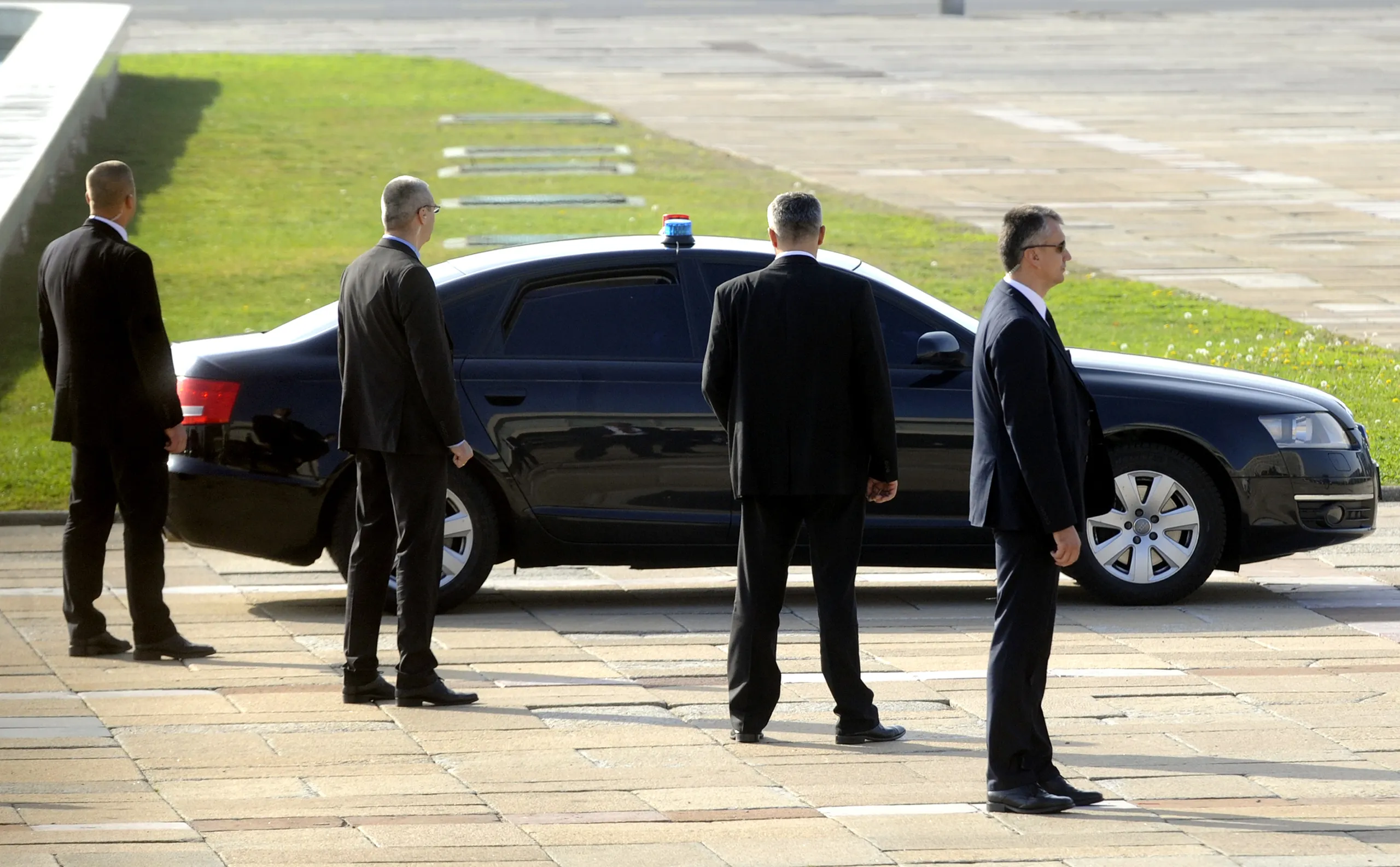
Tripoli’s oil and gas sector and Libya reconstruction programme generate occasional internationally attended events at the Corinthia Hotel, but the FCDO Libya advisory (2025) advises against all travel and the city’s armed faction dynamics, kidnapping risk and volatile security environment make it one of the most demanding event security contexts in the world. Every aspect of a Tripoli event requires armoured vehicle logistics, GNU and militia-liaison coordination, and a pre-positioned medevac capability.
For the full Tripoli security context, see our Tripoli city page. Delegates requiring personal close protection at Tripoli events should review bodyguard hire in Tripoli for specialist guidance in this critical-risk environment.
What does event security in Tripoli cover?
Tripoli Event Landscape
Tripoli hosts a very limited number of internationally attended events, driven primarily by Libya's oil and gas sector and periodic reconstruction investment forums attended by European, Turkish and Gulf-state companies with commercial interests in Libya's post-conflict rebuilding programme. The National Oil Corporation (NOC) and the Government of National Unity (GNU) host meetings with international energy companies, typically on a small-group basis rather than large conference format. The Corinthia Hotel Tripoli is the only venue in the city capable of hosting international-standard events with adequate physical security infrastructure; it functions as the de facto base for international business delegations visiting the capital. Multilateral organisations including the UN Mission in Libya (UNSMIL) conduct coordination meetings in Tripoli, typically within secured UN facilities rather than commercial venues. The event market is extremely constrained: most international organisations conduct Libya-related business in Tunis, Malta or Rome rather than travelling to Tripoli itself, and those that do visit work within tightly managed itineraries with minimal discretionary time in the city.
GNU Security Ministry Licensing Framework
The Government of National Unity (GNU) exercises nominal authority over Tripoli and its security apparatus, including the Ministry of Interior and its affiliated General Administration for Security Operations (GASO). Private security companies in Libya must register with the GNU Ministry of Interior to operate legally. However, the practical security environment in Tripoli is shaped by the presence of multiple armed militia groups, some of which are nominally affiliated with the GNU and some of which operate with significant autonomy. The Rada Special Deterrence Force, the Nawasi Brigade and other armed groups maintain positions in the city and at key infrastructure points. Any security provider operating in Tripoli must have established relationships with the relevant militia commanders and official structures and must be able to navigate both channels simultaneously. International clients should contract only providers with verifiable operational history in Tripoli and confirmed coordination relationships. A provider with only official GNU registration and no militia-liaison capability is operationally inadequate for the current environment.
Armed Faction Activity and Conflict Risk
The FCDO Libya travel advisory advises against all travel to parts of Libya, including Tripoli, as of 2025. The city has experienced episodes of intra-militia armed clashes, most recently in August 2023 when fighting in central Tripoli killed civilian bystanders and caused significant disruption. The security situation is described by the FCDO as volatile and subject to rapid deterioration. Armed factions conduct kidnapping for ransom operations against foreigners and have targeted international businesspeople and journalists. All delegate movements in Tripoli must be in armoured vehicles with an escort. There is no safe context for unescorted pedestrian movement outside the hotel perimeter. Route planning must factor in the possibility of roadblocks established by armed factions, which may demand documentation, identification or payment. The security team must maintain current intelligence on militia deployments and incident patterns through a local operations centre with real-time monitoring capability. A tested contingency extraction plan, including a harbour point and emergency evacuation route to Mitiga Airport, must be confirmed before any delegate arrival.
Corinthia Hotel Venue Access Control
The Corinthia Hotel Tripoli is the only international-standard venue in the city for commercially attended events. It operates its own armed security perimeter with vehicle checkpoints and access screening. Event security teams must treat the Corinthia's measures as the outer layer and add a dedicated event security layer from the hotel's inner lobby inward. A separate delegate credentialling process, using photo identification verified against a pre-registered attendee list, must be established independently of the hotel's standard guest registration. VIP delegates should use a secured back-of-house arrival route avoiding the main hotel entrance. No contractor, caterer or technical crew member should be admitted without verification against a pre-approved list and the issuance of an event-specific pass. A sweep of the session room and all adjacent service areas must be conducted by a trained operator before each event day begins. Communications between the access control team and the security command must run on a dedicated encrypted channel throughout the event.
Mitiga Airport Delegate Transfer Protocol
Mitiga International Airport (MJI) serves Tripoli: it is a former military air base located east of the city centre and is operated by the Libyan Air Force under GNU authority. Commercial flights operate to Tunis, Istanbul, Cairo, Malta and other regional points. Mitiga itself has been subject to sporadic rocket attacks and has been temporarily closed on several occasions due to security incidents in its vicinity. Before each transfer to or from Mitiga, the current operational status of the airport and the security situation on the access route must be confirmed through the local security operations centre. Transfer vehicles must be armoured and must travel with an armed escort. The route between Mitiga and the Corinthia Hotel passes through central Tripoli; real-time routing decisions should reflect current intelligence on militia activity. Inside-terminal collection is the standard protocol for arriving delegates. No vehicle should wait at the kerb side without a contact inside the terminal. The alternative departure option of Tripoli International Airport is not currently operational.
Medical Infrastructure and Medevac Routing
Medical infrastructure in Tripoli is severely degraded as a result of conflict damage, equipment deterioration and the departure of experienced medical personnel. The FCDO Libya advisory notes that medical facilities are inadequate for complex emergency care, and that medical evacuation is the appropriate response to any significant medical emergency for an international delegate in the country. The standard evacuation route from Tripoli is by air from Mitiga to Tunis, Tunisia (approximately one hour), the nearest hub with adequate medical facilities, with onward flights to European hospitals available from Tunis for more serious conditions. If Mitiga is closed by faction activity, the documented contingencies are sea evacuation to Malta (approximately 24 hours by fast boat) and road evacuation to the Tunisian border (approximately five to six hours). All delegates must hold insurance explicitly covering emergency medical evacuation. A medevac provider must be on operational standby for the full duration of any event in Tripoli, with the relevant aircraft confirmed as available. The event security team carries the medevac provider's 24-hour contact number and confirms the current flight schedule from Mitiga before each event day.
Vetted operators. Local knowledge. Proven protocols.
Sources for this page
Travel advice quoted on this page: FCDO travel advice: Libya. Advice changes; read the current version before travel.