
Request a protection detail for Tenerife
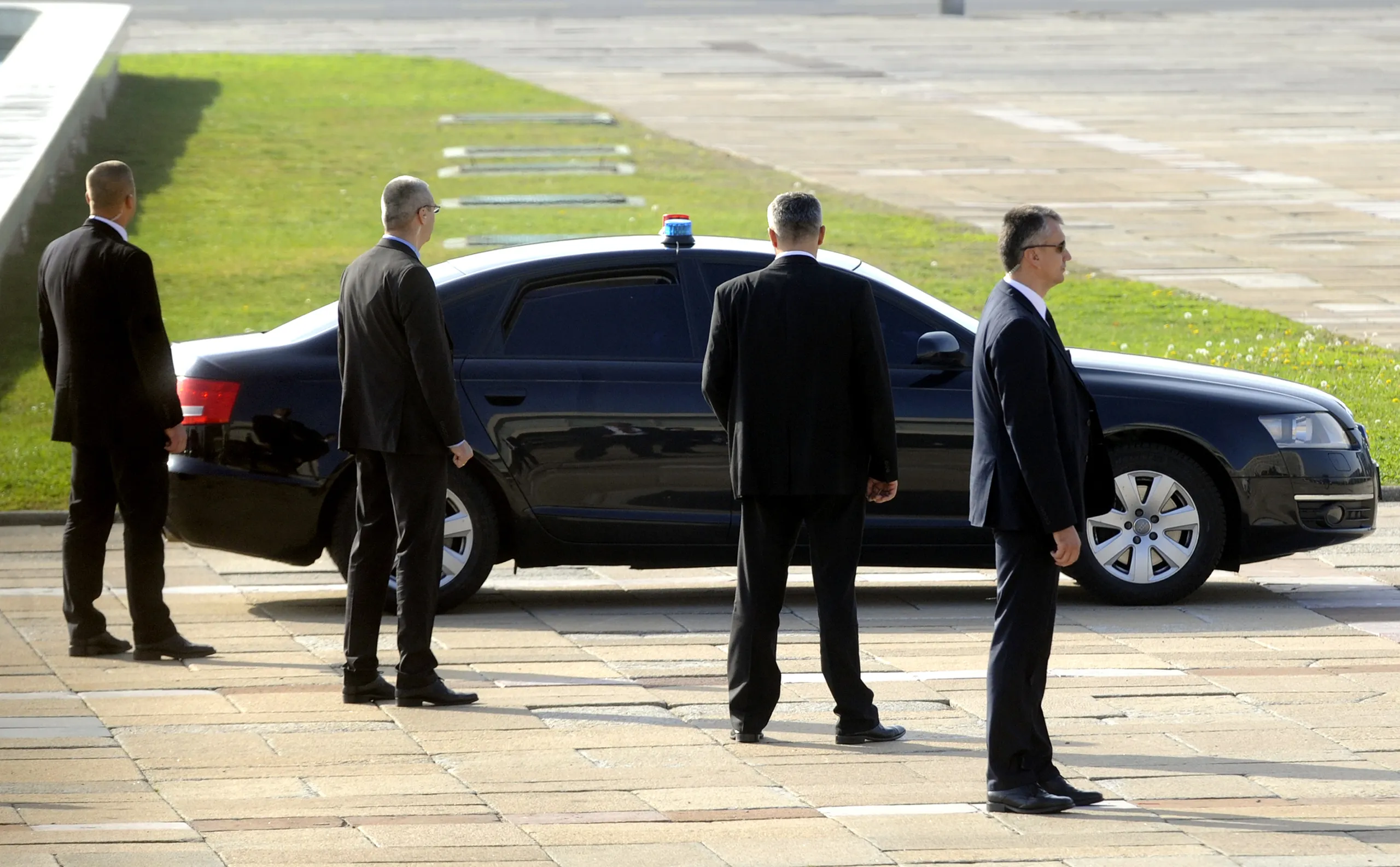
This page is about the people who provide close protection on Tenerife: who they are, how they are vetted, and what credentials to verify before they deploy. Every operator in our Tenerife network holds a tarjeta de identidad profesional (TIP) under Spain’s Ley de Seguridad Privada, and is assessed for local competence. It covers standard team configuration, the specific authorisation required for the uncommon armed option, and the credential checks a buyer should insist on before engaging any officer.
The island’s long-standing reputation as a leisure destination for Northern European visitors means that the local hospitality and service industry is well-practised at handling discreet, high-profile guests. Hotel security at the premium properties in Costa Adeje, including the Bahia del Duque and the Hard Rock Hotel, is of a higher standard than found in comparable resort environments elsewhere in Southern Europe. However, CPOs should not assume that hotel security is a substitute for a professional protection detail: hotel security is oriented towards property protection and guest services, not principal-specific threat management. For large-scale corporate events, product launches, or conference security at Tenerife’s major venues, see the Tenerife event security page for specific guidance on venue access control and crowd management.
The seismic and volcanic risk associated with the Teide volcanic complex, while not a regular operational concern, is worth including in a written risk assessment for any extended assignment. Teide is an active stratovolcano, and the Spanish National Geographic Institute (IGN) monitors seismic activity continuously. The island’s emergency plan (PEVOLCA) is well-established, and the risk of a major eruptive event during a short assignment is very low: however, principals undertaking helicopter excursions or Teide summit visits should be briefed on the IGN’s public alert system as standard due diligence.
To arrange short-term cover for a specific trip, see bodyguard hire in Tenerife. For organisational, duty-of-care protection around a corporate visit, see executive protection in Tenerife.
What does this cover in Tenerife?
Regulatory Framework and Licensing
Close protection in Tenerife is governed by Ley de Seguridad Privada 5/2014, Spain's primary private security legislation, administered nationally by the Ministerio del Interior through the Dirección General de la Policía. All security personnel operating commercially must hold a valid Tarjeta de Identidad Profesional (TIP). Ley 5/2014 limits security staff to EU and EEA nationals, or nationals of a third country whose agreement with Spain allows it, and EU and EEA nationals must show training and aptitudes equivalent to those required in Spain. Most corporate and HNWI close protection in Tenerife is conducted unarmed; armed authorisation requires a separate Interior Ministry permit and is rarely sought by commercial clients in the Canary Islands environment. Ley 5/2014 requires security companies to hold the nationality of an EU or EEA state, so firms from outside the EU work through an authorised Spanish company. Tenerife, as part of the Canary Islands autonomous region, falls under the same national licensing framework as mainland Spain; there is no island-level deviation. Verification of any firm's registration number should be completed at the contracting stage. The Cuerpo Nacional de Policia (CNP) and Guardia Civil both have jurisdiction depending on location and incident type, with CNP primary in urban areas and Guardia Civil covering rural mountain zones and motorway corridors.
Threat Environment in Tenerife
The FCDO Spain travel advisory (2024) rates Tenerife as low overall risk. The primary security concern for principals and close protection officers is petty theft in the resort corridors. The areas around Playa de las Americas and Los Cristianos experience regular bag-snatching and opportunistic vehicle break-ins, particularly in car parks serving popular beaches and commercial centres. Vehicle crime at remote trailhead car parks on Mount Teide access roads is also documented, relevant to principals undertaking private vehicle excursions into the interior. The Direccion General de Trafico (DGT, 2024) records above-average road accident rates on mountain roads in Tenerife, notably the TF-1 and the winding secondary routes across the Teide massif. Anti-tourism demonstrations have occurred in Santa Cruz de Tenerife and in some resort municipalities, most recently in 2024 and 2025: these are peaceful but can block key transit routes and squares with little warning, and the timing should be monitored via local press (El Dia, La Opinion de Tenerife) during assignment planning. There is no elevated terrorism threat specific to the island.
Principal Hotel and Business Zone Coverage
Tenerife operates as two distinct principal operating environments: the south coast resort strip and the north/administrative capital. Costa Adeje is the primary HNWI zone, anchored by the Hard Rock Hotel Tenerife (Avda. de Adeje 300) and the Bahia del Duque development, which hosts several luxury villa properties with private security infrastructure and gated access. This is the closest equivalent on the island to a managed high-security resort environment. CPOs operating here benefit from good vehicle access roads, relatively uncrowded streetscapes outside of peak holiday season, and proximity to Tenerife South Airport (TFS). Santa Cruz de Tenerife is the island's administrative and commercial capital, housing government offices, banking institutions, and the main port authority. The urban layout is denser than the south coast, with the Auditorio de Tenerife area and the Parque Maritimo providing open spaces that require greater situational awareness. Puerto de la Cruz, in the north, hosts the Hotel Botanico and a concentration of cultural tourism; its narrow streets around the old town require advance route assessment for larger vehicles. La Laguna (UNESCO World Heritage Site) is used primarily for daytime visits and academic or cultural meetings.
Airport and Transit Security
Tenerife is served by two airports with distinct operational implications. Tenerife South Airport (IATA: TFS), located near Costa Adeje, is the primary international gateway handling the majority of charter and scheduled flights from Northern Europe. It is approximately 64 kilometres from Santa Cruz de Tenerife (45 to 55 minutes via the TF-1 autopista) but only 10 to 15 minutes from the Costa Adeje luxury hotel zone, making it the preferred arrival airport for south-coast assignments. The airport has a new terminal building with improved arrivals hall layout, though peak morning wave congestion remains a consideration. Tenerife North Airport (IATA: TFN), located 10 kilometres from Santa Cruz, handles inter-island and some mainland Spain flights; transit time to the capital is approximately 15 minutes. The TF-1 autopista between north and south Tenerife is the primary transit route; it passes through a long tunnel section where mobile coverage drops and vehicle breakdown response is slower. CPOs should pre-identify breakdown points and alternative routes for high-value principal movements. Private and executive aviation uses a separate apron facility at TFS.
Operational Considerations
Tenerife's operating environment is broadly similar to other Southern European leisure destinations. Professional business attire is appropriate in Santa Cruz and during corporate meetings; resort attire in the south coast hotel zone is the norm and conspicuously formal dress may increase profile unnecessarily. Spanish (Castilian with some Canarian inflection) is the operating language for all official and emergency communications. English is widely spoken in the south coast resort corridor by commercial staff but should not be assumed in government offices or medical facilities. Mobile communications are reliable on all major networks across the main populated areas; some coverage gaps exist on the Teide mountain plateau and in the Masca gorge and similar remote areas. Surveillance detection is simplified by the relatively linear geography of the south coast hotel strip but complicated in Santa Cruz by the dense urban grid. Anti-tourism protest monitoring is an additional planning consideration; the Tenerife municipal authority and local press provide the most current information. The island's popularity with ultra-high-net-worth leisure visitors means that the local security and hospitality industry is accustomed to handling discreet high-profile guests.
Emergency Response and Medical Support
The island's main trauma capability sits with the public hospitals in Santa Cruz de Tenerife. Travel time from Santa Cruz city centre is approximately 15 minutes; from the south coast it is 50 to 60 minutes via the TF-1 autopista, and CPOs brief that journey time into the medical emergency plan. Acute care is also available closer to the southern resort corridor in the Adeje area, and private clinics around Costa Adeje handle non-emergency cases, usually with English-speaking staff. The integrated emergency number is 112, coordinating police, ambulance, and fire services. The Policia Nacional are reachable on 091, ambulance direct on 061, and the Guardia Civil on 062. The British Consulate in Tenerife (+34 922 286 863) provides consular assistance for British nationals. The US Embassy in Madrid (+34 91 587 2200) covers US principals in Tenerife, with no consulate on the island. Confirm the receiving facility with the principal's medical assistance provider at the point of activation rather than assuming a destination in advance.
Sources for this page
Licensing, firearms and foreign-operator rules for Tenerife, checked : BOE, Ley 5/2014, de 4 de abril, de Seguridad Privada (consolidated text); Ley 5/2014, articles 40 and 43, text (Papelea); Ley 5/2014, articles 26 to 28, text (Papelea); Ministerio del Interior, protección de personas; Policía Nacional, autorización de servicios de protección personal; Ministerio del Interior, armas y explosivos, normativa básica reguladora. The full rules are on our Tenerife security overview.
Travel advice quoted on this page: FCDO travel advice: Spain. Advice changes; read the current version before travel.
Frequently Asked Questions
Which airport should we use for arrivals into Tenerife for a south coast assignment?
Are anti-tourism demonstrations a security concern in Tenerife?
Is close protection in Tenerife typically armed or unarmed?
How do I verify that a security firm is legally licensed to operate in Tenerife?
Where is the nearest hospital to the Costa Adeje hotel zone?
This page is published by CloseProtectionHire.com and written to editorial standards overseen by James Calloway, Senior Security Consultant (regulation, licensing, vetting and risk frameworks) and Marcus Webb, Security Operations Adviser (operational close protection, secure transport and city-specific safety).
Threat, regulatory and emergency information is sourced to named, dated authorities such as the FCDO, the US State Department and national licensing bodies. Last updated . See how we verify.