
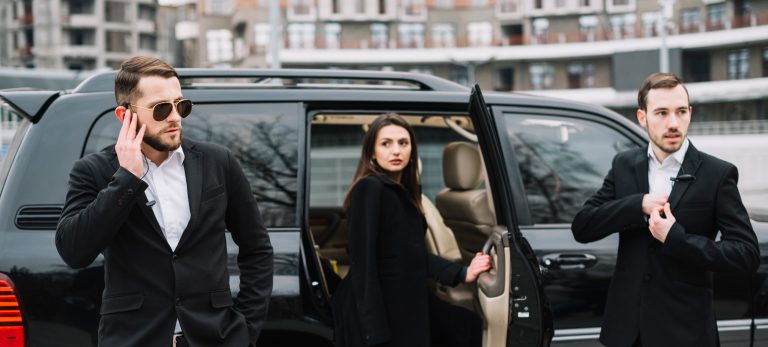
Require a licensed close protection officer in Hong Kong? Request a confidential brief.
This page is about the people who provide close protection in Hong Kong: who they are, how they are vetted, and what credentials to verify before they deploy. Every operator in our Hong Kong network holds a Security Personnel Permit issued by the Commissioner of Police under the Security and Guarding Services Ordinance, and is assessed for local competence. It covers standard team configuration, the unarmed model we use, and the credential checks a buyer should insist on before engaging any officer.
The political changes since 2019 have added a distinct planning dimension for certain categories of principal. While the ambient violent crime rate relevant to most corporate and HNWI clients remains very low, the NSL-era operating context requires that the pre-engagement brief addresses the specific sectors and profile characteristics relevant to the principal, not just the general Hong Kong threat environment.
For secure transport services alongside personal protection in Hong Kong, see our security drivers in Hong Kong page. For the full threat profile and service index, visit the Hong Kong city page.
To arrange short-term cover for a specific trip, see bodyguard hire in Hong Kong. For organisational, duty-of-care protection around a corporate visit, see executive protection in Hong Kong.
What does this cover in Hong Kong?
CPO Licensing Under Cap 460
Individual close protection officers operating commercially in Hong Kong must be licensed under the Security and Guarding Services Ordinance (Cap 460). Individual permits are issued by the Commissioner of Police and company licences by SGSIA. Each officer needs a Security Personnel Permit issued by the Commissioner of Police, and the operating company needs a Security Company Licence from the Security and Guarding Services Industry Authority (SGSIA). Clients should confirm both the individual officer's licence and the operating company's approval status before engagement.
No Armed Private Protection in Hong Kong
The close protection we arrange in Hong Kong is unarmed. Firearms rules for private security staff in Hong Kong could not be confirmed against a primary source on 7 October 2026. A CPO who does security work in Hong Kong is subject to Cap 460 regardless of the licences held in the CPO's home jurisdiction. Hong Kong's well-controlled public environment and low violent crime rate mean this is not a functional limitation for the vast majority of engagements.
Protocol-Driven Close Protection
Unarmed working has shaped the operational culture of CPO work in the city toward highly refined protocol-based protection. The emphasis is on threat assessment, advance work, counter-surveillance, route planning, and the management of movement in high-density urban environments. Hong Kong CPOs are typically experienced in principal extraction from congested environments - MTR stations, hotel lobby choke-points, Wan Chai or Causeway Bay street-level congestion - and in the distinct protocols required for helicopter transfers at the Business Aviation Centre at Chek Lap Kok.
SAR Political and Threat Landscape
Hong Kong's political environment has changed materially since 2019. The National Security Law (NSL) of 2020 has altered the operating context for certain categories of principal: media, legal, and civil society professionals with mainland-related profiles may face a distinct threat dimension that differs from the commercial crime or kidnap risk more relevant in other cities. A pre-engagement CPO brief in Hong Kong includes current NSL-related considerations relevant to the principal's sector, alongside the standard threat assessment covering commercial crime, targeted robbery, and protest-related disruption to movement.
Operational Profile: Central, Admiralty, and Kowloon
Hong Kong CPO engagements operate across the principal financial and business zones: Central and Admiralty on Hong Kong Island, Tsim Sha Tsui and Kowloon East on the Kowloon side, and residential environments in The Peak, Repulse Bay, and Stanley. The density of Hong Kong's urban environment - particularly Central's layered elevated walkway system and the cross-harbour transport options - requires CPO familiarity with multiple movement layers. The advance work for a Central-based principal maps the IFC and Exchange Square pedestrian systems, ferry terminal access, and the airport express options from Hong Kong Station.
HNWI and Corporate Protection in the SAR
Hong Kong retains a substantial HNWI and family-office community, and significant multinational corporate activity continues alongside the growth of mainland China-linked business. CPO demand is concentrated among visiting senior executives from regions with higher ambient threat, principals with business-related disputes that carry a personal risk dimension, and HNWI clients whose wealth profile and lifestyle in Hong Kong warrant an ongoing protective presence. The operational standard required is discretion, protocol fluency, and the ability to operate across both the English-language international business environment and Cantonese-speaking local contexts.
Sources for this page
Licensing, firearms and foreign-operator rules for Hong Kong, checked : Security and Guarding Services Ordinance (Cap. 460), section 2, Hong Kong e-Legislation; Hong Kong Police Force, Security Work leaflet (Security and Guarding Services Ordinance, Cap. 460); Security Bureau, How to apply for a Security Company Licence. The full rules are on our Hong Kong security overview.
Frequently Asked Questions
How do I verify a close protection officer's licence under Cap 460 in Hong Kong?
Why is there no armed private close protection in Hong Kong?
How has the National Security Law affected CPO requirements in Hong Kong?
What does a licensed CPO cost in Hong Kong?
This page is published by CloseProtectionHire.com and written to editorial standards overseen by James Calloway, Senior Security Consultant (regulation, licensing, vetting and risk frameworks) and Marcus Webb, Security Operations Adviser (operational close protection, secure transport and city-specific safety).
Threat, regulatory and emergency information is sourced to named, dated authorities such as the FCDO, the US State Department and national licensing bodies. Last updated . See how we verify.