
Planning travel to Yerevan? Speak with a security consultant.
Yerevan is the capital of Armenia, a landlocked South Caucasus state whose security environment has been fundamentally shaped by the 2020 Nagorno-Karabakh war and the subsequent September 2023 Azerbaijani military operation that ended the existence of the self-declared Republic of Artsakh and displaced approximately 100,000 ethnic Armenians into Armenia. The city itself remains operationally viable for corporate and diplomatic missions – it hosts a functioning international business environment with hotels, international organisations, and an IT sector that has grown significantly – but the geopolitical context requires careful attention.
The FCDO advises exercising a high degree of caution in Armenia and against all travel within 5 kilometres of the Armenian-Azerbaijani border (FCDO Armenia travel advice, 2026). The US State Department advises Exercise Increased Caution (Level 2, 2026) and lists the border region with Azerbaijan as Do Not Travel (Level 4). Political demonstrations in Yerevan are a recurring feature of Armenian public life and require monitoring.
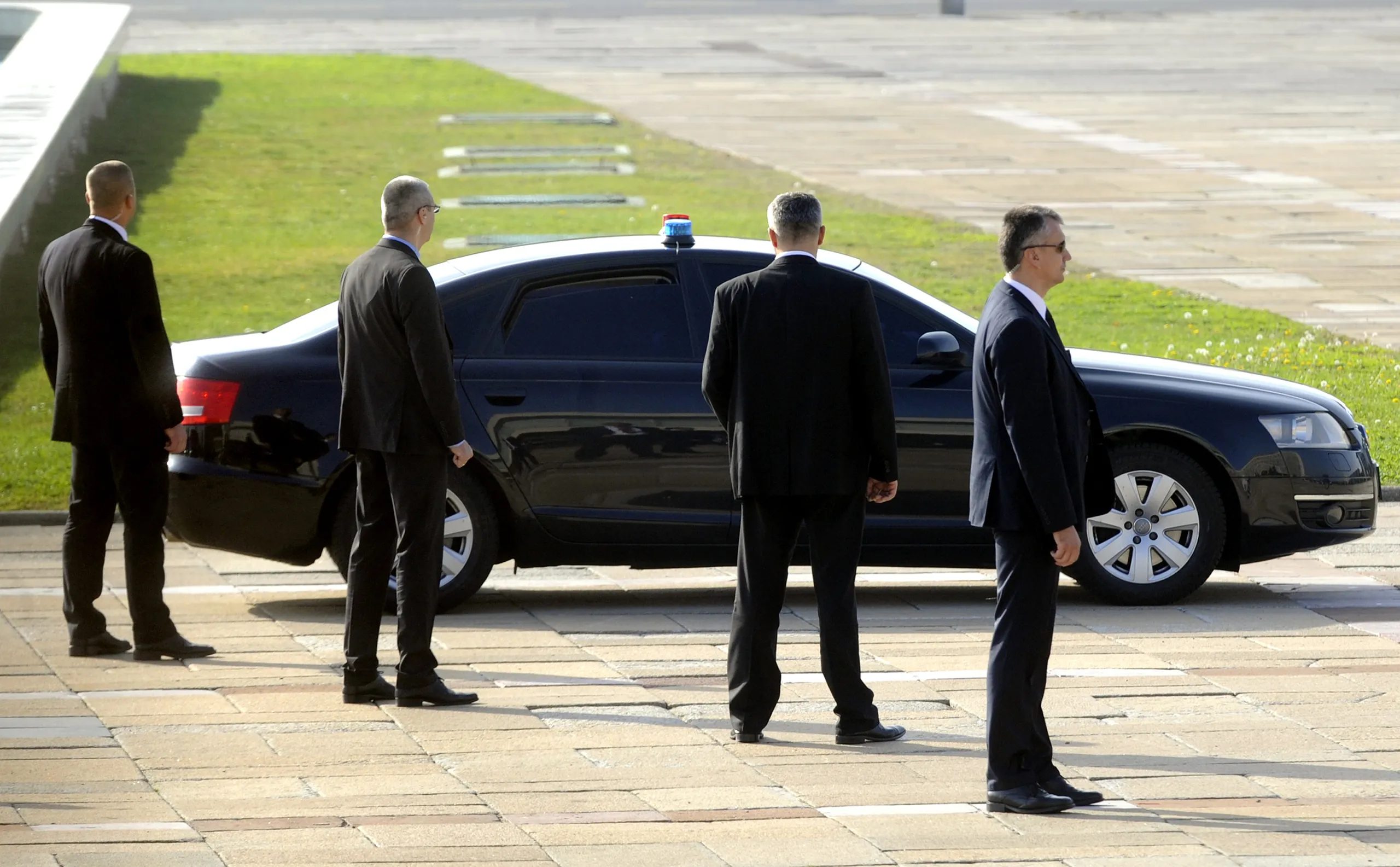
For corporate and diplomatic principals in Yerevan, the standard deployment includes vetted airport transfers, mobile close protection for higher-risk engagements, and residential security for extended assignments. For regional security context, see our security services in Tbilisi and our Baku security briefing.
What are the main security threats in Yerevan?
Geopolitical Tension and Border Risk
Armenia and Azerbaijan fought a 44-day war over Nagorno-Karabakh in 2020, resulting in Azerbaijan recapturing significant territory. In September 2023, Azerbaijan conducted a rapid military operation that led to the complete dissolution of the self-declared Republic of Artsakh (Nagorno-Karabakh) and the displacement of approximately 100,000 ethnic Armenians into Armenia. The Armenian-Azerbaijani border remains tense. The FCDO advises against all travel within 5 kilometres of the Armenian-Azerbaijani border and against all travel to the Syunik region's eastern border areas (FCDO Armenia travel advice, 2026). The US State Department lists the border region with Azerbaijan as Do Not Travel (Level 4, 2026).
Political Instability and Civil Demonstrations
Armenia has experienced significant political turbulence. Prime Minister Nikol Pashinyan came to power through the 2018 Velvet Revolution and faced significant opposition following the 2020 war outcome. Demonstrations and protests occur, including some that have become tense at times. The broader political environment reflects tensions between pro-Western and pro-Russian factions within Armenian society, complicated by Armenia's partial withdrawal from the Russia-led CSTO security organisation.
Petty Crime and Urban Security
Yerevan is relatively safe by regional and global standards for a capital city of its size. Petty crime including pickpocketing and bag-snatching occurs in crowded tourist areas and on public transport but at rates well below many comparable cities. The FCDO advises exercising a high degree of caution in Armenia (FCDO Armenia travel advice, 2026).
Landmines and Unexploded Ordnance
Territories previously affected by the 2020 war and areas near the Azerbaijani border retain landmine and unexploded ordnance hazards. The FCDO specifically warns against travelling off established routes near border areas. This does not affect Yerevan city operations but is relevant for any principals travelling to regions near the Azerbaijani border.
Vetted operators with direct experience in Yerevan
What security services are available in Yerevan?
Executive Protection
Residential and mobile close protection for corporate and diplomatic principals in Yerevan.
Security Drivers
Vetted security transport for Yerevan airport transfers, city movement, and inter-city travel within safe areas of Armenia.
Residential Security
Residential security assessments for diplomatic staff and corporate executives based in Yerevan on extended assignments.
Risk Assessment
Geopolitical risk assessment for organisations with Armenia and South Caucasus exposure, including border region monitoring.
What are the rules for private security in Yerevan?
Key regulatory requirements for operating security services in Yerevan.
Firearms Policy
The terms on which private security staff in Armenia may carry firearms could not be confirmed against a primary source on 14 October 2026. Commercial close protection in Yerevan typically uses unarmed officers; any armed element, and the permit behind each weapon, must be confirmed in writing before an assignment starts.
Licensing
Private security activity is a licensed activity in Armenia: it is listed in the security sector of the table in article 43 of the Law 'On Licensing', with a qualification requirement. The UN Working Group on mercenaries welcomed the amended law on private security activities as a clear framework for licensing private security providers (27 February 2023). The law's year and the licensing body could not be confirmed against a primary source on 14 October 2026, so ask any provider for its licence and the issuing body.
Foreign Operators
Article 7 of the Law 'On Licensing' lets some foreign legal persons carry out licensed activities in Armenia by Government decision or with permission from the Armenian licensing body, but whether this applies to private security could not be confirmed on 14 October 2026. In practice, international operators work with locally licensed Armenian security companies; take local legal advice before a foreign team carries out protective duties.
Sources, checked : UN Working Group on the use of mercenaries, end-of-visit statement on Armenia, 27 February 2023 (ecoi.net copy of the OHCHR release); Law of the Republic of Armenia 'On Licensing', article 43 table, security sector item 11 (private security activity), ARLIS.
Which areas of Yerevan carry elevated risk?
Lower-Risk Areas
- Central Yerevan, including Republic Square, the Northern Avenue, and the Cascade Complex area, maintains good general security for visitors.
- The Kentron (central) district is well-policed and has the principal concentration of international hotels and corporate facilities.
Elevated-Risk Areas
- Armenian-Azerbaijani border areas (within 5 km): FCDO advises against all travel.
- Syunik region eastern border: heightened military and political sensitivity.
- Mass demonstration routes: avoid large political gatherings which can become tense.
Deploying to Yerevan? Get a vetted close protection detail.
Request ConsultationWho do you call in an emergency in Yerevan?
Police
102
Fire service
101
Medical emergency
103
Nairi Medical Centre
+374 10 243 434
What travel advisories apply to Yerevan?
- The FCDO advises exercising a high degree of caution in Armenia and against all travel within 5 km of the Armenian-Azerbaijani border. Source: FCDO Armenia travel advice (2026).
- The US State Department advises Exercise Increased Caution in Armenia (Level 2), and lists the border region with Azerbaijan as Do Not Travel (Level 4) (2026).
- Political demonstrations occur in Yerevan and can become tense. Monitor local media and maintain flexibility in movement plans during periods of civil unrest.
- Zvartnots International Airport (EVN) provides connections to European and regional hubs. The airport is approximately 12 km west of central Yerevan. Pre-arrange vetted transport for arrivals.
- Medical facilities in Yerevan include Nairi Medical Centre and Erebuni Medical Centre, which provide adequate care for most cases. Medical evacuation to Tbilisi or Istanbul is standard contingency for specialist care. Arrange medevac cover before deployments.
Frequently Asked Questions
What is the security situation in Yerevan following the 2023 Nagorno-Karabakh events?
Is close protection available in Yerevan?
What are the risks near the Armenian-Azerbaijani border?
What medical facilities are available in Yerevan?
This page is published by CloseProtectionHire.com and written to editorial standards overseen by James Calloway, Senior Security Consultant (regulation, licensing, vetting and risk frameworks) and Marcus Webb, Security Operations Adviser (operational close protection, secure transport and city-specific safety).
Threat, regulatory and emergency information is sourced to named, dated authorities such as the FCDO, the US State Department and national licensing bodies. Last updated . See how we verify.