
Planning travel to Tunis? Speak with a security consultant.
Tunis is the capital of Tunisia and the country’s primary centre for commerce, banking, and international engagement. The city sits on the Gulf of Tunis at the junction of the Mediterranean and serves as a gateway for trade and investment across North Africa.
Tunisia’s post-Arab Spring trajectory has been closely watched internationally. The country held genuinely competitive elections through the 2010s, but since 2021 has moved toward concentrated presidential authority. For business visitors, this political context shapes the operating environment without directly threatening most corporate visits.
Security context
The 2015 terrorist attacks changed Tunisia’s security posture fundamentally. The Bardo Museum attack, the Sousse beach attack, and the Tunis city centre bombing within a single year produced a comprehensive security response: expanded counter-terrorism units, tighter border controls, and a sustained state of emergency that lasted until 2017. Tunisia’s security forces are now significantly more capable than they were before 2015.
The terrorism threat remains. It has not disappeared. For business visitors, the practical implication is situational awareness: soft targets (tourist sites, crowded areas, transport hubs) require more care than the established business districts.
Business environment
Les Berges du Lac has developed into a modern business district with European-standard office and hotel infrastructure. It is the operational centre for most international corporate activity in Tunis and presents a very different security profile from the Medina or interior districts. The majority of corporate itineraries can be managed effectively within this district.
The coast north of Tunis (La Marsa, Gammarth, Sidi Bou Said) provides residential and leisure options for longer assignments with lower ambient crime risk.
Sources: FCDO Tunisia travel advice, May 2026. US State Department Level 2: Exercise Increased Caution. For comparable operating environments in our network, see our Cairo city briefing and Casablanca city briefing.
What are the main security threats in Tunis?
Terrorism
Tunisia has experienced significant Islamist terrorist attacks, including the 2015 Bardo Museum attack (22 killed), the 2015 Sousse beach attack (38 killed, the majority British tourists), and a 2015 attack on the Presidential Guard in central Tunis. The terrorism threat remains elevated. FCDO maintains a high terrorism threat warning for Tunisia. The threat is higher in the interior and border regions than in Tunis city, but the capital has been a direct target. Source: FCDO Tunisia travel advice, May 2026.
Political Instability
Tunisia's post-2011 democratic transition has reversed significantly since 2021 when President Saied suspended parliament and assumed executive powers. A new constitution consolidating presidential authority was approved in 2022. Civil society and opposition activity have faced pressure. The political environment creates uncertainty for business planning and the possibility of unrest, though Tunis has not seen sustained protest violence comparable to the 2011 revolution period.
Civil Unrest
Economic pressures including high youth unemployment, inflation, and austerity linked to IMF negotiations have created conditions for periodic unrest. Protests have occurred in Tunis's working-class districts and in Sidi Bouzid and interior towns. Security force responses vary. Central Tunis demonstrations have been manageable historically but should be monitored.
Petty Crime
Pickpocketing and bag snatching occur in the Medina, Souk, and tourist-heavy areas of Tunis. Confidence scams targeting foreign visitors are reported in the Medina and around major hotels. Valuables should not be displayed visibly.
Vetted operators with direct experience in Tunis
What security services are available in Tunis?
Security Drivers
Vetted drivers with Tunis operational experience for airport transfers, business meetings, and intercity movement.
Bodyguard Hire
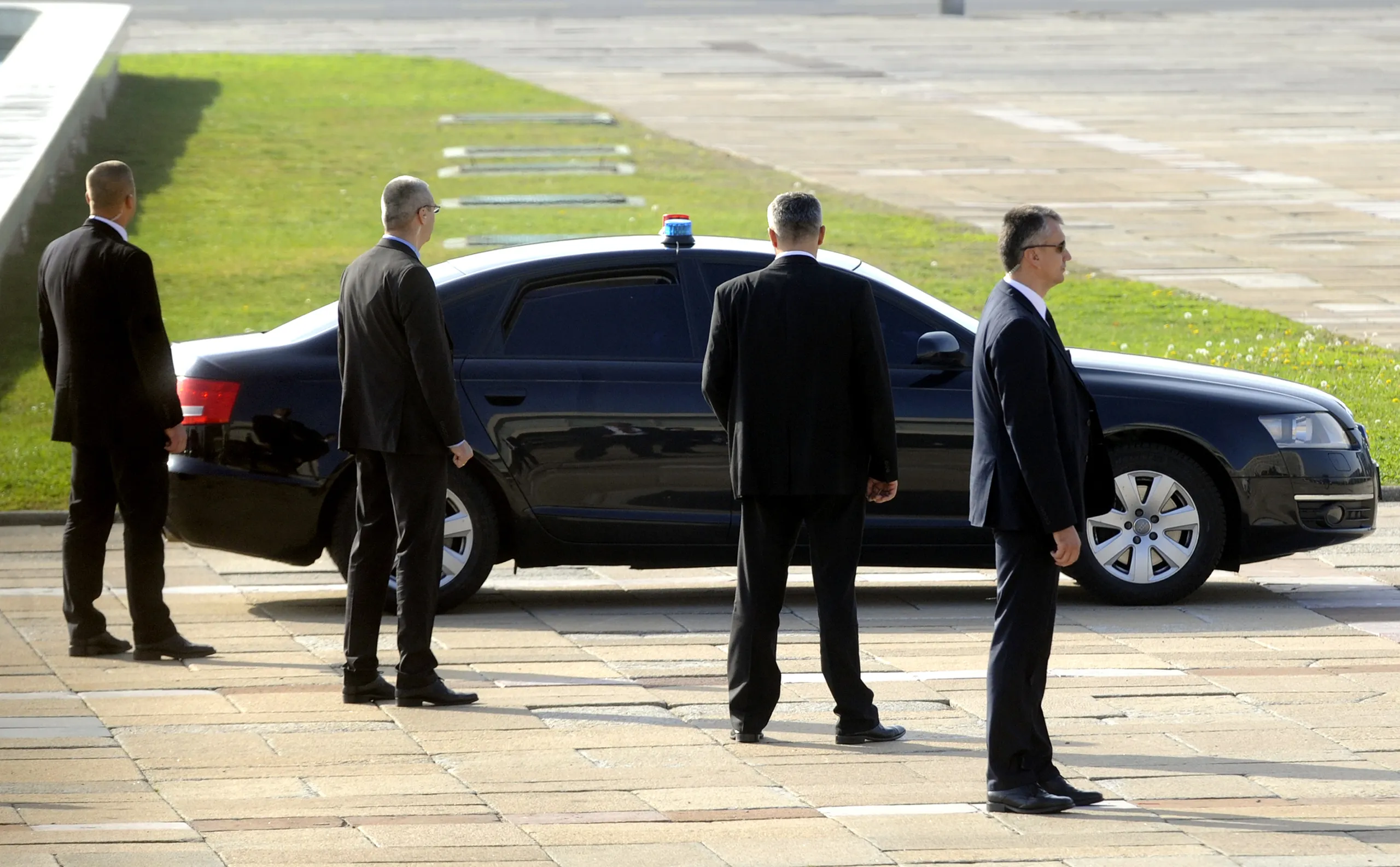
Close protection for higher-profile visitors or visits with specific security requirements.
Executive Protection
Security details for executives and senior officials operating in Tunis, including advance work and venue assessment.
Risk Assessment
Pre-travel assessment covering current political environment, terrorism threat picture, and specific itinerary risks.
What are the rules for private security in Tunis?
Key regulatory requirements for operating security services in Tunis.
Firearms Policy
A law of 18 February 2008 repealed Articles 21 to 25 of Law No. 2002-81, the private security law. A 2014 UN Working Group report cited Article 21 as letting private security staff carry weapons, so that statement no longer describes the law in force. The current rule on firearms for private security staff could not be confirmed against a primary source on 22 October 2026. Plan cover as unarmed, and confirm any armed element, and the authority behind it, in writing before an assignment starts.
Licensing
Private control, guarding, cash and precious-metal transport and the physical protection of persons are regulated by Law No. 2002-81 of 3 August 2002, and each needs an authorisation. The Minister of the Interior can suspend an authorisation by order while its holder is prosecuted (Article 30, as amended in 2008). Working without one is punishable by three years in prison, a fine of 50,000 to 100,000 dinars, or either (Article 32). Ask any provider for its authorisation before engagement.
Foreign Operators
The rules for foreign security companies and foreign protection officers in Tunisia could not be confirmed against a primary source on 22 October 2026. Work through a Tunisian provider that can show its authorisation, and take local legal advice before a foreign team carries out protective duties.
Sources, checked : Journal Officiel de la République Tunisienne No. 16 of 22 February 2008, pages 781 to 782: the law of 18 February 2008 amending Law No. 2002-81 of 3 August 2002 (new Articles 30 and 32; Article 4 repeals Articles 21 to 25), FAOLEX copy; UN Human Rights Council, Working Group on the use of mercenaries, A/HRC/27/50 (2014), paragraphs 20, 25 and 34: Tunisia's private security law and licensing by the ministry responsible for internal security.
Which areas of Tunis carry elevated risk?
Lower-Risk Areas
- Les Berges du Lac (Lac 1 and Lac 2): Modern business district north of central Tunis. International corporate and diplomatic presence, lower crime risk.
- Carthage and La Marsa: Coastal residential and diplomatic areas north of Tunis. Lower crime rates.
- City of Culture area (Cite de la Culture): Newer development district with good security infrastructure.
Elevated-Risk Areas
- Medina (Old City): High tourist density, elevated petty crime, complex narrow street layout.
- Bab El Khadra and Bab Souika: Working-class inner-city areas with periodic unrest.
- Interior and border regions: FCDO advises against travel near the Libyan border and recommends caution in interior governorates.
Deploying to Tunis? Get a vetted close protection detail.
Request ConsultationWho do you call in an emergency in Tunis?
Police
197
National Guard
193
Ambulance (SAMU)
190
Fire
198
Charles Nicolle Hospital, Tunis (main public teaching hospital)
+216 71 570 011
Mongi Slim Hospital, La Marsa
+216 70 939 066
CAMU, Centre d'Assistance Medicale Urgente
+216 71 341 807
Tunisie Ambulance
+216 71 725 555
US Embassy Tunis switchboard
+216 71 107 000
What travel advisories apply to Tunis?
- FCDO advises against all travel within 75km of the Libyan border and against all but essential travel to parts of the interior. Tunis city is assessed separately and is not subject to these specific advisories.
- The terrorism threat in Tunis is elevated and includes the risk of attacks on tourist sites, government facilities, and foreign interests. Awareness of soft targets is warranted.
- Political demonstrations in the Ave Habib Bourguiba area and near government ministries can escalate. Avoid large gatherings and monitor local news during periods of political tension.
- Photography near military and police installations is prohibited.
Frequently Asked Questions
Is Tunis safe for business travel?
What is the terrorism risk specifically in Tunis city?
Do I need close protection in Tunis?
What are the main business districts in Tunis?
This page is published by CloseProtectionHire.com and written to editorial standards overseen by James Calloway, Senior Security Consultant (regulation, licensing, vetting and risk frameworks) and Marcus Webb, Security Operations Adviser (operational close protection, secure transport and city-specific safety).
Threat, regulatory and emergency information is sourced to named, dated authorities such as the FCDO, the US State Department and national licensing bodies. Last updated . See how we verify.