Honduras · Close Protection & Executive Security
Close Protection in Tegucigalpa, Honduras
Close protection and security drivers in Tegucigalpa, Honduras. Executive security for manufacturing, energy, and finance sector visits to Central America's high-risk capital.
Planning travel to Tegucigalpa? Speak with a security consultant.
Tegucigalpa is the capital and largest city of Honduras, with a metropolitan population of approximately 1.2 million. It is the seat of government and the centre of Honduras’s financial services sector, energy administration, and regional management for the country’s significant manufacturing and agricultural industries. International visitors come to Tegucigalpa for government affairs and regulatory engagement, development finance and aid operations, manufacturing oversight in the maquila and free trade zone sector, energy sector business including hydroelectric and renewables projects, and financial services. Honduras is one of Central America’s larger economies, and Tegucigalpa functions as the administrative hub for a country with significant cross-sector international investment.
The security environment in Tegucigalpa is elevated. Honduras’s murder rate has declined significantly from its 2011 peak of approximately 90 per 100,000 to approximately 31 per 100,000 in 2023 (IUDPAS/UNAH), but this remains among the highest rates in Latin America in absolute terms. Gang activity, primarily associated with MS-13 and Barrio 18, is concentrated in peripheral colonias that are not on standard business itineraries. However, kidnapping and extortion targeting business figures remain documented risks even within commercial zones, and corruption in elements of the security forces, illustrated by the extradition and conviction of former President Juan Orlando Hernandez on drug trafficking charges (2022-2024), means that independent security arrangements are essential. The US State Department classifies Honduras at Level 3 (Reconsider Travel) as of 2026, and the FCDO advises a high degree of caution throughout the country.
The Colonia Palmira diplomatic and business district is the operational base for international visitors to Tegucigalpa. Major international hotels, embassies, and corporate offices are concentrated in this zone, which has a substantially different risk profile from the peripheral city. The recommended security baseline for all corporate visits is vetted security drivers for all movements, including the airport transfer from Toncontin International Airport (TGU), which is located approximately 6km from Colonia Palmira but served by routes requiring route planning awareness. Senior executives and those in sectors with an elevated targeting profile should engage close protection officers with Central America experience.
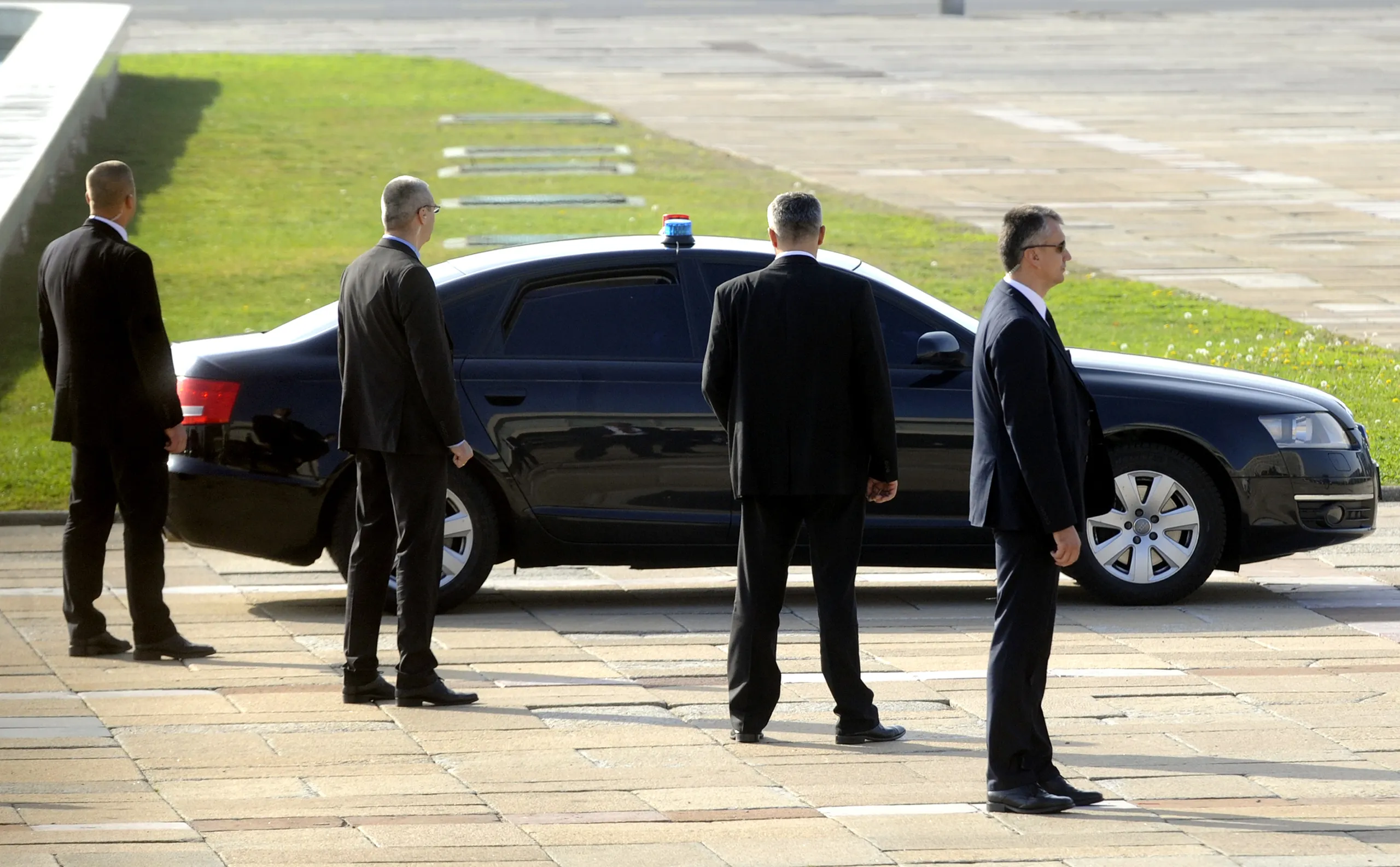
For security support in Tegucigalpa, our bodyguard hire team provides close protection officers with regional experience, and our security drivers cover airport transfers and business-day movement. Visitors to Honduras frequently also engage security support in neighbouring capitals; our Guatemala City and San Salvador pages provide complementary regional context. Sources: FCDO Honduras travel advice (2026); US State Dept Honduras Level 3 advisory (2026); IUDPAS/UNAH crime statistics (2023); US Department of Justice extradition proceedings (2022-2024).
Threat Profile
Gang Violence and Organised Crime
Honduras has historically been among the most violent countries in the world, though the murder rate has declined from a peak of approximately 90 per 100,000 in 2011 to approximately 31 per 100,000 in 2023 according to statistics from the Universidad Nacional Autonoma de Honduras violence observatory (IUDPAS/UNAH). The reduction reflects sustained security force operations and, to a degree, changes in gang structure, but the absolute rate remains significantly elevated. MS-13 and Barrio 18 have historically dominated street-level criminal activity in Tegucigalpa, and narco-trafficking organisations maintain significant presence. Peripheral colonias (neighbourhoods) carry serious gang risk that is not reflected in the conditions of the diplomatic and hotel zones.
Kidnapping and Extortion
Kidnapping targeting business figures, wealthy Honduran families, and high-profile international visitors is a documented risk in Tegucigalpa. Extortion demands directed at businesses, including international companies operating in free trade zones, are prevalent. The US State Department Honduras Level 3 advisory (2026) specifically notes kidnapping as a risk. Business executives, particularly those with visible corporate profiles or known associations with high-value sectors, should engage close protection officers and follow low-profile movement protocols.
Drug Trafficking and Corruption
Honduras is a major cocaine transit country between South America and the United States. Several senior Honduran officials, including former President Juan Orlando Hernandez (extradited to the US in 2022 and convicted in 2024), have been linked to trafficking networks. Corruption in elements of the security forces is documented. The operational implication for business visitors is that local law enforcement cannot always be relied upon as a security backstop, and independent security arrangements are essential. Source: FCDO Honduras travel advice (2026); US DoJ extradition proceedings (2022-2024).
Vetted operators with direct experience in Tegucigalpa
Available Services in Tegucigalpa
Security Drivers
Vetted, licensed security drivers for airport transfers and in-city movement.
Bodyguard Hire
Close protection officers for senior principals and visiting executives.
Executive Protection
Structured EP programmes for principals with elevated risk profiles.
Risk Assessment
Pre-travel security assessment covering the current threat environment.
Security Regulations
Key regulatory requirements for operating security services in Tegucigalpa.
Firearms Policy
Armed private security in Honduras is regulated under the National Police framework. Companies providing armed security must hold authorisation from the Secretaria de Estado en los Despachos de Seguridad (Ministry of Security). Verify armed operator authorisation before engagement.
Licensing
Honduras's private security sector is regulated under the Ley de Seguridad Privada (Private Security Companies Law) and requires companies to hold Interior Ministry (Secretaria de Gobernacion) authorisation. Verify your operator's licence and registration before engagement.
Foreign Operators
Foreign security personnel may accompany principals in Honduras in an unarmed advisory capacity. Armed security must be provided by Ministry-authorised Honduran companies. Advance coordination with a licensed local operator is essential for any visit requiring armed escort.
Zone Intelligence
Lower-Risk Areas
- Colonia Palmira: The principal diplomatic and international business district. Contains major international hotels, embassy row, and corporate offices. The recommended base for all business visitors to Tegucigalpa.
- Boulevard Morazan: Main commercial corridor running through the upper city. Banks, business services, and restaurants. Manageable during business hours with awareness.
Elevated-Risk Areas
- Downtown Tegucigalpa and Comayaguela: The old city centre and market area south of the river. Higher gang activity, petty crime, and robbery risk. Business meetings in this zone should be accompanied by security support.
- Peripheral colonias: Residential areas beyond the Colonia Palmira and Boulevard Morazan zone carry significantly elevated gang risk. Business visitors have no reason to enter these areas.
Deploying to Tegucigalpa? Get a vetted close protection detail.
Request ConsultationEmergency Contacts
Police Emergency
911
Cruz Roja (Red Cross) Ambulance
195
Hospital Viera
+504 2237 5700
British Embassy Tegucigalpa
+504 2220 0612
Important Warnings
- Toncontin International Airport (TGU) is approximately 6km from the Colonia Palmira business district but is famously approached through built-up mountainous terrain, making it operationally complex. Pre-arrange your transfer with a vetted security driver. Do not use informal taxis. Source: FCDO Honduras travel advice (2026).
- The US State Department classifies Honduras at Level 3 (Reconsider Travel) as of 2026. Specific colonias in Tegucigalpa carry implicit Level 4 conditions. Source: US State Dept Honduras travel advisory (2026).
- Corruption within elements of the Honduran security forces is well-documented. Business visitors should not rely solely on local police as a security resource and should maintain independent security arrangements throughout their visit. Source: FCDO Honduras travel advice (2026).
- Healthcare in Tegucigalpa is limited. Hospital Viera is the recommended private facility. For serious trauma or critical conditions, medical evacuation to the United States is the appropriate response. Confirm medical evacuation insurance before travel.
Frequently Asked Questions
Request a Consultation
Describe your security requirements below. All enquiries are confidential and handled by licensed consultants.
Your enquiry has been received. A security consultant will contact you within 24 hours to discuss your requirements.