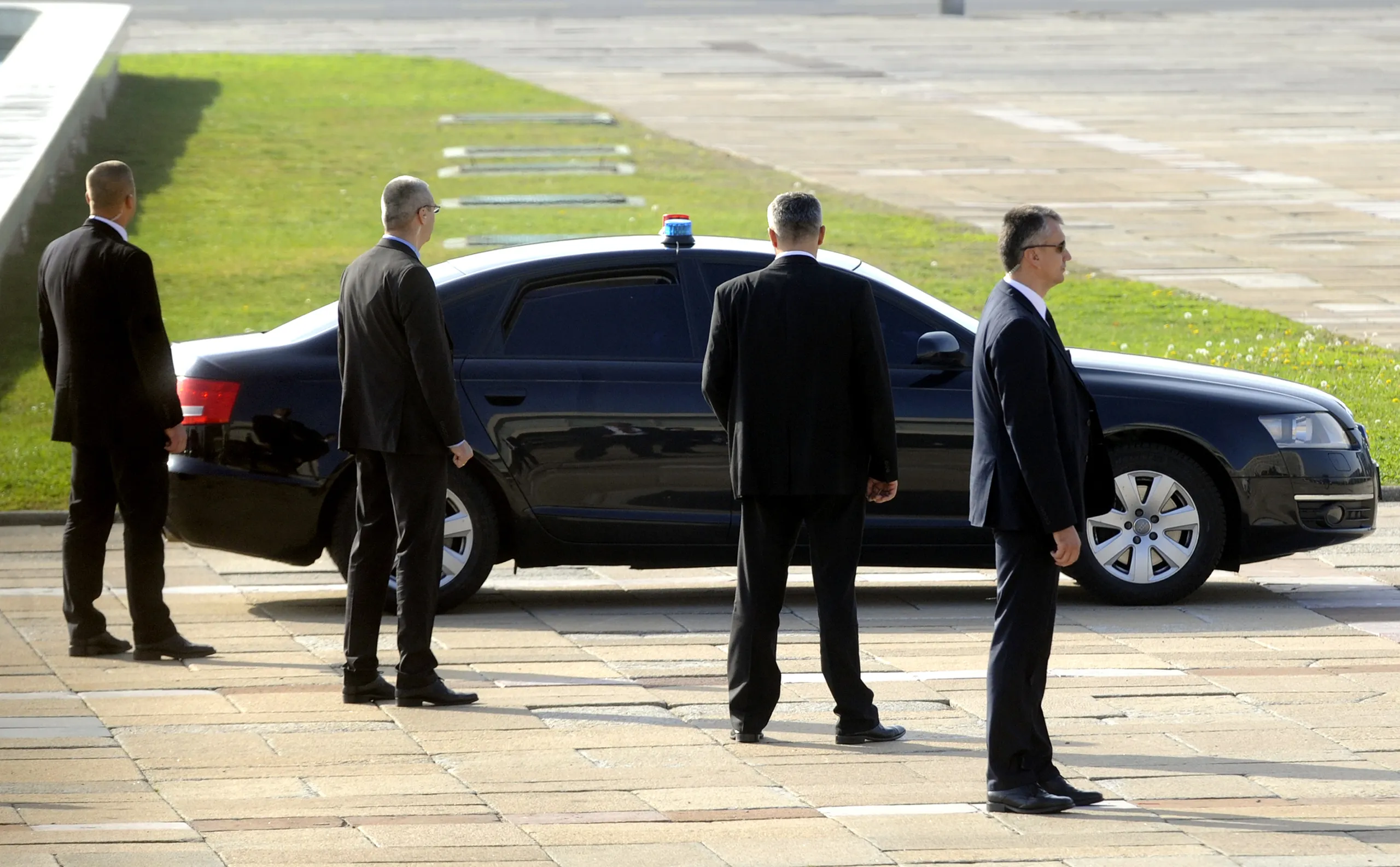
United Arab Emirates · Close Protection & Executive Security
Close Protection in Sharjah, UAE
Close protection and executive security in Sharjah, UAE. PSBD-licensed operators, briefing on Sharjah's alcohol-free legal environment, and transfers to Dubai and SAIF Zone.
Planning travel to Sharjah? Speak with a security consultant.
Executives who know Dubai often assume Sharjah, twenty minutes up the coast, runs on the same rules. It doesn’t. Sharjah is the only emirate in the UAE that bans alcohol outright, and its public-conduct standards, set out in rules the Sharjah government issued back in 2001, are enforced with more consistency than in Dubai or Abu Dhabi. That legal distinction, not crime, is the real planning issue for anyone moving between the two.
Beyond the legal environment, Sharjah has a character of its own. UNESCO named it Cultural Capital of the Arab World in 1998, and the emirate has leaned into that identity ever since, building out museums, heritage districts, and cultural institutions rather than competing with Dubai’s skyline. Economically, it plays a different role too: manufacturing, logistics, and trading firms cluster around the Sharjah Airport International Free Zone (SAIF Zone), drawn by industrial space and running costs well below Dubai’s. Sharjah International Airport itself, the base for budget carrier Air Arabia, is one of the region’s busiest, carrying close to 20 million passengers a year to more than 90 destinations.
Sharjah’s police force dates to 1967 and has run under the federal Ministry of Interior since the UAE’s formation in 1971, but private security licensing in the emirate does not follow Sharjah Police directly. It runs instead through the Private Security Business Department (PSBD), an Abu Dhabi Police unit, which covers Sharjah alongside Abu Dhabi and the four smaller Northern Emirates. Dubai’s separate SIRA licence has no standing here: any operator working legally in Sharjah needs PSBD certification specifically.
A large share of Dubai’s corporate workforce actually lives in Sharjah, drawn by cheaper housing, and commutes daily across the Al Ittihad Road border corridor at Al Nahda. That commute is congested and predictably so, a fact that matters more for planning a Sharjah visit than any crime statistic does.
Security Services in Sharjah
Close protection work in Sharjah centres on legal and cultural briefing as much as physical security: knowing where alcohol is and isn’t available, understanding the Sharjah Decency and Public Conduct Rules, and planning journeys around the Dubai border traffic rather than being caught by it. Security drivers here need working familiarity with both the Sharjah street network and the Al Ittihad Road and Emirates Road routes into Dubai, since most business visits touch both emirates. For principals visiting SAIF Zone or Sharjah’s industrial districts, executive protection planning looks different from a Dubai hotel-and-DIFC itinerary, and residential security work often covers corporate housing for staff based in Sharjah but working in Dubai.
For the wider national picture, see our UAE country hub, and for the neighbouring emirates on our network, our Dubai city page and Abu Dhabi city page. For hire options specific to Sharjah, see bodyguard hire in Sharjah.
Source: FCDO United Arab Emirates travel advice (updated 13 July 2026). Sharjah Decency and Public Conduct Rules, Government of Sharjah (16 June 2001). UAE Ministry of Interior, Private Security Business Department (PSBD) regulations. Sharjah International Airport passenger and route data (2025-2026). UNESCO Sharjah Cultural Capital of the Arab World designation (1998).
What are the main security threats in Sharjah?
Legal and Cultural Distinction from Dubai
Sharjah is the only one of the UAE's seven emirates with a complete alcohol ban. No licences are issued to hotels, restaurants, or private venues, and possession or consumption anywhere in the emirate is an offence. The Sharjah Decency and Public Conduct Rules, issued by the Government of Sharjah on 16 June 2001, also set out dress-code and public-behaviour standards enforced more strictly than in neighbouring Dubai. For executives used to Dubai's licensed-venue culture, this is the single biggest adjustment Sharjah requires, and it needs to be briefed before arrival, not discovered on the ground.
Low Street Crime
As with the rest of the UAE, ordinary violent crime affecting business visitors is rare in Sharjah. Ministry of Interior policing is extensive and the emirate is not flagged separately from the wider UAE low-crime profile in FCDO or US State Department guidance. The practical security work in Sharjah is legal compliance and logistics rather than crime avoidance.
Road and Border Congestion
Al Ittihad Road (E11), the main artery between Sharjah and Dubai, sees heavy and largely predictable congestion at the Al Nahda border corridor during the morning and evening commute, a pattern regularly reported by Gulf News traffic updates through 2026. Emirates Road (E611) is the usual alternative for principals who need a reliable journey-time estimate rather than a fast one.
Regional Backdrop
FCDO travel advice for the UAE, last updated 13 July 2026, does not currently advise against travel, having lifted the 'all but essential travel' wording applied earlier in 2026 during a period of regional escalation. The guidance notes the situation remains unpredictable and could shift at short notice, so this is worth checking against the live FCDO page before any visit rather than treated as fixed.
Vetted operators with direct experience in Sharjah
What security services are available in Sharjah?
Executive Protection
Discreet protection for principals visiting Sharjah's industrial, logistics, and cultural-sector organisations, built around the emirate's distinct legal environment as much as physical security.
Security Drivers
Vetted drivers with working knowledge of the Sharjah-Dubai commute corridor, SAIF Zone access, and Sharjah International Airport transfers.
Bodyguard Hire
Close protection officers briefed on Sharjah's public-conduct and alcohol laws, appropriate for single visits and short corporate trips into the emirate.
Residential Security
Property security and domestic staff vetting for corporate housing in Sharjah, commonly used by staff commuting to Dubai-based roles.
What are the rules for private security in Sharjah?
Key regulatory requirements for operating security services in Sharjah.
Firearms Policy
Firearms are prohibited for private security throughout the UAE, Sharjah included. All close protection work is unarmed and relies on planning, avoidance, and legal compliance rather than use of force.
Licensing
Unlike Dubai, which licenses private security through its own Security Industry Regulatory Agency (SIRA), Sharjah falls under the Private Security Business Department (PSBD), a unit of Abu Dhabi Police operating under the federal Ministry of Interior. PSBD covers Sharjah, Abu Dhabi, Ajman, Umm Al Quwain, Ras Al Khaimah, and Fujairah. Sharjah Police, the emirate's own police force since 1967, handles general policing and sits within the same federal Ministry of Interior structure, but private security licensing itself runs through PSBD rather than Sharjah Police directly.
Foreign Operators
Foreign operators need UAE residency, a work permit, and PSBD certification before working legally in Sharjah. A SIRA licence valid in Dubai does not automatically cover work in Sharjah; the two licensing chains are administratively separate even though both sit under the federal Ministry of Interior.
Which areas of Sharjah carry elevated risk?
Lower-Risk Areas
- Al Majaz Waterfront and the Buhaira Corniche: a well-lit, family-oriented district with a strong police presence and low crime.
- University City and Al Taawun: home to the American University of Sharjah and a cluster of business and government buildings, orderly and well-policed.
- Al Qasba and the cultural district around Sharjah Museums: purpose-built for visitors, with consistent security infrastructure.
Elevated-Risk Areas
- Al Nahda and the Al Ittihad Road border corridor during peak commute hours: the risk here is road congestion and driving conditions rather than crime.
- Sharjah's industrial areas and SAIF Zone approach roads: heavier goods-vehicle traffic and less pedestrian-oriented infrastructure than the central districts.
Deploying to Sharjah? Get a vetted close protection detail.
Request ConsultationWho do you call in an emergency in Sharjah?
Police
999
Ambulance
998
Fire and Civil Defence
997
University Hospital Sharjah
+971 6 505 5555
British Consulate, Dubai (nearest to Sharjah)
+971 4 309 4444
What travel advisories apply to Sharjah?
- Sharjah is the only UAE emirate with a total alcohol ban. No licences are issued anywhere in the emirate, including hotels, and this applies to residents and visitors alike. Do not assume Dubai's rules carry over.
- The Sharjah Decency and Public Conduct Rules (16 June 2001) set dress-code and public-behaviour standards that are enforced more consistently than in Dubai or Abu Dhabi. Briefing on appropriate dress and conduct is worthwhile before any visit.
- Photography of government buildings, military sites, and ports is restricted UAE-wide, and Sharjah is no exception.
- Al Ittihad Road congestion at the Sharjah-Dubai border is a routine feature of the morning and evening commute. Build in extra time or route via Emirates Road (E611) where the schedule allows.
- As with the rest of the UAE, drug-residue laws are strict and carry no minimum threshold defence. This applies equally to visitors passing through Sharjah on business.
Frequently Asked Questions
This page is published by CloseProtectionHire.com and written to editorial standards overseen by James Calloway, Senior Security Consultant (regulation, licensing, vetting and risk frameworks) and Marcus Webb, Security Operations Adviser (operational close protection, secure transport and city-specific safety).
Threat, regulatory and emergency information is sourced to named, dated authorities such as the FCDO, the US State Department and national licensing bodies. Last updated . See how we verify.
Request a Consultation
Describe your security requirements below. All enquiries are confidential and handled by licensed consultants.
Your enquiry has been received. A security consultant will contact you within 24 hours to discuss your requirements.