
Planning travel to Sarajevo? Speak with a security consultant.
Sarajevo is the capital of Bosnia and Herzegovina, a country whose contemporary security environment is fundamentally shaped by the 1992-1995 war – Europe’s deadliest conflict since the Second World War – and the complex governance structure established by the 1995 Dayton Agreement to end it. The city itself carries a powerful historical weight: it was the site of a three-and-a-half year siege (April 1992-February 1996) by Bosnian Serb forces and Bosniak and Croat community division that has only partially healed in the three decades since.
For corporate and diplomatic visitors, the Sarajevo of 2026 is a functioning European capital with reasonable security in the city centre, an international hotel infrastructure, and direct air links to European hubs. The FCDO advises a high degree of caution (FCDO BiH travel advice, 2026) and the US State Department advises Exercise Increased Caution (Level 2, 2026). The primary security considerations are the residual political instability of the Dayton governance structure, organised crime risks requiring due diligence in business dealings, and the landmine hazard in rural and mountain areas outside the city.
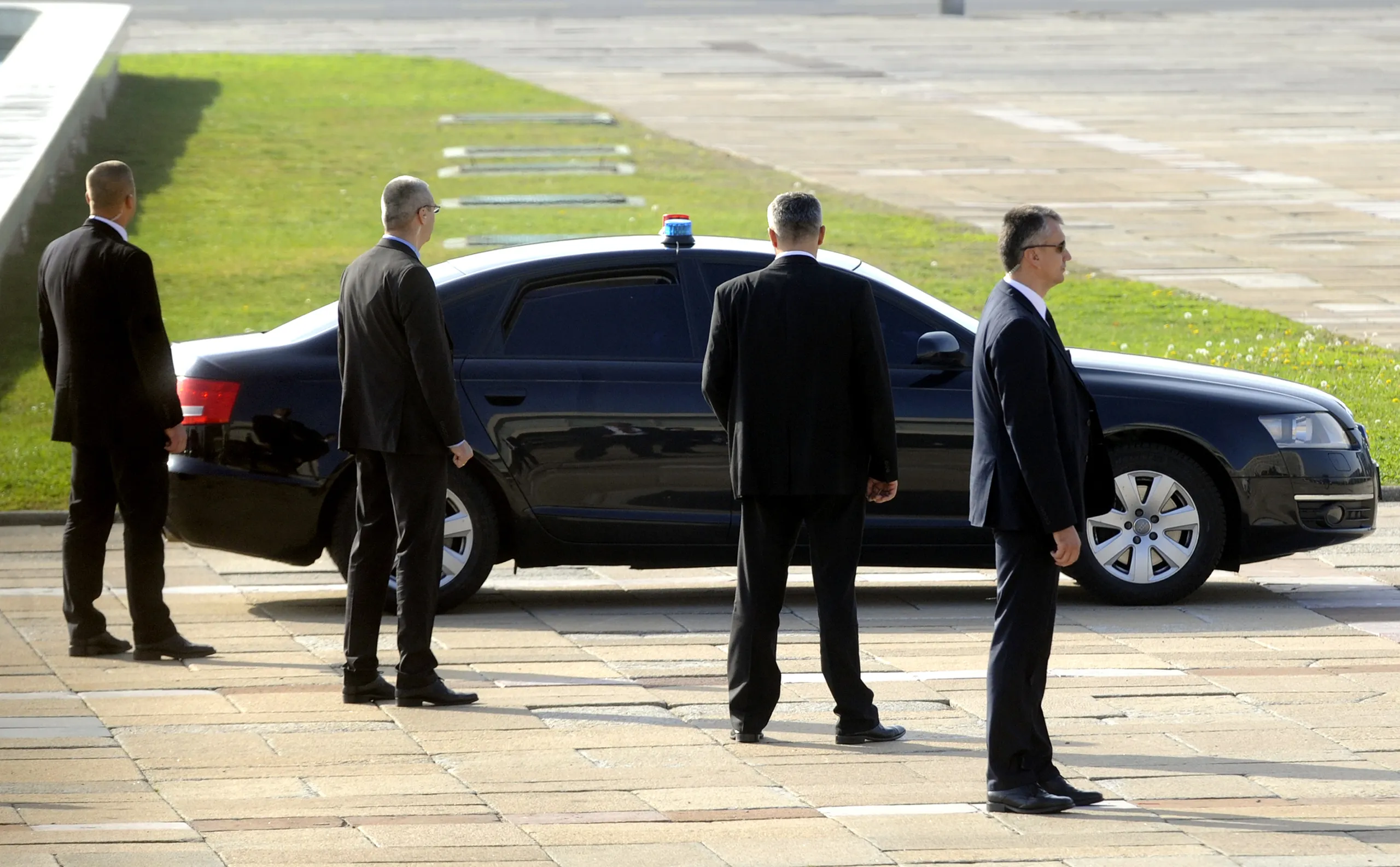
Executive protection and security driver services for Sarajevo are available through licensed Federation of BiH operators. For regional security context, see our security services in Podgorica and our Tirana security briefing.
What are the main security threats in Sarajevo?
Post-Conflict Political Instability
Bosnia and Herzegovina's political system, established by the 1995 Dayton Agreement, divides the country between two entities: the Federation of Bosnia and Herzegovina and Republika Srpska. Political tensions between the entities -- and in particular between Bosniak, Croat, and Serb political leaderships -- generate recurring constitutional crises. Republika Srpska's leadership has challenged the authority of state-level institutions. These tensions have periodically reached crisis level and require monitoring. The FCDO advises exercising a high degree of caution in Bosnia and Herzegovina (FCDO BiH travel advice, 2026).
Landmines and Unexploded Ordnance
Bosnia and Herzegovina has one of the world's highest concentrations of landmines and unexploded ordnance, a legacy of the 1992-1995 war. As of 2025, the Bosnia and Herzegovina Mine Action Centre (BHMAC) estimates that approximately 1,000 square kilometres remain contaminated. Mined areas are found in forests, mountain slopes, and near former front lines -- outside city limits. Sarajevo city centre is clear of mines, but excursions into rural, forested, or mountain areas require strict adherence to established paths. The FCDO advises staying on established roads and paths outside city areas.
Organised Crime
Bosnia and Herzegovina's complex governance structure has created jurisdictional gaps that organised crime networks exploit. Drug trafficking, human trafficking, and financial crime are documented concerns. International business operations in Bosnia require due-diligence procedures appropriate to a jurisdiction with elevated corruption risk.
Petty Crime and Urban Security
Sarajevo experiences petty crime at moderate levels -- pickpocketing in the Bascarsija (old bazaar) area and on public transport are the most commonly reported incidents. The risk is manageable with standard personal security precautions. The US State Department advises Exercise Increased Caution in Bosnia and Herzegovina (Level 2, 2026).
Vetted operators with direct experience in Sarajevo
What security services are available in Sarajevo?
Executive Protection
Mobile and residential close protection for corporate executives, diplomatic staff, and HNW individuals in Sarajevo.
Security Drivers
Vetted security transport for Sarajevo airport transfers, city movement, and inter-city travel within safe corridors.
Residential Security
Residential security assessments for diplomatic personnel and corporate executives on extended Sarajevo assignments.
Risk Assessment
Country risk assessment covering BiH's political environment, Dayton Agreement governance risks, and the specific security considerations for operations in Sarajevo.
What are the rules for private security in Sarajevo?
Key regulatory requirements for operating security services in Sarajevo.
Firearms Policy
Under the Federation of BiH law, an agency may acquire firearms only with an approval issued with the prior consent of the Federal Ministry of Interior (Article 24, as amended). Ask any provider for the approval covering each weapon before engagement.
Licensing
Sarajevo is in the Federation of Bosnia and Herzegovina, where private security agencies are governed by the Law on Agencies and Internal Services for the Protection of People and Property (Službene novine FBiH 78/08, as amended). The agency's work approval is issued by the Federal Ministry of Interior, close protection of persons is a listed activity, and staff must hold a certificate for protection work (Article 16). Republika Srpska has its own law. Ask any provider for its Federal Ministry approval and its staff certificates before engagement.
Foreign Operators
Staff of a protection agency in the Federation must be citizens of Bosnia and Herzegovina (Article 16). The amending law allows foreign legal and natural persons to found an agency under the conditions it sets (Article 12a). Take local legal advice before a foreign team carries out protective duties.
Sources, checked : Parliament of the Federation of BiH, Law amending the Law on Agencies and Internal Services for the Protection of People and Property.
Which areas of Sarajevo carry elevated risk?
Lower-Risk Areas
- Central Sarajevo, including the Bascarsija district, the Cathedral area, and the main hotel zone along the Miljacka River, is generally safe for visitors during business and tourist hours.
- The airport corridor (Sarajevo International Airport SJJ) is a standard business route.
Elevated-Risk Areas
- Rural and mountain areas outside Sarajevo: landmine risk, adhere strictly to established paths.
- Outer residential districts: petty crime rates higher, police presence reduced.
- Political demonstration areas: avoid large political gatherings during periods of heightened constitutional tension.
Deploying to Sarajevo? Get a vetted close protection detail.
Request ConsultationWho do you call in an emergency in Sarajevo?
Police (emergency)
122
Fire service
123
Medical emergency
124
University Clinical Centre Sarajevo
+387 33 297 000
What travel advisories apply to Sarajevo?
- The FCDO advises exercising a high degree of caution in Bosnia and Herzegovina and warns specifically about landmine risk outside urban areas. Source: FCDO BiH travel advice (2026).
- The US State Department advises Exercise Increased Caution in Bosnia and Herzegovina (Level 2, 2026).
- Do not enter forested or mountain areas outside established paths without local expert guidance. Landmine markers are not always present and contaminated areas are not always visibly distinguishable from clear areas.
- Monitor political developments related to the Republika Srpska entity and Dayton Agreement tensions. Significant political crises can generate civil unrest.
- Medical facilities at the University Clinical Centre Sarajevo provide reasonable care for a regional capital. Medical evacuation to Vienna, Zagreb, or Belgrade is standard for specialist care.
Frequently Asked Questions
What is the landmine risk for visitors to Sarajevo?
Is close protection available in Sarajevo?
What are the political risks in Bosnia and Herzegovina for corporate clients?
What medical facilities are available in Sarajevo?
This page is published by CloseProtectionHire.com and written to editorial standards overseen by James Calloway, Senior Security Consultant (regulation, licensing, vetting and risk frameworks) and Marcus Webb, Security Operations Adviser (operational close protection, secure transport and city-specific safety).
Threat, regulatory and emergency information is sourced to named, dated authorities such as the FCDO, the US State Department and national licensing bodies. Last updated . See how we verify.