
Planning travel to Riyadh? Speak with a security consultant.
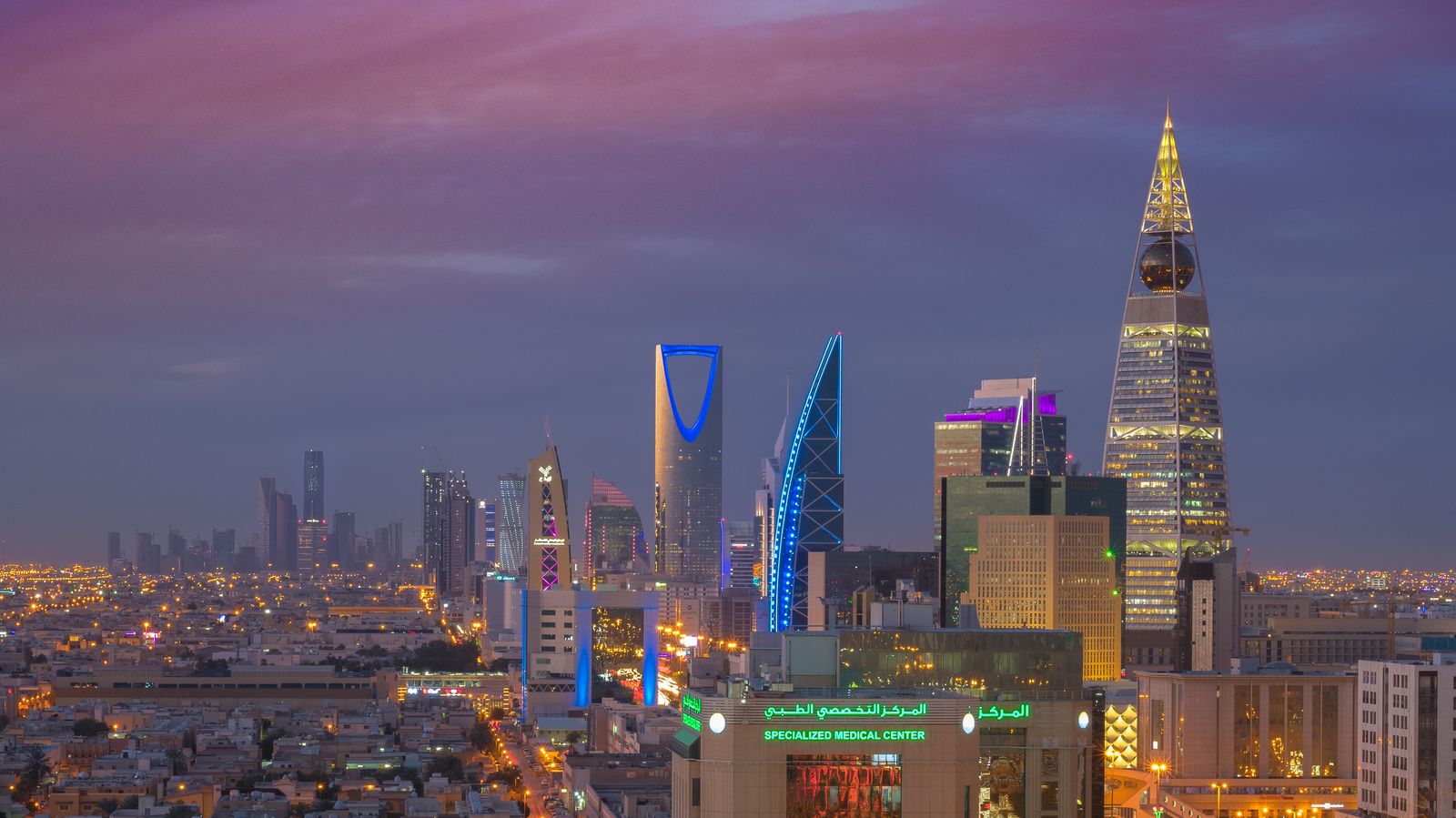
Riyadh is the political capital and a major financial centre of Saudi Arabia, and the primary base for corporate engagement with the Kingdom’s Vision 2030 economic transformation. The city’s security environment is fundamentally different from other P1 cities: street crime is very low, conventional violent crime is rare, and the Saudi security apparatus is effective. The specific threats that make Riyadh a P1 city are regional in origin: missile and drone attacks from Yemen-based Houthi forces, and a terrorism threat from IS remnants and Iran-linked groups.
The FCDO advisory and the regional conflict
The FCDO advises against all but essential travel to the entire Riyadh Province. This advisory is not a general crime warning. It is based on the active threat of Houthi missile and drone attacks. Saudi Arabia’s air defence systems (primarily Patriot batteries) intercept the majority of incoming missiles, but the interception process itself generates debris that has caused civilian casualties on the ground.
Riyadh has been struck by ballistic missiles on multiple occasions since 2019. The targeting of ARAMCO facilities has illustrated both the scale of Houthi ambition and the effectiveness of Saudi defences. In April 2026, the advisory remains active and the underlying conflict has not resolved.
For corporate visitors, the practical implication is shelter-in-place protocol awareness. International hotels in Riyadh brief guests on alert procedures. Know the designated shelter areas in your accommodation and meeting venues. Keep the Saudi Civil Defence emergency number (998) accessible. This is not hypothetical preparation.
The legal and cultural environment
The legal environment requires explicit preparation for Western visitors. Saudi Arabia applies Sharia law, and activities that carry no legal consequence in the UK or US carry criminal penalties in Saudi Arabia. Alcohol is completely prohibited; possession is a criminal offence. Drug offences carry the death penalty. Public behaviour standards differ significantly from Western norms.
Vision 2030 has opened Saudi Arabia considerably since 2019. Women can drive, attend entertainment events, and work in mixed-gender environments. The requirement for non-Muslim women to wear an abaya has been relaxed. These are genuine changes. But they do not alter the fundamental legal framework, and the pace of change means that local interpretation of newer regulations varies. A pre-deployment legal and cultural briefing is standard for all first-time visitors to Saudi Arabia, and our Riyadh travel safety guide covers the cultural requirements alongside transport, accommodation and emergency contacts.
Photography restrictions are legally enforced. Government buildings, military installations, palaces, and missile interception events must not be photographed. Violations carry criminal penalties.
Security operations in Riyadh
The Diplomatic Quarter (DQ) is Riyadh’s highest-security zone: a dedicated enclave with its own security force, restricted access, and active perimeter security. Most international embassies and many multinational company offices operate from within or adjacent to the DQ. Operating from the DQ where possible is the standard recommendation for any assignment with an elevated threat profile.
Our Riyadh risk assessment provides current threat scoring and zone-specific guidance. For operator options, see our bodyguard hire service in Riyadh. All operators hold Ministry of Interior licensing and have specific Riyadh operational experience. Jeddah and NEOM assignments are covered on our Saudi Arabia country page.
Source: FCDO Saudi Arabia travel advisory (April 2026; scope of advice as updated 10 October 2026). US State Department Saudi Arabia Level 3 advisory. Saudi Arabia Civil Defence missile shelter protocols. Vision 2030 regulatory updates, Saudi General Investment Authority (2024).
What are the main security threats in Riyadh?
Missile and Drone Attack
The FCDO advises against all but essential travel to the entire Riyadh Province (updated 10 October 2026), citing Houthi missile and drone attacks from Yemen. Riyadh has been struck by long-range ballistic missiles. Debris from intercepted missiles has caused civilian casualties. Shelter-in-place protocols are active at international hotels.
Terrorism
IS remnants and Iran-linked groups maintain intent to attack Saudi targets. Military installations, government buildings, oil infrastructure, and locations associated with Western businesses are the primary target categories. The Saudi security apparatus has disrupted multiple plots.
Cultural and Legal Risk
Saudi Arabia applies Sharia law. Activities that are legal in Western countries, including alcohol consumption, can carry severe criminal penalties. This creates a legal risk for uninformed visitors that requires specific pre-deployment briefing.
Road Safety
Saudi Arabia has a high road traffic accident rate. Speed is a major factor. Driving standards differ significantly from Western norms. Pre-booked, vetted transport is the appropriate measure.
Vetted operators with direct experience in Riyadh
What security services are available in Riyadh?
Executive Protection
Discreet executive protection for corporate visitors, with cultural awareness and protocol management for the Saudi business environment.
Security Drivers
Professional licensed drivers with Riyadh route intelligence and awareness of shelter-in-place protocols for missile alerts.
Event Security
Security planning and staffing for corporate events, conferences, and VIP functions in Riyadh.
Cultural Security Briefings
Pre-deployment briefings on legal and cultural requirements in Saudi Arabia, reducing the risk of inadvertent legal exposure.
What are the rules for private security in Riyadh?
Key regulatory requirements for operating security services in Riyadh.
Firearms Policy
Under the Law of Weapons and Ammunition (Royal Decree No. M/45 of 25/7/1426 H), possessing, carrying and trading in firearms need a licence from the Minister of Interior (articles 9 and 11). The Law of Private Security Services contains no provision authorising private security guards to carry arms.
Licensing
Private security companies are licensed under the Law of Private Security Services (Royal Decree No. M/24 of 8/7/1426 H), with implementing regulations issued by Ministerial Decision No. 170 of 5/5/1427 H. The licence is issued by the Minister of Interior or his delegate for 5 years and is renewable (article 4). The Law's definition of private civil security does not expressly mention personal protection. In May 2025 the Ministry of Interior amended the implementing regulations to set which establishments must keep guards during working hours or around the clock.
Foreign Operators
The Law requires a licensed establishment to be wholly owned by a Saudi national, and a licensed company to be wholly owned by Saudi nationals (article 4). It also requires all staff of a licensed security company to be Saudi nationals (article 5). A foreign security company therefore cannot hold a licence or supply its own guards, and international clients engage a licensed Saudi company. Take local legal advice before a foreign team carries out protective duties.
Sources, checked : Law of Private Security Services, Royal Decree No. M/24 of 8/7/1426 H (King Khalid University copy of the official text); Saudi Central Bank Rulebook, Law of Private Security Services (status: in force); Law of Weapons and Ammunition, Royal Decree No. M/45, text (mohamah.net); Gulf News, All employees at security firms must be Saudis (23 June 2023); Gulf News, Saudi Arabia tightens private security law (18 May 2025).
Which areas of Riyadh carry elevated risk?
Lower-Risk Areas
- Diplomatic Quarter (DQ): High-security diplomatic enclave with its own dedicated security force. Restricted access and active perimeter security. International embassies and many multinational company offices are located here.
- King Abdullah Financial District (KAFD): Modern planned financial centre with purpose-built security infrastructure.
- Olaya and Al Malaz: Primary international hotel and business districts. Well-policed and monitored.
Elevated-Risk Areas
- Batha district: Higher petty crime relative to the Riyadh average. Concentrated worker population areas.
- Highways and outer roads after dark: Road safety risk substantially higher outside peak policing hours.
Deploying to Riyadh? Get a vetted close protection detail.
Request ConsultationWho do you call in an emergency in Riyadh?
Police
999
Ambulance
997
Fire
998
Civil Defence (missile alert)
998
Unified emergency number (police, civil defence, ambulance and traffic police; covers Riyadh Region)
911
Dallah Hospital Al Nakheel (private, King Fahd Road)
+966 920012222
Kingdom Hospital (private, Ath Thumamah Road, Ar Rabi)
+966 11 275 1111
U.S. Embassy Riyadh (consular section)
+966 11 510 3731
What travel advisories apply to Riyadh?
- The FCDO advises against all but essential travel to Riyadh Province (entire), as it does to Aseer, Najran and Jizan provinces and Taif, and against all travel within 10km of the Yemen border (updated 10 October 2026). This is a current, active advisory based on missile and drone attack risk from the Yemen conflict. Review the current FCDO advisory before any planned travel to Riyadh.
- Saudi Arabia's legal system applies Sharia law. Alcohol is completely prohibited; possession carries criminal penalties. Drug offences carry the death penalty. Behaviour that is routine in Western countries may be a criminal offence in Saudi Arabia.
- Photography of government buildings, military installations, palaces, and missile interception events is prohibited by law. Violations carry criminal penalties.
- Dual nationals with Iranian, Yemeni, or other relevant nationalities may face additional scrutiny at immigration. Obtain legal advice before travel if this applies.
- Vision 2030 reforms have opened Saudi Arabia to international business since 2019, but the legal and cultural environment still requires specific preparation. Do not rely on general regional knowledge.
Frequently Asked Questions
Do I need security in Riyadh?
What does the FCDO advisory mean for Riyadh Province?
What cultural and legal risks must corporate visitors be aware of?
Are missile or drone attacks a realistic risk for corporate visitors to Riyadh?
How does close protection work within Saudi Arabia's regulatory environment?
This page is published by CloseProtectionHire.com and written to editorial standards overseen by James Calloway, Senior Security Consultant (regulation, licensing, vetting and risk frameworks) and Marcus Webb, Security Operations Adviser (operational close protection, secure transport and city-specific safety).
Threat, regulatory and emergency information is sourced to named, dated authorities such as the FCDO, the US State Department and national licensing bodies. Last updated . See how we verify.