
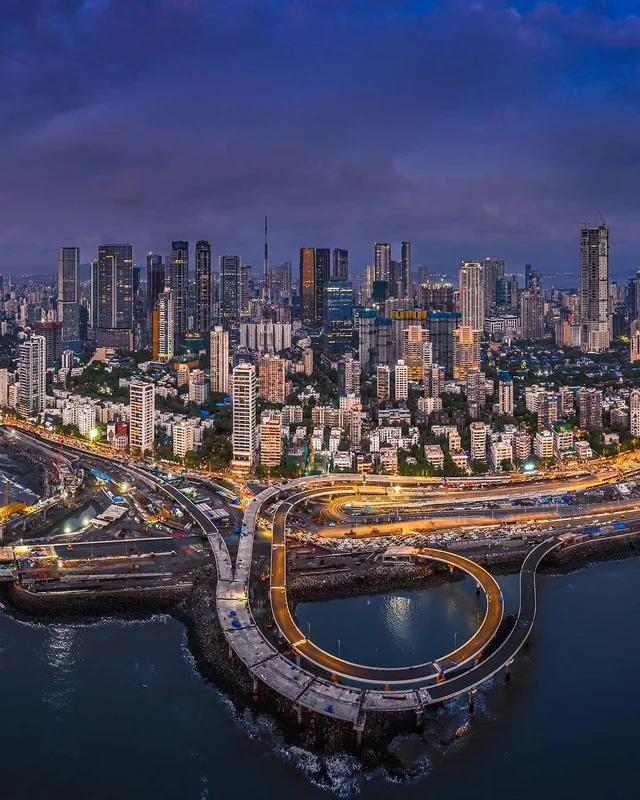
Planning travel to Mumbai? Speak with a security consultant.
Mumbai is India’s financial capital: the headquarters of the Bombay Stock Exchange, Reserve Bank of India, and the concentration of India’s banking, insurance, and media sectors. The city receives more foreign direct investment than any other Indian city and is the standard entry point for corporate engagement with India’s economy. Its security environment is shaped by two parallel realities: one of the most significant terrorist attacks of the past two decades, and a day-to-day street-level risk profile that is manageable with professional planning.
The terrorism risk
The November 2008 attacks remain the defining security reference for Mumbai. LeT-trained gunmen arrived by sea, attacked ten sites simultaneously over three days, and killed 166 people. The Taj Mahal Palace Hotel alone was under siege for over 60 hours. The attack demonstrated that Mumbai is a high-value target and that the terrorism planning horizon extends across multiple simultaneous locations.
The threat has not diminished. Lashkar-e-Taiba retains both the intent and the assessed capability to conduct further attacks in India. AQIS (al-Qaeda in the Indian Subcontinent) represents an additional threat vector. IS-inspired lone actors add a third category. The FCDO rates the terrorism threat in India as highly likely.
Since 2008, hotel security at international properties has been substantially upgraded. Taj Mahal Palace, Oberoi, and comparable properties operate bag screening, vehicle checks at the entrance perimeter, and armed security staff. This represents a genuine improvement in the baseline security posture. Corporate visitors should nonetheless maintain awareness of emergency evacuation routes at any hotel on their itinerary.
The day-to-day security environment
Below the terrorism headline, Mumbai’s everyday security picture is more manageable than its P1 city status might suggest. Violent crime against foreign business travellers is relatively uncommon. The practical risks for most visitors are pickpocketing at transport hubs, taxi and auto-rickshaw scams, and disruption from traffic accidents or civil unrest.
The FCDO includes a specific and serious warning about sexual assault risk in India for women, including foreign nationals. This applies to Mumbai and requires operational planning for female executives. Pre-arranged transport and security-aware accompaniment for evening movements are the standard precautions. Our Mumbai travel safety guide turns these into a pre-trip checklist covering transport, accommodation, medical cover and emergency contacts.
Traffic safety is a genuine concern. Mumbai’s road accident statistics are among the highest of any major city. Our security drivers are trained to manage both the driving environment and the security implications of extended exposure in congested traffic.
PSARA licensing and operator standards
The Private Security Agencies Regulation Act, 2005 (PSARA) governs private security in India. Maharashtra state registration is required for operations in Mumbai. PSARA requires licensed agencies to train their guards and verify their character and antecedents.
We deploy only PSARA-registered operators with documented Mumbai experience. For the wider regulatory context, see our guide to private security regulations in India. For an itinerary that goes beyond Mumbai, close protection across India’s main business cities covers Delhi, Bangalore and Hyderabad as well, and our India country page covers Mumbai and Delhi together.
Our operations in Mumbai
Our Mumbai risk assessment provides current threat scoring, zone-by-zone analysis, and operational protocols. All Mumbai assignments include airport transfer management, hotel security assessment for the specific property on the itinerary, and a threat briefing covering current terrorism and civil unrest indicators. For UHNWI principals and executives with elevated profiles, close protection for all movements outside the hotel is the standard recommendation.
Source: FCDO India travel advisory (April 2026). 2008 Mumbai attacks: Indian Government Commission of Inquiry. Private Security Agencies (Regulation) Act 2005. US State Department India Level 2 advisory (2026).
What are the main security threats in Mumbai?
Terrorism
The 2008 Mumbai attacks killed 166 people across 10 sites over three days. Lashkar-e-Taiba carried out the operation. Mumbai remains a named priority target for LeT and AQIS. The FCDO rates terrorism in India as highly likely. Luxury hotels and transport infrastructure are the primary target categories.
Street Crime
Pickpocketing is common on crowded commuter trains (CST, Dadar station), in tourist areas, and at markets. Scams targeting foreign nationals are frequent. Violent crime against business travellers is less common but occurs, particularly at night in isolated areas.
Sexual Assault Risk
The FCDO includes a specific warning about sexual assault risk for female foreign nationals in India, including in Mumbai. This requires specific operational planning for female executives travelling to or within the city.
Traffic Safety
Mumbai's road accident rates are among the highest of any major city. Driving standards differ from Western norms. Congestion creates extended vulnerability windows during vehicle movements.
Civil Unrest
Protests and bandhs (general strikes) can disrupt transport at short notice. Communal tensions can escalate during religious festivals and politically sensitive periods.
Vetted operators with direct experience in Mumbai
What security services are available in Mumbai?
Close Protection
PSARA-licensed close protection officers with Mumbai operational experience. Armed protection only where an Arms Act 1959 licence is held.
Executive Protection
Full executive security details including advance work, venue assessment, and counter-terrorism awareness protocols.
Security Drivers
PSARA-licensed drivers with Mumbai route knowledge. Pre-booked transfers from Chhatrapati Shivaji Maharaj International Airport.
Event Security
Security planning and staffing for corporate events, conferences, and private functions at Mumbai venues.
What are the rules for private security in Mumbai?
Key regulatory requirements for operating security services in Mumbai.
Firearms Policy
The Private Security Agencies (Regulation) Act 2005 (PSARA) contains no provision on arms. Under section 3 of the Arms Act 1959 no person may acquire, possess or carry a firearm without a licence, which the licensing authority grants after a police report (section 13). The Arms Act has no separate route for private security guards.
Licensing
Private security agencies are licensed under PSARA by a Controlling Authority that each state government designates, an officer of at least Joint Secretary rank in its Home Department (section 3). No one may carry on the business of a private security agency without a licence (section 4). The Act licenses agencies, not individual guards: an agency must train its guards, verify their character and antecedents (sections 9 and 10) and issue each a photo identity card (section 17). In Maharashtra the licence is issued by the Maharashtra Controlling Authority.
Foreign Operators
Under section 6(2) a company, firm or association cannot be considered for a licence if it is not registered in India or has a proprietor, majority shareholder, partner or director who is not an Indian citizen. Under section 10 an agency may engage as private security guards only citizens of India or of a country the Central Government specifies. A foreign security company therefore works through an Indian agency licensed in the state concerned. Take local legal advice before a foreign team carries out protective duties.
Sources, checked : Private Security Agencies (Regulation) Act 2005, India Code; Arms Act 1959, India Code; Ministry of Home Affairs, Private Security Agency Licensing Portal.
Which areas of Mumbai carry elevated risk?
Lower-Risk Areas
- Nariman Point and Bandra-Kurla Complex (BKC): Primary financial and business districts. Modern office towers, international hotel standard, lower crime profile.
- Colaba: International hotel zone, close to the Taj Mahal Palace. Higher police visibility maintained since 2008.
- Bandra West: Preferred residential and dining area for corporate visitors. Generally lower crime than older parts of the city.
Elevated-Risk Areas
- Dharavi and adjacent areas: Densely populated area with elevated crime. No legitimate corporate itinerary requires access.
- Dadar and CST stations in rush hours: Severe overcrowding, active pickpocketing risk.
- Isolated areas after dark: FCDO guidance consistently advises avoiding unlit and isolated areas.
Deploying to Mumbai? Get a vetted close protection detail.
Request ConsultationWho do you call in an emergency in Mumbai?
Police
100
Ambulance
102
Fire
101
Mumbai Police
022 2262 0111
Emergency services, ambulance / fire / police (single national number)
112
Breach Candy Hospital Trust, Bhulabhai Desai Road (emergency department)
+91 22 6259 7809
Breach Candy Hospital Trust, main board line
+91 22 6259 7788
Lilavati Hospital and Research Centre, Bandra West (emergency and casualty)
+91 22 6931 8063
FCDO consular assistance, London (24 hours)
+44 20 7008 5000
What travel advisories apply to Mumbai?
- The 2008 attacks targeted hotels frequented by international business travellers. Luxury hotel venues remain the highest-profile terrorism targets in Mumbai. Maintain awareness of emergency protocols at the Taj Mahal Palace, Oberoi, and other international properties.
- Use only pre-arranged transport from the airport. Unofficial taxis and auto-rickshaws create unnecessary risk. Pre-book all transfers with vetted operators.
- Female business travellers should be accompanied by a security-aware colleague or close protection officer for evening and isolated movements. This is specific and current FCDO guidance for India.
- During bandhs (general strikes), remain in your hotel. Transport disruption can be sudden and complete. Keep a day's provisions available.
- India-Pakistan border tensions are elevated in 2026. Monitor FCDO advisories for any escalation affecting Mumbai.
Frequently Asked Questions
Is Mumbai safe for business travel?
What licence must a Mumbai bodyguard hold?
How does the 2008 attack legacy affect current security planning?
Which areas of Mumbai are appropriate for corporate visits?
Is Mumbai safe for female business travellers?
This page is published by CloseProtectionHire.com and written to editorial standards overseen by James Calloway, Senior Security Consultant (regulation, licensing, vetting and risk frameworks) and Marcus Webb, Security Operations Adviser (operational close protection, secure transport and city-specific safety).
Threat, regulatory and emergency information is sourced to named, dated authorities such as the FCDO, the US State Department and national licensing bodies. Last updated . See how we verify.