
Planning travel to Montevideo? Speak with a security consultant.
Montevideo is the capital and largest city of Uruguay, a stable South American democracy that consistently ranks as one of the region’s safest, most transparent, and most politically stable countries. It is the administrative and commercial hub of a country whose economy is driven by agriculture, technology, financial services, and logistics. For international business visitors, Montevideo represents one of South America’s most straightforward operating environments: low crime, functioning institutions, a stable political environment, and no terrorism threat.
The security environment
The FCDO advises normal travel precautions for Uruguay, noting petty theft as the primary risk. Uruguay consistently performs well on governance indicators, ranking among Latin America’s least corrupt countries by Transparency International’s Corruption Perceptions Index. The US State Department Uruguay advisory is Level 2 (Exercise Increased Caution). Pocitos, Punta Carretas, and Carrasco are the primary residential and business zones for international visitors, all with low crime profiles. Source: FCDO Uruguay travel advice (2026); US State Department Uruguay advisory Level 2 (2026).
Business context
Montevideo’s technology sector has grown significantly, with several multinational regional headquarters now based in the Zona Franca (free trade zone). Agricultural export companies, financial services, and logistics sector businesses are the other major drivers of international business travel. Hospital Britanico is the recommended private medical facility, and Buenos Aires provides additional medical evacuation capability approximately 50 minutes by air.
Sources: FCDO Uruguay travel advice (2026). US State Department Uruguay advisory (2026). Ley 19.721 (Uruguay). For comparable operating environments, see our Buenos Aires city briefing and Santiago city briefing.
What are the main security threats in Montevideo?
Petty Crime
Petty theft including pickpocketing and bag snatching occurs in tourist areas, markets, and bus terminals in Montevideo. The Ciudad Vieja (Old City) and the Tres Cruces bus terminal area are the primary higher-risk zones. The overall crime rate is low by South American standards, and most visitor incidents are opportunistic rather than targeted. Source: FCDO Uruguay travel advice (2026).
Vehicle Crime
Vehicle break-ins and car theft are documented in Montevideo. Vehicles left unattended in public areas, particularly near the rambla (waterfront) and in less supervised car parks, are targets. Using attended parking facilities and not leaving valuables visible in vehicles reduces this risk significantly. Source: FCDO Uruguay travel advice (2026).
Demonstration Risk
Trade union demonstrations and political marches occur in Montevideo, particularly around the Avenida 18 de Julio and Plaza Independencia. These are generally peaceful and well-managed by police but can cause traffic disruption. Occasionally, spontaneous demonstrations following political or economic events can occur.
Vetted operators with direct experience in Montevideo
What security services are available in Montevideo?
Security Drivers
Vetted, licensed security drivers for airport transfers and in-city movement.
Bodyguard Hire
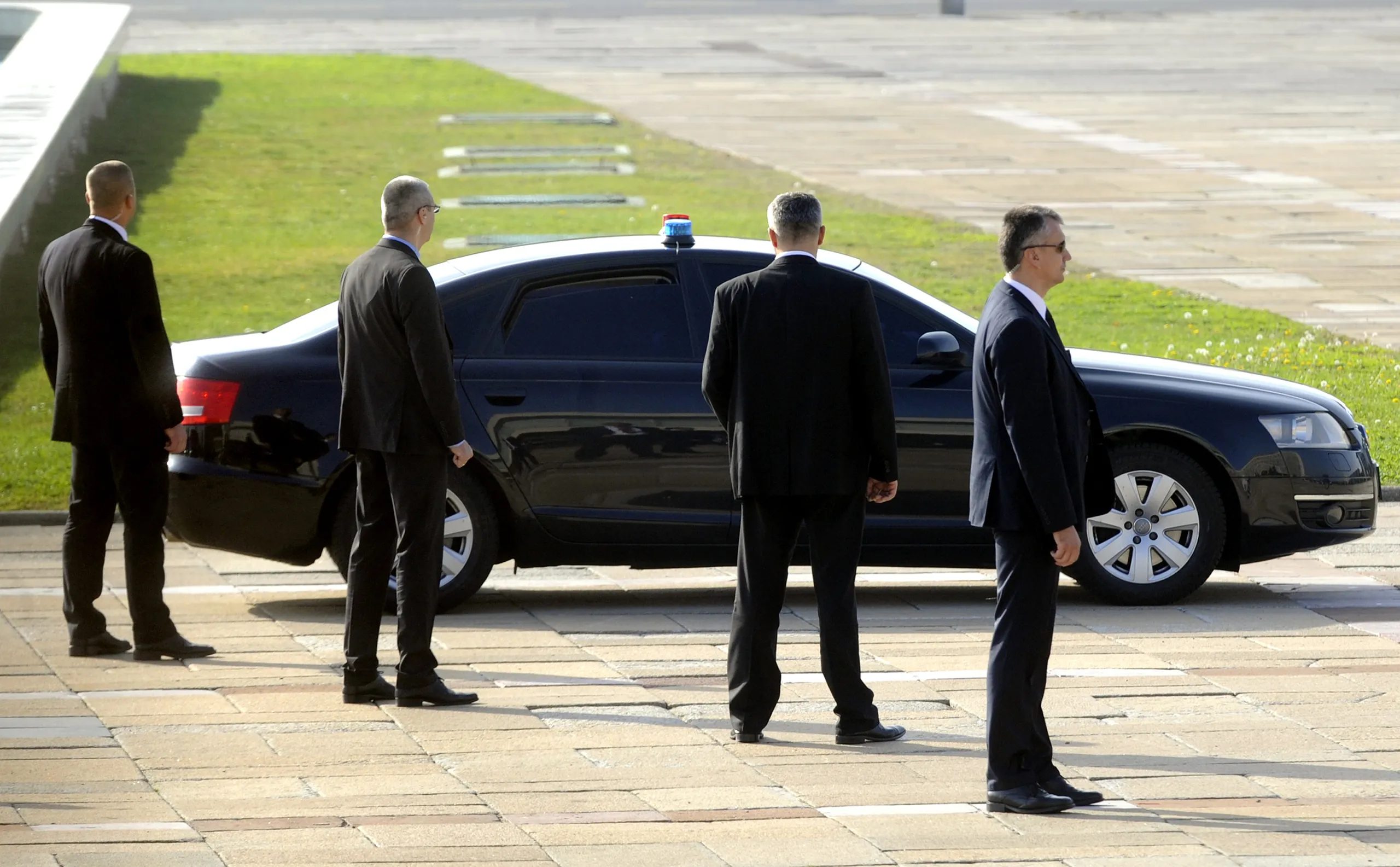
Close protection officers for senior principals and visiting executives.
Executive Protection
Structured EP programmes for principals with elevated risk profiles.
Risk Assessment
Pre-travel security assessment covering the current threat environment.
What are the rules for private security in Montevideo?
Key regulatory requirements for operating security services in Montevideo.
Firearms Policy
Under Article 12 of Ley 19.721, security workers may carry weapons only during working hours and within the authorised premises, except in dynamic patrol, bodyguard and cash-in-transit roles. Ask any provider for the authorisation covering each weapon before engagement.
Licensing
Private security in Uruguay is governed by Ley 19.721 (2018). The Ministry of the Interior's private security directorate registers, authorises and supervises companies and workers (Articles 26 and 38). The law defines a bodyguard as any person contracted to protect another (Article 21), and each one needs the directorate's authorisation (Article 22). Ask any provider for its authorisation and each officer's before engagement.
Foreign Operators
The law sets no nationality rule that we could find, but any person contracted to protect another in Uruguay needs the directorate's authorisation as a bodyguard (Articles 21 and 22). Take local legal advice before a foreign team carries out protective duties.
Sources, checked : Ley 19.721, Seguridad privada, IMPO (Uruguay official legal database).
Which areas of Montevideo carry elevated risk?
Lower-Risk Areas
- Pocitos and Punta Carretas: Primary residential and commercial districts for business visitors. International hotels, corporate offices, and best restaurants. Lowest crime profile in the city.
- Carrasco: Eastern suburb. Embassy residences and upscale residential area. Very low crime profile.
- Centre (Avenida 18 de Julio corridor): Main commercial and government boulevard during business hours.
Elevated-Risk Areas
- Ciudad Vieja (Old City): Higher petty crime concentration, particularly after business hours.
- Tres Cruces bus terminal area: Elevated pickpocketing and theft risk.
- Peripheral areas (Casabo, Cerro): Higher crime neighbourhoods not on standard corporate visitor itineraries.
Deploying to Montevideo? Get a vetted close protection detail.
Request ConsultationWho do you call in an emergency in Montevideo?
Police Emergency
911
Ambulance
105
Hospital Britanico (best private facility)
+598 2 487 1020
Clinica Medica Uruguaya
+598 2 481 2000
British Embassy Montevideo
+598 2 623 3630
What travel advisories apply to Montevideo?
- Petty theft is the primary risk for visitors to Montevideo. Maintain awareness in the Ciudad Vieja, bus terminal areas, and any crowd concentration. Do not leave valuables unattended. Source: FCDO Uruguay travel advice (2026).
- Uruguay's legal framework for cannabis and some other substances differs from most countries. International visitors should be aware that while Uruguay has decriminalised or legalised certain substances domestically, these substances remain illegal for export and their use has implications for business visitors from countries with zero-tolerance policies.
- Uruguay's Hospital Britanico is the recommended private medical facility in Montevideo. For complex cases, Buenos Aires (approximately 50 minutes by air or 2 hours by Buquebus fast ferry) has significantly better medical infrastructure.
Frequently Asked Questions
Is Montevideo safe for international business visitors?
What industries bring international business visitors to Montevideo?
What airport serves Montevideo?
Is close protection cover required for standard business visits to Montevideo?
This page is published by CloseProtectionHire.com and written to editorial standards overseen by James Calloway, Senior Security Consultant (regulation, licensing, vetting and risk frameworks) and Marcus Webb, Security Operations Adviser (operational close protection, secure transport and city-specific safety).
Threat, regulatory and emergency information is sourced to named, dated authorities such as the FCDO, the US State Department and national licensing bodies. Last updated . See how we verify.