
Planning travel to Kinshasa? Speak with a security consultant.
Kinshasa is the capital of the Democratic Republic of Congo and the gateway to one of Africa’s largest mineral-extraction economies. The DRC produces significant quantities of cobalt, copper, coltan, and other critical minerals, making it a consistent destination for mining executives, commodity traders, infrastructure investors, and the large NGO and UN sector engaged with one of the world’s most complex humanitarian environments. The security environment requires professional management at every stage of any itinerary, and Kinshasa is not appropriate for unaccompanied or unsupported corporate visits.
The operating environment
Kinshasa’s security environment is significantly elevated relative to most African capitals. Armed robbery is frequent and occurs in areas frequented by international visitors, not only in lower-income districts. Civil unrest linked to political developments, including elections and events in eastern DRC, can turn violent. Infrastructure limitations compound every other risk category: emergency response times are unreliable, road conditions limit route options, and power outages affect communications and security systems.
The combination of active criminal threat, unpredictable civil unrest, and infrastructure gaps means that the security baseline in Kinshasa is substantively higher than in most other African business capitals. This is not a city where standard business-travel precautions are sufficient.
Armed escorts come from the police
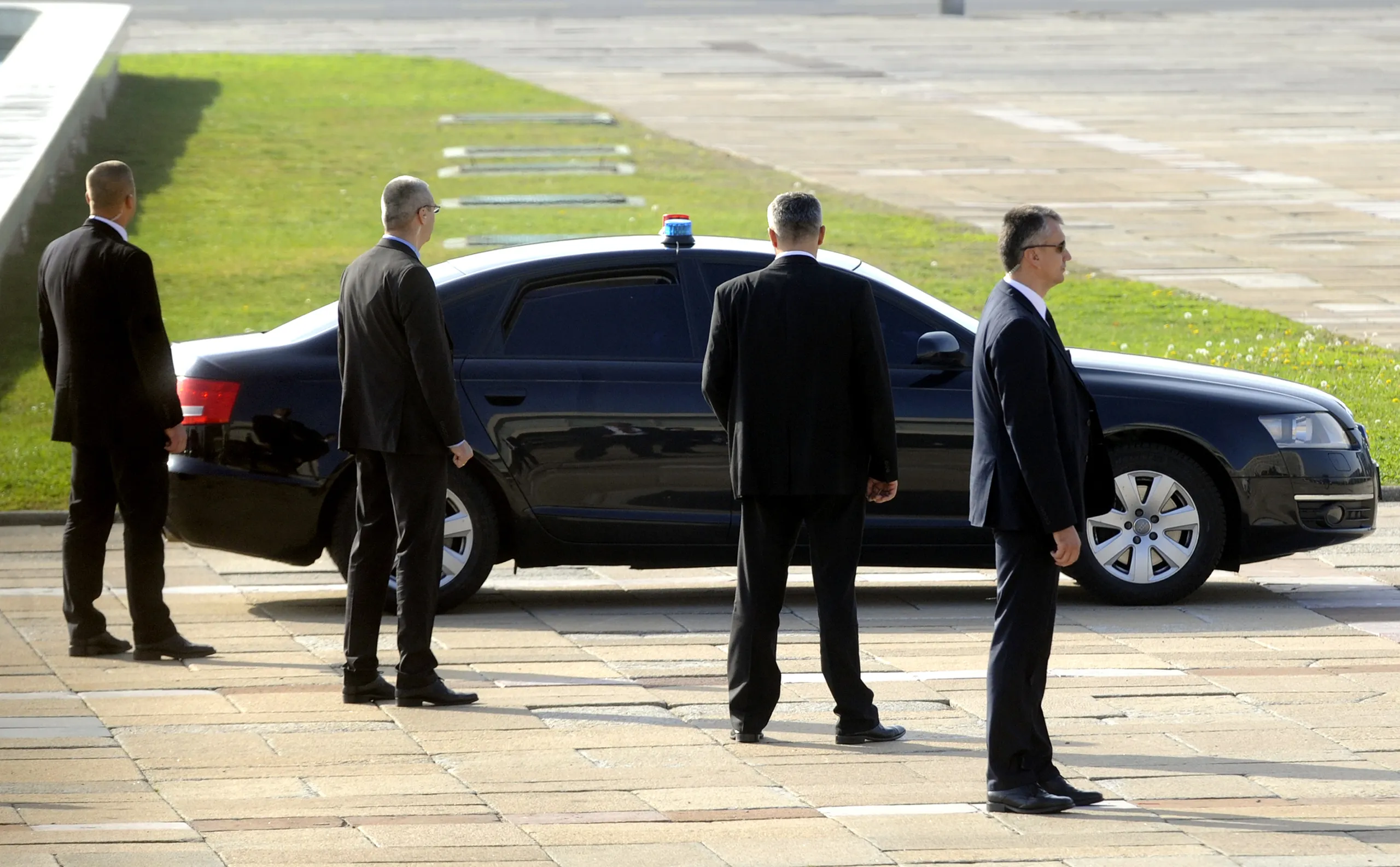
Armed robbery risk, kidnapping threat and infrastructure constraints lead many corporate visitors in Kinshasa to plan for an armed escort. Private security companies in the DRC may not hold or use firearms, so that escort comes from police officers assigned to the detail, alongside an unarmed close protection officer and a security driver whose route knowledge addresses the documented threats. Night movement – after dark, regardless of district – should be avoided entirely rather than managed with enhanced precautions.
The eastern DRC distinction
Kinshasa’s security requirements and those of eastern DRC are not comparable. Eastern DRC is an active conflict environment with multiple armed groups, FARDC military operations, and UN peacekeeping activity. Visits to mining sites in Kivu, Ituri, or other conflict-affected eastern provinces require a dedicated conflict-zone security assessment, appropriate armament levels, medical evacuation planning, and MONUSCO coordination. The Kinshasa baseline does not apply to eastern DRC operations.
Our operations in Kinshasa
Our operators hold a Ministry of the Interior operating permit and have documented experience in Kinshasa’s specific operating environment. All assignments use vetted transport, with a police escort arranged where the principal’s risk profile calls for one. We maintain contacts with the MONUSCO security network and local intelligence sources, and provide pre-arrival briefings covering current conditions in Kinshasa and any relevant developments in eastern DRC that may affect the capital.
For wider context in the region see our Lagos city page and Nairobi city page.
Source: FCDO Democratic Republic of Congo travel advisory (April 2026). OSAC DRC Country Security Report 2025. UN MONUSCO security documentation. Ministerial Orders 25/CAB/MININTERSECDAC/037/2014 and 25/CAB/VPM/MININTERSECAC/PKK/243/2023 on guarding companies, as described by AFREWATCH (2021) and Leganews; Radio Okapi, 20 July 2026. Checked 22 October 2026.
What are the main security threats in Kinshasa?
Armed Robbery
Armed robbery targeting vehicles and pedestrians is a serious and frequent risk in Kinshasa. Incidents occur across the city, including in areas frequented by expatriates and international visitors. Night movement is significantly more dangerous than daytime. Traffic congestion creates vulnerability windows during ground movements.
Civil Unrest
Political demonstrations in Kinshasa can become violent with limited warning. Security forces have used lethal force against protesters historically. Elections and political developments in eastern DRC can trigger unrest in the capital. The DRC's electoral cycle is a recurring flashpoint.
Kidnapping
Kidnap-for-ransom incidents involving foreign nationals occur primarily in eastern DRC but with documented incidents in the capital. Express kidnapping at ATMs and during traffic incidents has been recorded. Foreign nationals in the mining and infrastructure sectors are the primary target category.
Infrastructure and Emergency Response
Kinshasa's infrastructure is severely underdeveloped. Emergency medical response times are unpredictable and often very slow. Road conditions create vehicle vulnerability and limit route planning options. Power outages affect communications and security systems across the city.
Vetted operators with direct experience in Kinshasa
What security services are available in Kinshasa?
Bodyguard Hire
Close protection officers with DRC operational experience and current local licensing, for mining sector executives, NGO directors, and senior officials.
Executive Protection
Full security details, with a police escort where the assessment calls for one, for corporate principals attending mining sector meetings and government engagement in Kinshasa.
Security Drivers
Vetted security drivers with Kinshasa route knowledge for all ground movements, coordinated with a police escort where one is assigned.
Residential Security
Security assessment and management for expatriate residences in Gombe and Ngaliema districts.
What are the rules for private security in Kinshasa?
Key regulatory requirements for operating security services in Kinshasa.
Firearms Policy
Private security companies in the DRC may not hold or use firearms, patrol public roads or wear uniforms that resemble those of the police or armed forces; the Haut-Katanga police commissioner restated these limits to company managers in July 2026. Civilian possession of firearms is governed by Ordonnance-loi 85-035 of 3 September 1985. Private companies and mining sites that want an armed element call on police (PNC) or armed forces personnel, so any armed escort in Kinshasa comes from the police, not from the private provider.
Licensing
No specific law governs private security in the DRC. Guarding companies need an operating permit under Ministerial Order 25/CAB/MININTERSECDAC/037/2014 of 27 June 2014 on the conditions for operating guarding companies, amended by Ministerial Order 25/CAB/VPM/MININTERSECAC/PKK/243/2023 of 14 November 2023; a separate 2023 order sets up the commission that controls guarding companies. The Ministry of the Interior keeps the register, and in October 2026 it began inspecting guarding companies in Kinshasa through its civil protection directorate. Ask any provider for its Ministry of the Interior operating permit.
Foreign Operators
The 2014 order provides for guarding companies majority-owned by foreigners (article 3), while the 2017 subcontracting law reserves subcontracting to Congolese-owned companies, a conflict the AFREWATCH study points out. A foreign protection team cannot bring armed capability, because private security may not hold firearms. Work through a Congolese company holding a Ministry of the Interior permit, and take local legal advice before a foreign team carries out protective duties.
Sources, checked : AFREWATCH study on private security companies and human rights in the DRC (June 2021), pages 9 to 12 and 29: Ministerial Order 25/CAB/MININTERSECDAC/037/2014, the Ministry of the Interior register and the use of police and armed forces; Leganews, Ministerial Order 25/CAB/VPM/MININTERSECAC/PKK/243/2023 of 14 November 2023 amending the 2014 order on the conditions for operating guarding companies (title and summary); Radio Okapi via allAfrica, 20 July 2026: Haut-Katanga police remind private security companies that they may not hold or use firearms; Agence Congolaise de Presse, 2 October 2026: Ministry of the Interior inspections of guarding companies in Kinshasa; Agence Congolaise de Presse, 3 July 2026: civilian firearms governed by Ordonnance-loi 85-035 of 3 September 1985.
Which areas of Kinshasa carry elevated risk?
Lower-Risk Areas
- Gombe: Government and commercial district with higher security presence relative to the rest of the city. Location of most international hotels and government offices.
- Ngaliema: Expatriate and diplomatic area with established private security infrastructure and managed residential compounds.
- Major international hotel compounds: International hotels maintain their own security perimeters and are appropriate bases for visiting executives.
Elevated-Risk Areas
- Kinshasa beyond Gombe and Ngaliema: Significantly elevated armed robbery and crime risk across most other districts.
- Night-time movement anywhere: Materially more dangerous than daytime regardless of district. Night movement should be avoided.
- Areas near protest sites during political events: Security force response to demonstrations includes use of force.
Deploying to Kinshasa? Get a vetted close protection detail.
Request ConsultationWho do you call in an emergency in Kinshasa?
Police (PNC)
112
MONUSCO (UN Mission)
+243 81 890 0000
Embassy emergency lines
Check with your embassy before travel
Clinique Ngaliema, Gombe (public reference hospital, emergency department and ambulance)
+243 810 044 920
Ngaliema Medical Center, Kintambo (private, open 24 hours)
+243 999 909 283
Centre Medical de Kinshasa (CMK), emergency room (CPU)
+243 898 950 305
Centre Hospitalier Monkole, emergency line
+243 890 000 012
HJ Hospitals, Limete Industriel (open 24 hours), emergency line
+243 815 586 560
Air ambulance (Horizon Air Ambulance, listed by the US Embassy Kinshasa)
+1 631 662 5425
What travel advisories apply to Kinshasa?
- Do not travel after dark. Night movement in Kinshasa significantly elevates all risk categories. This is a hard operational rule rather than a precaution.
- Use only pre-arranged, vetted transport for all movements including airport transfers. Do not accept transport from individuals approaching in public areas.
- Carry copies of documents in a separate location from originals. Police and military checkpoints occur frequently and require documentation.
- Identify the nearest international-standard medical facility before arrival. Emergency response infrastructure is severely limited, and a pre-identified medical plan is essential.
- Monitor political developments. DRC elections and developments in eastern DRC can trigger Kinshasa unrest with limited warning.
Frequently Asked Questions
Is Kinshasa manageable for corporate visitors?
How does security in Kinshasa differ from eastern DRC?
What is the standard security model for NGO and development sector staff in Kinshasa?
What emergency evacuation planning is needed for Kinshasa assignments?
What does the mining sector security model look like in Kinshasa?
This page is published by CloseProtectionHire.com and written to editorial standards overseen by James Calloway, Senior Security Consultant (regulation, licensing, vetting and risk frameworks) and Marcus Webb, Security Operations Adviser (operational close protection, secure transport and city-specific safety).
Threat, regulatory and emergency information is sourced to named, dated authorities such as the FCDO, the US State Department and national licensing bodies. Last updated . See how we verify.