
Planning travel to Katowice? Speak with a security consultant.
Katowice’s identity is one of active transition. For most of the twentieth century, the city was defined by coal mining and heavy industry as the historic capital of Upper Silesia’s Gorny Slask (Upper Silesian Industrial Region). Today, the Katowice Special Economic Zone, established in 1996, has drawn more than PLN 50 billion in investment and created over 100,000 jobs, earning recognition as Europe’s best special economic zone in a 2024 assessment by fDi Intelligence, part of the Financial Times group. Business-services employment grew by nearly 70 percent over four years to around 27,000 workers, and the city’s financial-services and IT sector now sits alongside, rather than replacing, its industrial legacy.
That transition was made visible to the world in December 2018, when Katowice hosted COP24, the UN Climate Change Conference, at the Katowice International Congress Centre alongside the adjacent Spodek Arena, drawing roughly 20,000 attendees from 190 countries under Poland’s climate minister Michal Kurtyka as conference president. The venue remains a significant conference and institutional-event site, a fitting symbol for a city whose corporate identity is now built as much on energy-transition and financial services as on the coal industry that made it.
Security-wise, Katowice is a straightforward, low-risk destination. The main practical caution is the area around the central railway station and bus depot after dark, flagged consistently in general travel guidance as the city’s principal petty-crime concentration point, a pattern common to most major Polish transit hubs rather than anything specific to Katowice. The one genuine logistics quirk is Katowice Airport itself, which at roughly 30 to 35km from the city centre sits notably farther out than many comparable European business destinations, making advance transport arrangements worth confirming well before arrival.
Security Services in Katowice
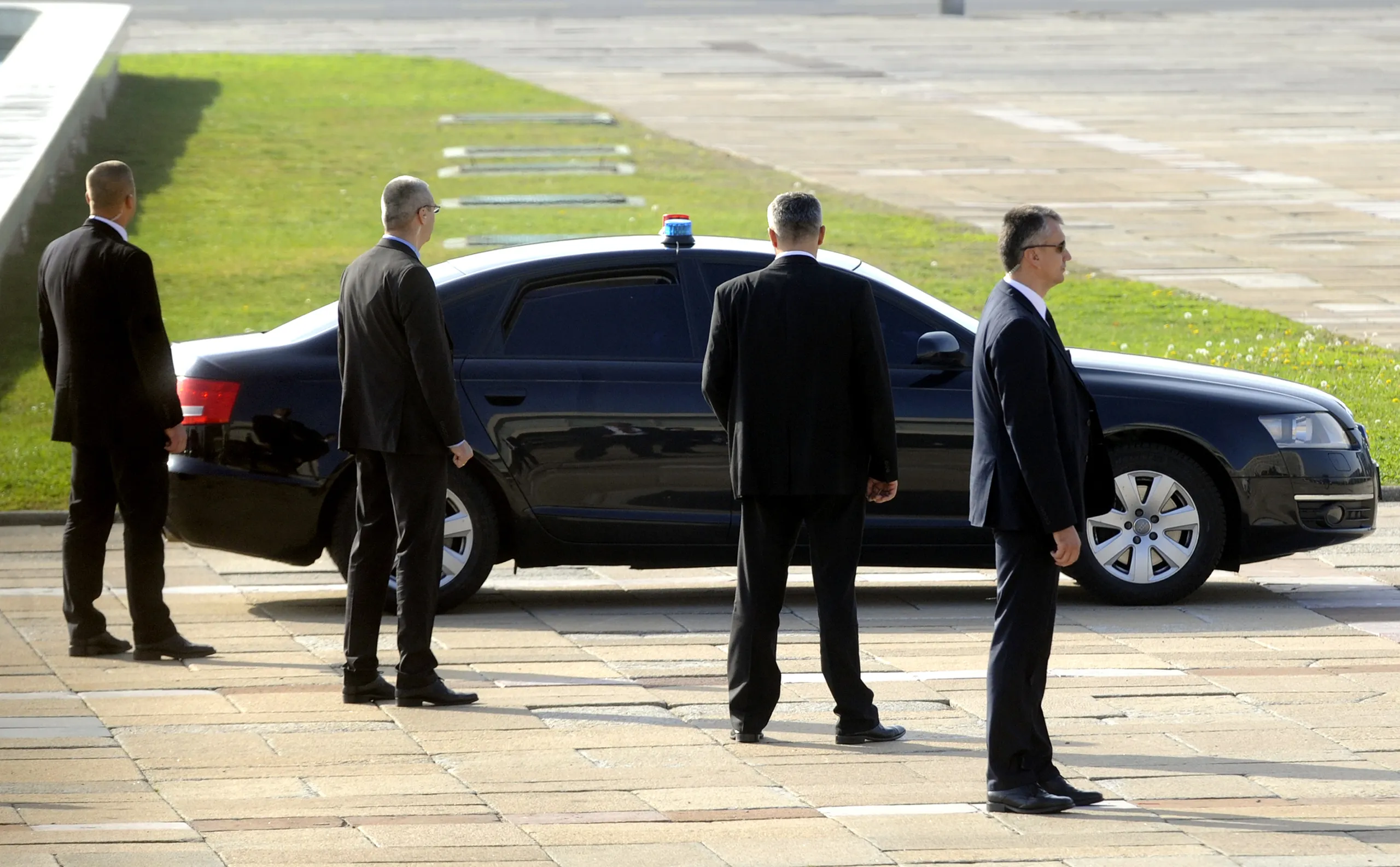
Executive protection here covers both the financial-services and business-process corporate community and institutional visitors to the Katowice International Congress Centre. Secure chauffeured transport handles the notably long Pyrzowice airport transfer and movement across the wider Upper Silesian conurbation, and advance security surveys are a standard part of preparing for any major conference or corporate event at the MCK.
For related security services, see our bodyguard hire and event security pages, and our Poland security briefing for the national concession-licensing framework. For regional context, see our Krakow and Warsaw city briefings.
Source: Katowice Special Economic Zone (KSSE) investment data. fDi Intelligence, Europe’s Special Economic Zones of the Future 2024/25. UNFCCC, COP24 conference records (December 2018). Act of 22 August 1997 on the Protection of Persons and Property. FCDO Poland travel advice (2026). Uniwersyteckie Centrum Kliniczne im. prof. K. Gibinskiego (uck.katowice.pl).
What are the main security threats in Katowice?
Economic Transition Context
Katowice is the historic capital of Upper Silesia's coal-mining and heavy-industry region, and the city is in an active, ongoing transition toward financial services, IT, and business-process operations. The Katowice Special Economic Zone (KSSE), established in 1996, has attracted more than PLN 50 billion in investment and generated over 100,000 jobs, and was named Europe's best special economic zone in 2024 by fDi Intelligence, part of the Financial Times group. Business-services employment in the city grew by nearly 70 percent over four years to roughly 27,000 workers, according to the Association of Business Service Leaders. This transition context is economic rather than a security concern, but it explains the mixed industrial and modern-corporate landscape visitors encounter.
Transport Hub Petty Crime
General travel guidance identifies the area around Katowice's main railway station and bus depot as a petty-crime hotspot best avoided after dark, consistent with patterns seen at major transit hubs across Poland. No official Polish police statistic specific to Katowice's station area was located during research for this page; treat this as travel-advisory guidance rather than a cited figure.
Airport Distance
Katowice Airport (Pyrzowice, IATA code KTW) sits notably far from the city centre, approximately 30 to 35 km depending on the source consulted, roughly 30 to 40 minutes by road. This is a logistics consideration for executive arrivals rather than a security one, but it should be factored into transfer scheduling given the lack of a closer alternative.
Vetted operators with direct experience in Katowice
What security services are available in Katowice?
Executive Close Protection
Personal protection for executives visiting Katowice's financial-services and business-process sector employers, and for institutional or conference delegations at the Katowice International Congress Centre.
Secure Chauffeured Transport
Airport transfers from Katowice Airport (Pyrzowice, KTW), approximately 30 to 35km north of the city, and secure movement within the city and to the wider Upper Silesian conurbation.
Event Security
Coordinated security for conferences and institutional events at the Katowice International Congress Centre (MCK), the venue that hosted the COP24 UN Climate Change Conference in December 2018.
Advance Security Surveys
Pre-visit assessment of corporate offices, hotels, and conference facilities across Katowice's business districts.
What are the rules for private security in Katowice?
Key regulatory requirements for operating security services in Katowice.
Firearms Policy
A company that holds a security concession may keep firearms on a weapons certificate (świadectwo broni) issued under the Act of 21 May 1999 on Weapons and Ammunition. Its staff may use those weapons only on duty and only once they are cleared to possess weapons. Whether a company may offer armed protection depends on the forms of service written into its concession, so ask to see the concession before an armed assignment in Katowice.
Licensing
Private security in Poland is governed by the Act of 22 August 1997 on the Protection of Persons and Property. A business that provides protection of persons or property needs a concession from the minister responsible for internal affairs, and the concession sets out the scope and forms of its services. Each officer must be entered on the list of qualified physical security staff kept by the Chief Commander of Police, and must complete refresher training every 5 years.
Foreign Operators
The Act requires a concession for any business providing protection services in Poland and sets out no separate route for a foreign security company. Only Polish citizens and citizens of another EU, EEA or Swiss state can be entered on the list of qualified physical security staff. Take local legal advice before a foreign team carries out protective duties in Katowice.
Sources, checked : Act of 22 August 1997 on the Protection of Persons and Property, consolidated text Dz.U. 2025 item 532 (Sejm); Act of 21 May 1999 on Weapons and Ammunition, consolidated text (Sejm).
Which areas of Katowice carry elevated risk?
Lower-Risk Areas
- Katowice city centre business district around the Spodek arena and MCK congress centre: modern, well-maintained, and heavily used for conferences and corporate events.
- Ligota and Panewniki residential districts: quieter, lower-crime areas favoured for extended corporate accommodation.
Elevated-Risk Areas
- Main railway station and bus depot area after dark: general travel guidance flags this as the city's principal petty-crime concentration point.
Deploying to Katowice? Get a vetted close protection detail.
Request ConsultationWho do you call in an emergency in Katowice?
Unified Emergency Number
112
Police
997
Ambulance
999
Fire
998
Uniwersyteckie Centrum Kliniczne (UCK) Katowice
+48 32 358 1200
What travel advisories apply to Katowice?
- FCDO Poland travel advice recommends normal precautions. Demonstrations can occur with limited notice; avoid all protests and political gatherings.
- Katowice Airport (Pyrzowice, KTW) is approximately 30 to 35km north of the city centre, notably far compared with many equivalent European business destinations; confirm vetted transport well in advance of arrival.
- The area around the main railway station and bus depot is flagged in general travel guidance as a petty-crime hotspot after dark; standard transit-area vigilance is advisable.
Frequently Asked Questions
Is Katowice safe for business travellers?
What is the Katowice Special Economic Zone, and why does it matter for corporate visitors?
What happened at the Katowice International Congress Centre in 2018?
How far is Katowice Airport from the city, and how should transfers be arranged?
What licensing applies to close protection officers working in Katowice?
This page is published by CloseProtectionHire.com and written to editorial standards overseen by James Calloway, Senior Security Consultant (regulation, licensing, vetting and risk frameworks) and Marcus Webb, Security Operations Adviser (operational close protection, secure transport and city-specific safety).
Threat, regulatory and emergency information is sourced to named, dated authorities such as the FCDO, the US State Department and national licensing bodies. Last updated . See how we verify.