
Planning travel to Dhaka? Speak with a security consultant.
Dhaka is the capital and commercial heart of Bangladesh and one of the world’s most densely populated cities. It hosts a large development and NGO sector presence, a growing garment and manufacturing industry, and increasing corporate investment as Bangladesh’s economy continues to expand. The security environment is demanding, defined by an active terrorism threat, a volatile political cycle, and infrastructure constraints that compound every other risk category.
The 2016 Gulshan attack and its legacy
The July 2016 Holey Artisan Bakery attack killed 22 people, including foreign nationals from Italy, Japan, and the United States, at a restaurant in Dhaka’s Gulshan diplomatic district. The attackers specifically targeted the restaurant because of its foreign clientele, and the method – a coordinated armed assault by IS-affiliated individuals – demonstrated both intent and capability to strike the expatriate community in its most concentrated area.
Security in Gulshan has been significantly upgraded since 2016. Checkpoints, venue security screening, and an increased security force presence are now standard features of the district. The underlying terrorism threat has not been removed, and the practical implication for corporate visitors is that venues frequented by foreign nationals anywhere in Dhaka require the same heightened awareness that is now applied in Gulshan.
Political unrest and hartals
Hartals – general strikes called by political parties or organisations – are a recurrent feature of Bangladeshi political life. They can be called with limited notice and can effectively shut down transport across the city for hours or days, stranding personnel in accommodation, offices, or between locations. Political violence between rival party affiliates is documented and adds a direct physical dimension to the disruption risk during periods of elevated tension.
For corporate visitors, the practical response is to monitor the political calendar and maintain accommodation flexibility. Committing to movements or departures at periods of elevated political tension without contingency planning is the primary avoidable risk.
Traffic as a security factor
Dhaka’s traffic congestion is severe enough to function as a security constraint. Emergency response times are significantly affected. A medical emergency, security incident, or unplanned evacuation in Dhaka must be planned against realistic journey times measured in hours rather than minutes in many scenarios. This shapes venue selection, accommodation choice, and the value of identifying the nearest international-standard medical facility before arrival.
A security driver in Dhaka is therefore valued primarily for route knowledge and real-time awareness of conditions, rather than for driving technique alone.
Our operations in Dhaka
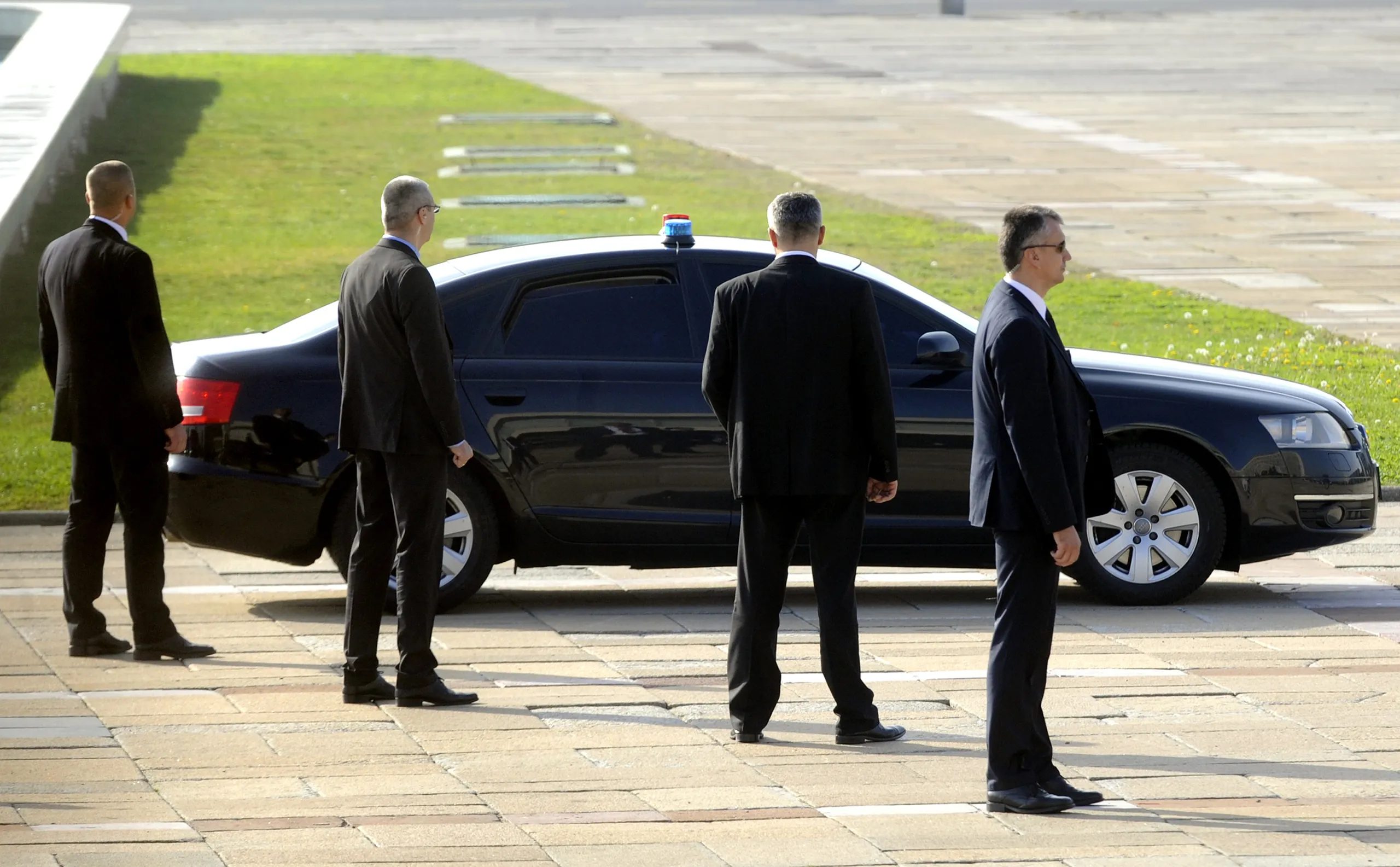
Our operators are licensed under the Private Security Services Act 2006 and have direct Dhaka experience. We provide close protection, security drivers, and residential security. All Dhaka deployments include a current political brief and contingency planning for hartal scenarios.
For context on the wider South Asian security environment, see our Karachi city page and our Mumbai city page.
Source: FCDO Bangladesh travel advisory (April 2026). Holey Artisan Bakery attack documentation, July 2016. OSAC Bangladesh Country Security Report 2025. Private Security Services Act 2006. WHO Bangladesh road safety data.
What are the main security threats in Dhaka?
Terrorism
The July 2016 Holey Artisan Bakery attack in Dhaka's Gulshan district killed 22 people, including 9 Italians, 7 Japanese, and 1 American, and demonstrated that IS-affiliated groups have both intent and capability to target foreign nationals in Bangladesh. The FCDO maintains a high terrorism threat rating for Bangladesh. Security at venues frequented by foreigners in Gulshan has been significantly upgraded since 2016, but the underlying threat has not been removed.
Civil Unrest
Bangladesh experiences frequent and sometimes violent political unrest. General strikes (hartals) and opposition blockades can immobilise the city with limited warning, effectively shutting down transport for hours or days. Political violence between party affiliates is documented and can affect movement and safety in ways that are difficult to predict.
Traffic and Infrastructure
Dhaka has among the worst traffic congestion globally. Emergency response times are severely affected. Road safety standards are poor, and road accident fatality rates are high. The combination creates significant risk during security incidents, medical emergencies, or any situation requiring rapid movement.
Flooding and Natural Hazards
Dhaka experiences severe flooding during the monsoon season, which can disrupt transport and communications for extended periods and effectively close roads. Bangladesh is also vulnerable to cyclones affecting the coast and conditions that indirectly affect Dhaka's infrastructure.
Vetted operators with direct experience in Dhaka
What security services are available in Dhaka?
Bodyguard Hire
Close protection officers with Dhaka operational experience, NGO sector background, and familiarity with Bangladesh's security and regulatory environment.
Executive Protection
Full security details for senior corporate executives, foreign government officials, and development sector leaders operating in Bangladesh.
Security Drivers
Vetted security drivers with knowledge of Dhaka's traffic patterns, alternative routes, and contingency routing during hartals.
Residential Security
Security assessment and management for expatriate residences in Gulshan, Banani, and Baridhara diplomatic enclaves.
What are the rules for private security in Dhaka?
Key regulatory requirements for operating security services in Dhaka.
Firearms Policy
Section 12 of the Private Security Services Act 2006 says no person or private security service establishment may be licensed for firearms, weapons or ammunition under it. The one exception is armed Ansar and Village Defence personnel deployed for cash transport with the Ansar director's authorisation.
Licensing
Private security services in Bangladesh are licensed under the Private Security Services Act 2006 (Act No. 11 of 2006). Nobody may set up or run a private security service establishment without a licence under section 5. The licensing authority is the District Magistrate in a district and the Police Commissioner in a metropolitan area (section 6).
Foreign Operators
Section 7 of the Act limits licences to Bangladeshi citizens and to companies registered in Bangladesh, and section 9 requires security guards to be Bangladeshi nationals. A foreign company therefore works through a licensed Bangladeshi provider. Take local legal advice before a foreign team carries out protective duties.
Sources, checked : Laws of Bangladesh (Legislative and Parliamentary Affairs Division), Private Security Services Act 2006; Prothom Alo, challenges and prospects of Bangladesh's private security services industry (24 July 2025).
Which areas of Dhaka carry elevated risk?
Lower-Risk Areas
- Gulshan 1 and 2: Primary diplomatic and expatriate area with significantly enhanced security following the 2016 attack. Higher checkpoints and venue security than the rest of the city.
- Banani: Commercial and residential area adjacent to Gulshan, generally manageable for business activity during normal periods.
- Baridhara DOHS: Military housing development used by senior diplomats and NGO leaders; high-security residential zone.
Elevated-Risk Areas
- Old Dhaka: Congested, limited emergency vehicle access, higher petty crime and crowd risk.
- Motijheel during political events: Central business district is a focal point for demonstrations and hartals.
- Any location during an active hartal: Movement restrictions can strand personnel across all districts with limited warning.
Deploying to Dhaka? Get a vetted close protection detail.
Request ConsultationWho do you call in an emergency in Dhaka?
National Emergency Service (police, fire and ambulance on one number: say which service you need)
999
Fire Service and Civil Defence, direct hotline (999 also reaches the fire service)
102
Rapid Action Battalion (RAB)
+880 2 966 2525
Square Hospitals Ltd, 24-hour emergency and ambulance (West Panthapath)
+880 1713 377775
Square Hospitals Ltd, overseas caller line
+880 9610 010616
United Hospital Limited (Plot 15, Road 71, Gulshan)
+880 2 2226 2466
Evercare Hospital Dhaka (Plot 81, Block E, Bashundhara R/A)
+880 2 8431661
Ambulance via the 999 national emergency service (ask for an ambulance, or a cardiac ambulance if a heart attack is suspected; with a vehicle to hand, driving to hospital is often faster)
999
US Embassy Dhaka, American Citizen Services (duty officer after hours)
+880 2 5566 2000
What travel advisories apply to Dhaka?
- Monitor political developments closely. Hartals can be called with little notice and can effectively shut down the city. Have contingency plans for extended restricted movement, including accommodation flexibility.
- Since the 2016 Gulshan attack, venues in the expatriate area have enhanced security measures. Apply the same heightened awareness to any restaurant, hotel, or venue frequented by foreign nationals.
- Traffic conditions make emergency medical response extremely slow in Dhaka. Identify the nearest international-standard medical facility before you need it, and build that journey time into contingency planning.
- Monsoon flooding can close roads and disrupt communications. Check seasonal conditions when planning visits between June and October.
Frequently Asked Questions
Is Dhaka safe for business travel after the 2016 attack?
How do I plan for hartals in Dhaka?
How does Dhaka's traffic affect security planning?
What is the standard security arrangement for corporate visitors to Dhaka?
What security do NGO and development sector organisations use in Dhaka?
This page is published by CloseProtectionHire.com and written to editorial standards overseen by James Calloway, Senior Security Consultant (regulation, licensing, vetting and risk frameworks) and Marcus Webb, Security Operations Adviser (operational close protection, secure transport and city-specific safety).
Threat, regulatory and emergency information is sourced to named, dated authorities such as the FCDO, the US State Department and national licensing bodies. Last updated . See how we verify.