
Planning travel to Chisinau? Speak with a security consultant.
Chisinau is the capital of Moldova, one of Europe’s smallest and most economically fragile states, positioned between Ukraine to the north and east and Romania to the west. The country’s security environment is defined above all by the Transnistria frozen conflict – the unresolved 1992 civil war that left the eastern strip of Moldova under de facto Russian-supported separatist control – and by the broader implications of Russia’s full-scale invasion of Ukraine for Moldova’s geopolitical exposure.
Within Chisinau itself, the operational security environment for corporate and diplomatic clients is manageable. The FCDO advises a high degree of caution (FCDO Moldova travel advice, 2026) and the US State Department advises Exercise Increased Caution (Level 2, 2026). Petty crime and organised crime exist but at levels typical for Eastern European capitals. The more significant risk factors for international organisations in Moldova are the Transnistria situation, Russian hybrid influence activity, and the residual governance challenges that Moldova is working to address through its EU accession process.
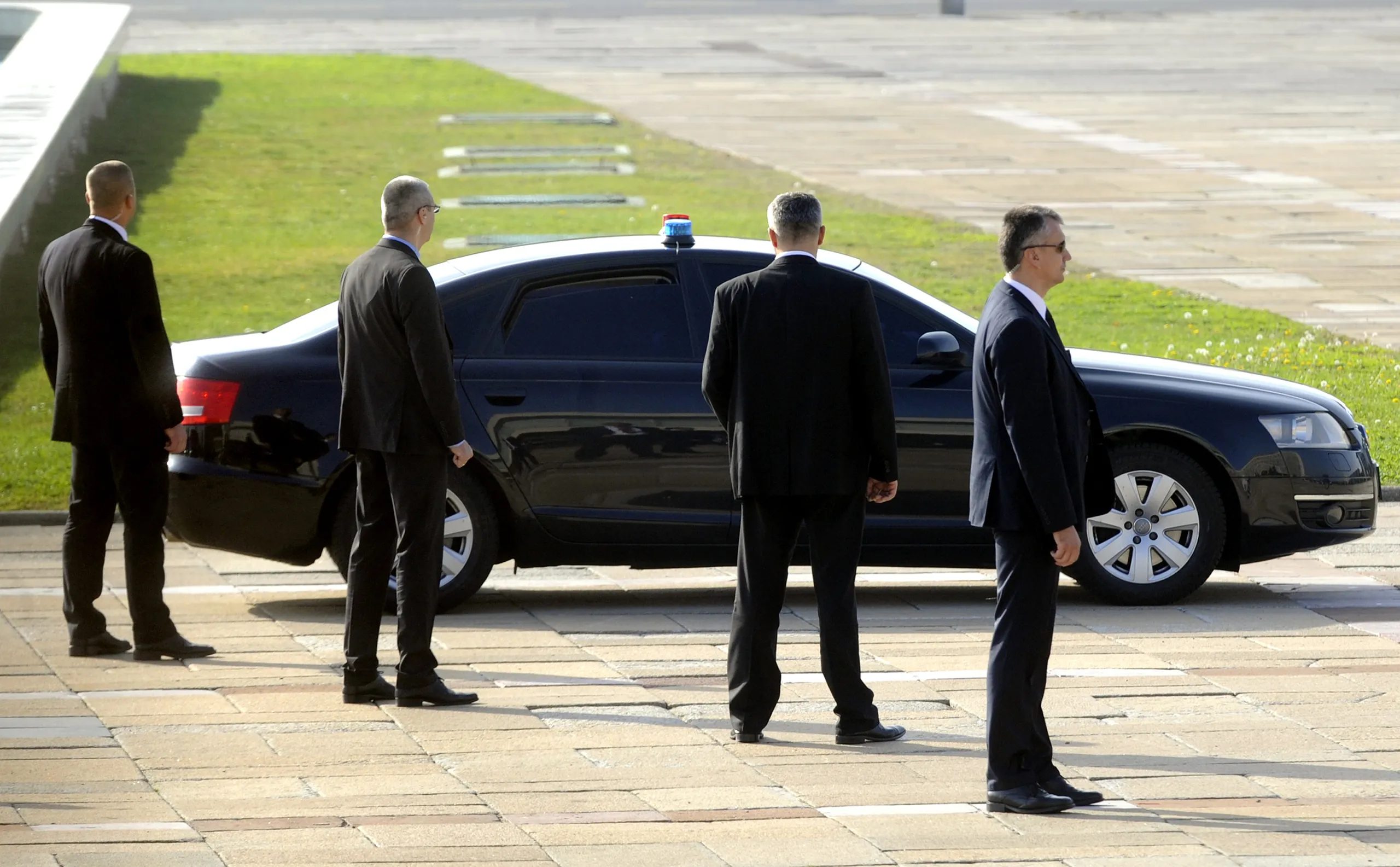
For corporate and diplomatic principals in Chisinau, the standard deployment includes vetted airport transfers from Chisinau International Airport, mobile close protection for higher-risk engagements, and residential security for longer assignments. For regional security context, see our security briefing for Kyiv and our bodyguard hire services in Chisinau.
What are the main security threats in Chisinau?
Transnistria Frozen Conflict
Moldova's eastern Transnistria region -- roughly 12% of the country's territory on the left bank of the Dniester River -- remains under the control of the self-declared Pridnestrovian Moldavian Republic (PMR), supported by approximately 1,500 Russian troops (the Operational Group of Russian Forces, OGRF). The Moldovan government does not control Transnistria. The FCDO advises against all travel to Transnistria. The security situation in Transnistria has been subject to heightened monitoring since the start of Russia's full-scale invasion of Ukraine in February 2022.
Russian Influence and Hybrid Threats
Moldova has been the subject of significant Russian influence operations, including energy manipulation (Gazprom cut gas supplies in 2021-2022), disinformation campaigns, and alleged interference in the 2023 elections. Moldova is an EU candidate state (candidate status granted June 2022; accession negotiations opened June 2024) and has pursued a pro-Western trajectory under President Maia Sandu. This orientation creates an ongoing tension with Russian interests that manifests in hybrid threat activity.
Organised Crime
Moldova's high emigration rate and historically weak state institutions have contributed to organised crime networks. Human trafficking, drug transit, and financial crime are the primary organised crime concerns. The operating environment for international business requires due-diligence procedures appropriate to a jurisdiction with elevated corruption risk, though Moldova has shown measurable improvement in governance indicators under the Sandu government.
Petty Crime and Urban Security
Chisinau experiences petty crime at levels broadly comparable to other Eastern European capitals of similar size. Pickpocketing in the Central Market and on public transport, and vehicle break-ins in poorly lit areas, are the most common incidents involving foreign nationals. The FCDO advises exercising a high degree of caution in Moldova (FCDO Moldova travel advice, 2026).
Vetted operators with direct experience in Chisinau
What security services are available in Chisinau?
Executive Protection
Mobile and residential close protection for corporate and diplomatic principals in Chisinau, with particular experience in the Eastern European regulatory environment.
Security Drivers
Vetted security transport for Chisinau airport transfers and city movement.
Residential Security
Residential security surveys and guard-force management for embassy staff, diplomatic personnel, and corporate executives on extended Chisinau assignments.
Risk Assessment
Country risk assessments for organisations with Moldova exposure, including Transnistria analysis and Russian hybrid threat monitoring.
What are the rules for private security in Chisinau?
Key regulatory requirements for operating security services in Chisinau.
Firearms Policy
Weapons used by security organisations are held under Law No. 130/2012 on the regime of civilian weapons and ammunition, according to the Ministry of Internal Affairs' draft amending Law No. 283/2003. The terms on which an individual guard or bodyguard may carry a firearm in Moldova could not be confirmed against the in-force text on 14 October 2026; confirm any armed element, and the permit behind each weapon, in writing before an assignment starts.
Licensing
Private security (pază) is governed by Law No. 283-XV of 4 July 2003 on private detective and security activity, implemented by Government Decision No. 667 of 8 July 2005. The authorisation for private security activity is handled by the Inspectoratul General al Poliției (General Police Inspectorate, under the Ministry of Internal Affairs), through its section supervising security activities, which publishes the list of authorised organisations. Ask any provider for its current authorisation.
Foreign Operators
A Ministry of Internal Affairs draft amending Law No. 283/2003 would prohibit the activity of foreign security organisations in Moldova; whether it has been adopted could not be confirmed on 14 October 2026. Work through a Moldovan organisation on the police list of authorised security organisations and take local legal advice before a foreign team carries out protective duties.
Sources, checked : Inspectoratul General al Poliției (Moldova), 'Autorizaţia pentru activitatea particulară de pază', public service page and list of authorised guard organisations; Parliament of Moldova draft law amending Law No. 283/2003 on private detective and security activity, with the Ministry of Internal Affairs explanatory note (particip.gov.md).
Which areas of Chisinau carry elevated risk?
Lower-Risk Areas
- Central Chisinau, including Stefan cel Mare and Sfint Boulevard area, the city centre's main commercial and hotel district, is well-policed during business hours.
- The airport corridor and established hotel areas maintain reasonable security infrastructure.
Elevated-Risk Areas
- Transnistria (entire region east of the Dniester): FCDO against all travel.
- Central Market and surrounding areas: elevated petty crime risk.
- Outer residential districts of Chisinau after dark: reduced police presence.
Deploying to Chisinau? Get a vetted close protection detail.
Request ConsultationWho do you call in an emergency in Chisinau?
Police
112
Fire service
112
Medical emergency
112
Spitalul Clinic Republican
+373 22 403 186
What travel advisories apply to Chisinau?
- The FCDO advises exercising a high degree of caution in Moldova and against all travel to Transnistria. Source: FCDO Moldova travel advice (2026).
- The US State Department advises Exercise Increased Caution in Moldova (Level 2); Transnistria Level 3 or above (2026).
- Do not travel to Transnistria. The region is not controlled by the Moldovan government, has unpredictable security conditions, and the ability of consular officers to provide assistance there is severely limited.
- Chisinau International Airport (KIV) is the main entry point. Direct connections to Bucharest, Istanbul, Vienna, and other European hubs are available. Pre-arrange vetted transport for arrivals.
- Medical care in Chisinau is available at Spitalul Clinic Republican and private facilities including Medpark and Sancos. For specialist care, medical evacuation to Bucharest (approximately 2.5 hours by road) is standard.
Frequently Asked Questions
What is the risk from Transnistria for business travellers to Chisinau?
Is close protection available in Chisinau?
How does Moldova's EU candidacy affect the security environment?
What are the medical evacuation options from Chisinau?
This page is published by CloseProtectionHire.com and written to editorial standards overseen by James Calloway, Senior Security Consultant (regulation, licensing, vetting and risk frameworks) and Marcus Webb, Security Operations Adviser (operational close protection, secure transport and city-specific safety).
Threat, regulatory and emergency information is sourced to named, dated authorities such as the FCDO, the US State Department and national licensing bodies. Last updated . See how we verify.