
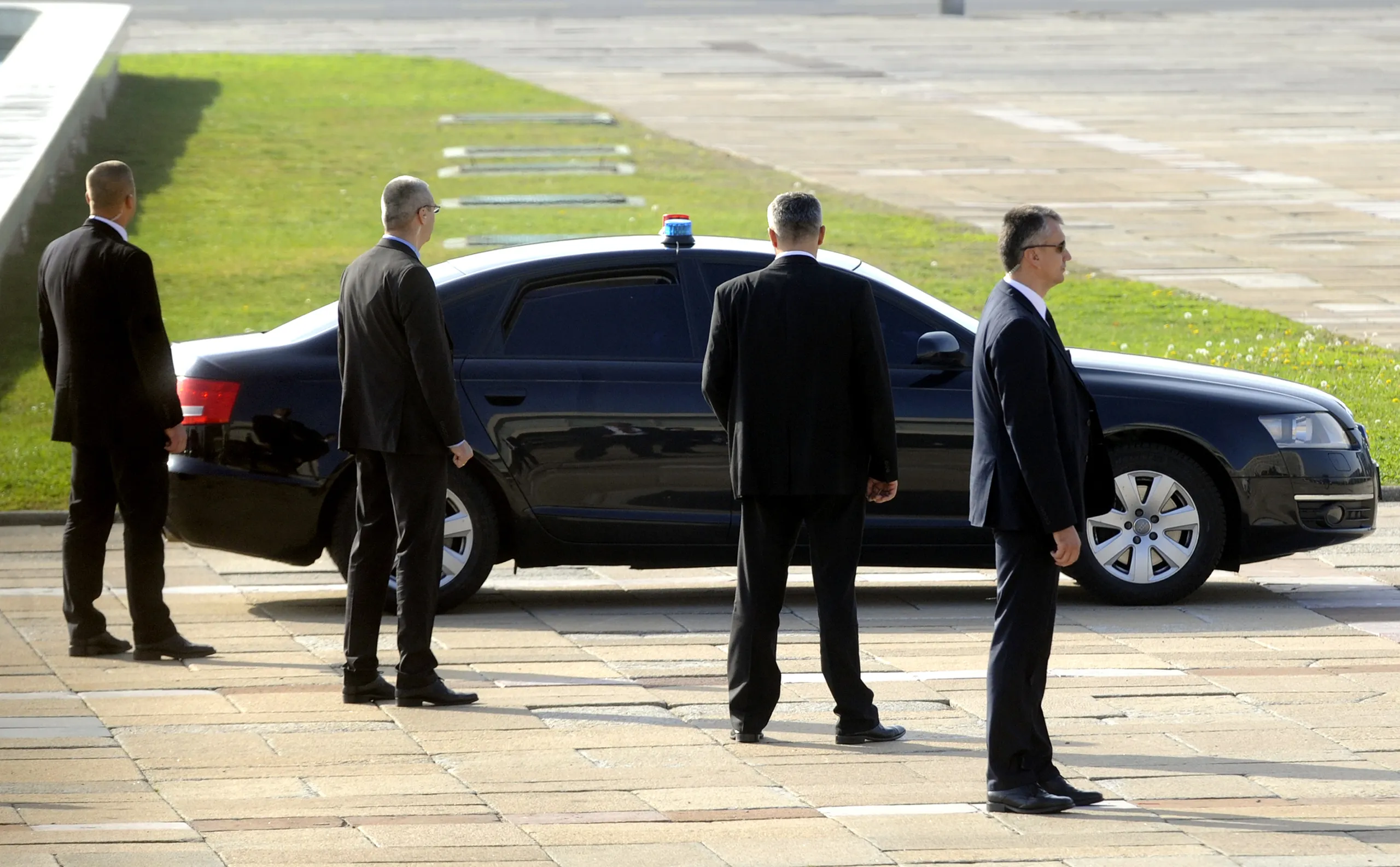
Planning travel to Brussels? Speak with a security consultant.
Brussels operates as one of the most complex security environments in Western Europe for corporate and diplomatic visitors. The density of EU institutions, NATO headquarters, and multinational lobbying activity creates a concentrated population of high-profile principals operating in a city that has experienced serious terrorist attacks (March 2016 bombings, 35 killed) and maintains an active threat environment (OCAM Level 2, 2025). For most corporate visitors, the practical security discipline is not high-cost or operationally disruptive: vetted transport from Brussels Airport (BRU) rather than ad-hoc transfer, accommodation selection in the European Quarter or Avenue Louise rather than the central station district, and heightened personal awareness at transport nodes.
For principals requiring formal close protection in Belgium, operators must hold a valid licence under the Law of 2 October 2017 regulating private and particular security. Our executive protection services are co-ordinated with Belgian-licensed partners experienced in EU institutional access protocols and NATO-perimeter operations. During EU summit periods, advance liaison with Belgian Federal Police is incorporated into the protective programme. For vetted security drivers in Brussels covering BRU and CRL airport runs with knowledge of summit-period road closures, contact our team for a programme-specific briefing. Regional context is available in our security briefings for Amsterdam and Paris.
What are the main security threats in Brussels?
Terrorism risk
Brussels remains one of the most significant terrorism risk environments in Western Europe. The Belgian OCAM (Coordination Unit for Threat Analysis) maintains a National Threat Level, most recently at Level 2 (medium) for the general public but with higher situational levels for EU institutions and transport hubs (OCAM 2025). The November 2015 Paris attacks and the March 2016 Brussels bombings (32 killed at Zaventem Airport and Maalbeek Metro) established the city as a high-profile target environment. FCDO Belgium travel advice (2026) advises heightened awareness at transport hubs, crowded public spaces, and government facilities.
Petty crime in specific districts
Pickpocketing and opportunistic theft are elevated in central Brussels around the Grand-Place, Midi/Zuid station, and on Metro lines 1 and 5. Belgian Federal Police annual report (2025) identifies Molenbeek-Saint-Jean and parts of Schaerbeek as elevated crime zones. Corporate visitors moving through the central station and Midi/Zuid rail hub require heightened personal security awareness.
Civil unrest during EU summits
Brussels hosts European Council summits and major NATO ministerial meetings throughout the year. These events attract significant protest activity, with demonstrations occasionally turning disruptive around Place du Luxembourg and the European Quarter. Belgian Federal Police impose road closures and security perimeters during summit periods that affect corporate movement planning across the city.
Vetted operators with direct experience in Brussels
What security services are available in Brussels?
Executive Protection
Close protection for EU institution delegates, multinational executives, and diplomatic visitors operating across Brussels and the wider Belgian capital region.
Security Drivers
Vetted transfers from Brussels Airport (BRU) and Brussels South Charleroi (CRL), with EU Quarter and Nato HQ area route expertise.
Event Security
Corporate event security for Brussels-based EU lobby meetings, investor conferences, and institutional receptions, with advance liaison with Belgian Federal Police.
Residential Security
Property surveys and security management for expatriate executives and diplomatic staff in the Brussels capital region.
What are the rules for private security in Brussels?
Key regulatory requirements for operating security services in Brussels.
Firearms Policy
Security officers in Belgium may carry a weapon only with a permit to carry arms (autorisation de port d'armes) issued by the Minister of the Interior. Firearms in general are governed by the Law of 8 June 2006 regulating economic and individual activities with weapons.
Licensing
Private security is governed by the Law of 2 October 2017 regulating private and particular security (loi réglementant la sécurité privée et particulière). Protection of persons is one of its guarding activities. A company must obtain prior authorisation from the Minister of the Interior, handled by the Private Security Directorate of the FPS Interior, and every officer must carry an identification card and hold training certificates from an approved body.
Foreign Operators
Foreign companies may apply to the FPS Interior for the same authorisation, using forms for foreign guarding companies. Without it they may not offer protection of persons in Belgium. Ask any provider for its FPS Interior authorisation and each officer's identification card.
Sources, checked : FPS Interior (BeSafe), Autorisations et activités; FPS Interior (BeSafe), Législation sécurité privée; FPS Interior (BeSafe), Agent de gardiennage brochure; Belgian Chamber of Representatives, bill 52K0474 amending the Law of 8 June 2006 on weapons.
Which areas of Brussels carry elevated risk?
Lower-Risk Areas
- European Quarter (Ixelles/Etterbeek) - heavily policed, diplomatic community resident, low ambient crime
- Avenue Louise and Uccle - upmarket residential, low street crime, good police visibility
- Woluwe-Saint-Lambert and Woluwe-Saint-Pierre - residential eastern communes, very low crime
Elevated-Risk Areas
- Molenbeek-Saint-Jean - historically elevated crime; federal police maintain enhanced presence; awareness required
- Brussels Midi/Zuid and Gare Centrale stations - elevated pickpocketing; avoid conspicuous device use
- Grand-Place and Manneken Pis area - very high tourist density, targeted by organised pickpocketing groups
Deploying to Brussels? Get a vetted close protection detail.
Request ConsultationWho do you call in an emergency in Brussels?
Emergency services (police, fire, ambulance)
112
Police emergency
101
UZ Brussel hospital
+32 2 477 6111
Cliniques universitaires Saint-Luc
+32 2 764 1111
What travel advisories apply to Brussels?
- FCDO Belgium travel advice (2026): normal precautions with heightened awareness at transport hubs and crowded public spaces due to terrorism risk.
- US State Department Level 2 (Increased Caution - terrorism) for Belgium (2026).
- OCAM National Threat Level 2 (medium) for Belgium (2025/2026). Monitor OCAM updates during EU summit periods when level may temporarily increase.
- Brussels Airport (BRU) was the site of the March 2016 bombings. Security procedures remain comprehensive; allow additional time for screening.
- Medical facilities: UZ Brussel and Cliniques universitaires Saint-Luc are the primary acute care facilities. Clinique Saint-Jean offers English-language private care.
Frequently Asked Questions
What is the terrorism risk for business visitors to Brussels?
Which Brussels districts require elevated security awareness?
How do EU summit periods affect security planning in Brussels?
What medical facilities are available for executives in Brussels?
This page is published by CloseProtectionHire.com and written to editorial standards overseen by James Calloway, Senior Security Consultant (regulation, licensing, vetting and risk frameworks) and Marcus Webb, Security Operations Adviser (operational close protection, secure transport and city-specific safety).
Threat, regulatory and emergency information is sourced to named, dated authorities such as the FCDO, the US State Department and national licensing bodies. Last updated . See how we verify.