Brazil · Close Protection & Executive Security
Close Protection in Brasilia, Brazil
Close protection and executive security in Brasilia, Brazil's federal capital. Diplomatic-quarter placements, satellite-city risk, and Plano Piloto route planning.
Planning travel to Brasilia? Speak with a security consultant.
Lucio Costa’s 1957 competition-winning plan for Brasilia, laid out in the rough shape of a bird or an aeroplane depending on who you ask, and Oscar Niemeyer’s modernist government buildings, earned the city UNESCO World Heritage status in 1987, less than three decades after it was inaugurated as Brazil’s capital on 21 April 1960. It is a genuinely unusual security environment for that reason: a purpose-built federal capital, not an organic city, with the Planalto Palace, the National Congress, and the Federal Supreme Court all sitting inside the Praca dos Tres Poderes at one end of the plan, and a dedicated diplomatic quarter, the Setor de Embaixadas Sul and Norte, housing the bulk of Brazil’s foreign missions.
That planned structure shapes the crime picture too. FCDO Brazil travel advice (2026) flags Brasilia’s central bus station, the Rodoviaria do Plano Piloto, as a consistent theft location, and notes pedestrian theft more broadly across the central and southern commercial sectors. Beyond the planned centre sit Brasilia’s satellite cities, administrative regions with a genuinely different profile. The OSAC Brazil Crime and Safety Report for Brasilia names Ceilandia, Santa Maria, Sao Sebastiao, and Paranoa as areas best avoided after dark. None of this touches a standard corporate or diplomatic itinerary, but the distinction between the Plano Piloto and its satellite cities matters for anyone planning routes in the city.
There’s a separate risk category worth naming honestly: politically motivated violence aimed at the government district itself. On 13 November 2024, two explosions went off seconds apart in the Praca dos Tres Poderes, one outside the Supreme Federal Court, the other near Congress. A single attacker died; nobody else was hurt. It’s a low-frequency risk, and not one Sao Paulo’s organised-crime profile shares, but it’s real, and it means any itinerary touching the federal precinct benefits from a current check on access arrangements rather than an assumption of routine entry.
Brasilia International Airport (BSB) sits about 11 kilometres from the Plano Piloto, a 15 to 25 minute drive depending on traffic. The US State Department’s Level 2, Exercise Increased Caution, advisory for Brazil (2026 update) applies nationally, citing violent crime and a specific kidnapping risk indicator; Brasilia’s core sits well below Sao Paulo or Rio de Janeiro on most of those measures, but the national baseline still belongs in any planning conversation.
Security Services in Brasilia
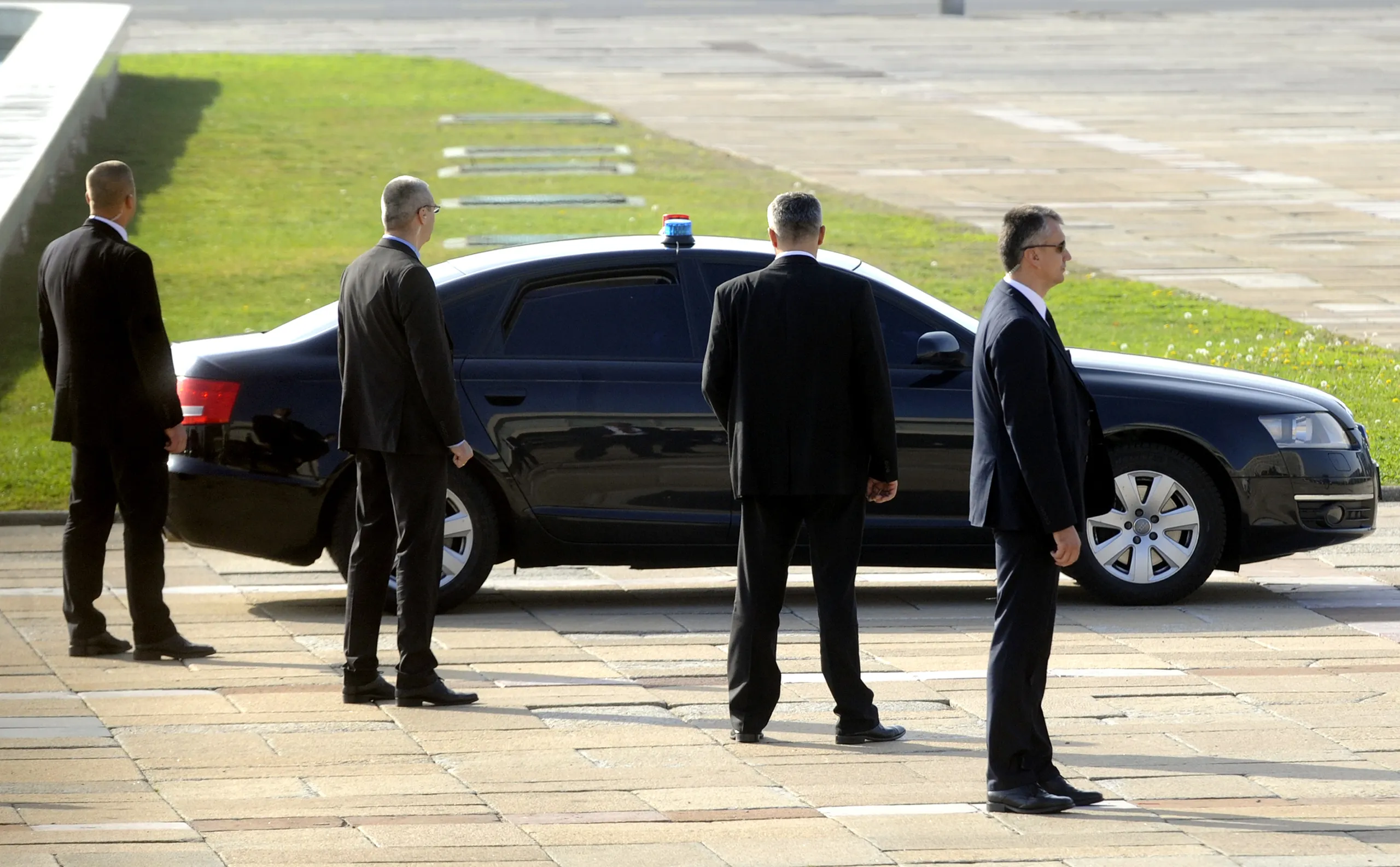
Close protection in Brasilia works differently from Sao Paulo’s armed, armoured-vehicle-first model. Officers here spend more time on diplomatic protocol, government-sector access, and satellite-city route avoidance than on carjacking countermeasures, and the majority of engagements run unarmed. Secure chauffeured transport typically begins at BSB rather than a rail station, and advance surveys of embassy-adjacent and ministry-sector venues are a standard part of any government-linked visit.
For the national regulatory picture, see our Brazil country hub. For our approach to armed, higher-tempo operating environments elsewhere in Brazil, see the Sao Paulo city briefing, and for South American cross-border comparisons, see our Bogota and Buenos Aires city pages. Our bodyguard hire and executive protection service pages cover the full range of engagement types available in Brasilia.
Source: FCDO Brazil travel advice (2026). US State Department Brazil Travel Advisory, Level 2 (2026 update). OSAC Brazil Crime and Safety Report: Brasilia. BBC News reporting on the 13 November 2024 Praca dos Tres Poderes explosions. Federal Police private security regulations (Portaria 3233/2012). UNESCO World Heritage List, Brasilia inscription (1987).
What are the main security threats in Brasilia?
Street Theft in Commercial and Transit Areas
FCDO Brazil travel advice (2026) singles out Brasilia's central bus station (Rodoviaria do Plano Piloto) as a consistent theft hotspot, and notes that pedestrian theft also occurs across the city, particularly in the central and southern commercial sectors. This is opportunistic, not organised, crime, and it responds to standard discretion: minimal cash carried, no visible valuables, and vetted transport rather than street hailing near the bus terminal.
Satellite City Risk After Dark
Brasilia's administrative regions, commonly called satellite cities, sit outside the planned centre and carry a different profile. The OSAC Brazil Crime and Safety Report for Brasilia identifies Ceilandia, Santa Maria, Sao Sebastiao, and Paranoa as areas to avoid after dark. None of these fall within any normal corporate or diplomatic itinerary, but drivers and advance teams need the distinction built into route planning from the outset.
Government-District Targeted Violence
On 13 November 2024, two explosions occurred within 20 seconds of each other in the Praca dos Tres Poderes, outside Brazil's Supreme Federal Court and near the National Congress. A single attacker, acting alone, died in the second blast; no one else was hurt. The incident, widely reported at the time including by the BBC, shows that Brasilia's seat-of-government zone carries a distinct, low-frequency risk of individually motivated political violence that has no real equivalent in Sao Paulo's crime profile.
National Crime Backdrop
The US State Department maintains a Level 2, Exercise Increased Caution, advisory for Brazil as of its 2026 update, citing violent crime including armed robbery and carjacking, plus a specific kidnapping risk indicator. This is a national rating rather than a Brasilia-specific one, and the city's Plano Piloto core runs well below Sao Paulo or Rio de Janeiro on most measures, but the national backdrop still shapes baseline planning assumptions.
Vetted operators with direct experience in Brasilia
What security services are available in Brasilia?
Executive Close Protection
Personal protection for executives, diplomats, and delegations moving between the federal government sector, the Setor de Embaixadas diplomatic quarter, and hotel or conference venues in the Plano Piloto.
Secure Chauffeured Transport
Vetted ground transport from Brasilia International Airport (BSB) into the Plano Piloto, and onward movement that avoids satellite-city routing after dark where an alternative exists.
Advance Security Surveys
Pre-visit assessment of hotels, embassy-adjacent venues, and government-sector meeting locations, including access protocols specific to Brasilia's diplomatic and federal precincts.
Travel Security Briefings
Pre-travel briefings covering Brasilia's specific profile: satellite-city avoidance after dark, bus-station and commercial-sector pedestrian theft, and the practical implications of the November 2024 Praca dos Tres Poderes incident for government-district visits.
What are the rules for private security in Brasilia?
Key regulatory requirements for operating security services in Brasilia.
Firearms Policy
Brazil's Policia Federal regulates armed private security nationally, and the agency's own national headquarters sits in Brasilia, reflecting the city's status as the federal capital. Armed close protection is available through Federal Police registered firms, though the large majority of Brasilia's diplomatic and corporate engagements are staffed unarmed given the comparatively low baseline risk of the Plano Piloto.
Licensing
Private security is regulated at federal level by the Policia Federal and at state level by Distrito Federal authorities. Company registration and individual operator certification both run through Federal Police standards, per Portaria 3233/2012, the same framework applied in Sao Paulo and other Brazilian cities.
Foreign Operators
Foreign security firms must establish a Brazilian entity and obtain federal registration before operating in Brasilia. Foreign personnel need Brazilian work authorisation, and armed roles are restricted to Brazilian-licensed operators; our arrangements route through Federal Police registered Brazilian partners.
Which areas of Brasilia carry elevated risk?
Lower-Risk Areas
- Setor de Embaixadas Sul and Norte: the diplomatic quarter housing the majority of Brasilia's foreign missions, low pedestrian density, high baseline security presence.
- Esplanada dos Ministérios and the Praca dos Tres Poderes government sector during standard business hours: heavily policed federal precinct.
- Asa Sul and Asa Norte residential-commercial wings of the Plano Piloto: the city's established hotel and business districts.
Elevated-Risk Areas
- Rodoviaria do Plano Piloto (central bus station) and immediate surroundings: the city's most consistently flagged pedestrian-theft location per FCDO guidance.
- Ceilandia, Santa Maria, Sao Sebastiao, and Paranoa satellite cities after dark: identified by the OSAC Brasilia crime and safety report as areas to avoid outside daylight hours.
- Central and southern commercial sectors generally: FCDO notes pedestrian theft occurs across these areas, not only at the bus station.
Deploying to Brasilia? Get a vetted close protection detail.
Request ConsultationWho do you call in an emergency in Brasilia?
Police (Policia Militar)
190
Ambulance (SAMU)
192
Fire Department
193
Civil Defence
199
Hospital Sirio-Libanes Brasilia
+55 61 2141 4000
British Embassy Brasilia
+55 61 3329 2300
What travel advisories apply to Brasilia?
- Brasilia's satellite cities, including Ceilandia, Santa Maria, Sao Sebastiao, and Paranoa, carry a materially different risk profile after dark than the Plano Piloto itself. The OSAC Brasilia crime and safety report identifies all four as areas to avoid outside daylight hours; none feature in a normal corporate or diplomatic itinerary.
- The central bus station and the city's southern and central commercial sectors are the most consistently flagged locations for pedestrian theft, per FCDO Brazil travel advice (2026). Carry minimal cash and avoid displaying valuables in these areas.
- Brasilia International Airport (BSB) sits roughly 11 kilometres from the Plano Piloto, a drive of around 15 to 25 minutes depending on traffic. Vetted transport direct from the terminal is standard practice rather than street-hailed alternatives.
- The 13 November 2024 explosions at the Praca dos Tres Poderes, a single-attacker incident with no other casualties, are a reminder that Brasilia's federal government precinct carries its own low-frequency risk category. Any itinerary involving government-adjacent venues benefits from advance liaison on current access protocols.
Frequently Asked Questions
This page is published by CloseProtectionHire.com and written to editorial standards overseen by James Calloway, Senior Security Consultant (regulation, licensing, vetting and risk frameworks) and Marcus Webb, Security Operations Adviser (operational close protection, secure transport and city-specific safety).
Threat, regulatory and emergency information is sourced to named, dated authorities such as the FCDO, the US State Department and national licensing bodies. Last updated . See how we verify.
Request a Consultation
Describe your security requirements below. All enquiries are confidential and handled by licensed consultants.
Your enquiry has been received. A security consultant will contact you within 24 hours to discuss your requirements.