
Planning travel to Bogota? Speak with a security consultant.
Bogota has transformed significantly over the past two decades. The city that was synonymous with cartel violence has become a major regional business hub with a functioning security infrastructure in its northern districts. The risks that remain are specific, well-documented, and require professional management – not because Bogota is uniformly dangerous, but because the remaining threat categories (express kidnapping, scopolamine drugging, street robbery) are specifically targeted at foreign nationals and visible wealth.
Express kidnapping: the primary threat
Express kidnapping, known locally as paseo millonario, is Bogota’s signature criminal threat for corporate visitors. The typical scenario involves a victim being taken into an unofficial taxi or approaching a criminal-controlled vehicle, then transported to multiple ATMs over several hours and released after withdrawing the maximum allowed cash. In a significant proportion of cases, victims are first drugged with scopolamine, a drug that renders them compliant while appearing coherent.
Foreign nationals are disproportionately targeted because they are assumed to have accessible funds and limited knowledge of local procedures. The entry point is almost always transport: unofficial taxis waiting outside hotels, airports, and restaurants. The single most effective countermeasure is pre-arranged vetted transport for all movements.
Scopolamine
Scopolamine (burundanga) is a documented feature of Bogota’s crime environment. It is administered without the victim’s knowledge, typically through drinks, food, or physical contact. Victims can appear and behave normally while being fully compliant with criminal instructions, and typically have no memory of events after the drug takes effect. This is why accepting drinks from strangers – or leaving drinks unattended in social settings – carries real rather than theoretical risk in Bogota.
The northern districts versus the rest
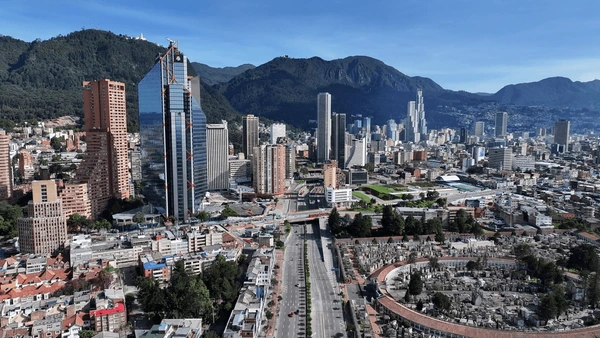
Bogota’s risk picture is highly uneven. The northern business areas – Zona T, Zona G, Usaquen, Parque de la 93, El Chico – have a substantially better security picture than the city average, with higher police presence and established security infrastructure. La Candelaria (the historic tourist centre) is a different environment, with elevated robbery and pickpocketing, particularly after dark. The southern districts have high crime rates and no corporate justification for most itineraries.
The practical implication for corporate planning is that route selection and venue choice matter greatly. A direct route on a map may pass through elevated-risk areas, and the transition between the northern business zone and higher-risk areas can be abrupt.
Our operations in Bogota
All our operators hold valid SVSP credentials and are native Spanish speakers with extensive Bogota experience. Our Colombia country page sets out the Supervigilancia licensing rules under Decree 356 of 1994 and covers Medellin as well as Bogota. Armoured vehicles are available for all assignments, and drivers are trained in anti-kidnap driving techniques and real-time communications with our operations centre. For executives travelling to Bogota, the minimum recommended package is a security driver plus close protection officer for all movements outside the hotel.
Our Bogota risk assessment provides current threat scoring and zone-specific guidance, and the Bogota travel safety guide covers current FCDO advisory status. For the regulatory framework, see our guide to private security regulations in Colombia.
Source: FCDO Colombia travel advisory (April 2026). OSAC Colombia Country Security Report 2025. Colombian SVSP private security regulations. Scopolamine crime documentation, Colombian National Police. US State Department Colombia advisory (2026).
What are the main security threats in Bogota?
Express Kidnapping
Paseo millonario (millionaire's ride) involves victims being taken in unofficial taxis or after being drugged, then transported to multiple ATMs over several hours before release. Foreign nationals are targeted disproportionately. Scopolamine (burundanga) is used to render victims compliant and unable to resist.
Armed Robbery
Street robbery, often involving weapons, is common across Bogota including in tourist and business areas. Phone snatching on foot and in traffic, pickpocketing in crowded areas, and distraction theft are frequent. Scopolamine drugging is a documented tactic, particularly in nightlife settings.
Political Violence and Protest
Protests and demonstrations occur frequently and can escalate with tear gas deployment and road blockages. Strikes and civil unrest affect transport across the city and can turn violent. Bogota has experienced multiple significant protest cycles in recent years.
Organised Crime
Residual conflict dynamics mean organised criminal groups maintain a presence in urban areas. Extortion targeting businesses operates in some commercial sectors. The security situation in Bogota is substantially better than in the peak conflict years, but the underlying dynamics have not fully resolved.
Vetted operators with direct experience in Bogota
What security services are available in Bogota?
Bodyguard Hire
Licensed close protection officers with Bogota operational experience and native Spanish-language capability.
Executive Protection
Multi-operator executive details with armoured vehicle support and counter-kidnap protocols.
Security Drivers
Anti-kidnap trained drivers with armoured vehicles and real-time route intelligence.
Event Security
Venue assessment and security teams for corporate events and private functions in Bogota.
What are the rules for private security in Bogota?
Key regulatory requirements for operating security services in Bogota.
Firearms Policy
Decree 2535 of 1993 makes the State the only lawful source of arms (article 2) and requires a permit, issued by the military authorities, to hold or carry a firearm (articles 22, 23 and 32). Private security services may use firearms under those permits, and armed staff must be trained and certified (article 78). Decree 356 of 1994 lists armed escort of people as a private security service (article 6).
Licensing
Private security services may only be provided under a licence or credential issued by the Superintendencia de Vigilancia y Seguridad Privada (Supervigilancia), under Decree 356 of 1994, the Private Security and Surveillance Statute (article 3). Supervigilancia is a technical body attached to the Ministry of National Defence (Decree 2355 of 2006, article 1). It publishes registers of authorised companies and accredited operational staff.
Foreign Operators
Partners in a Colombian private security company must be Colombian nationals (Decree 356 of 1994, article 12). Companies set up before the Decree with foreign capital may not increase the foreign share. Foreign clients therefore engage a Colombian company licensed by Supervigilancia. Take local legal advice before a foreign team carries out protective duties.
Sources, checked : Decree 356 of 1994, Private Security and Surveillance Statute (Senate of Colombia text); Decree 2535 of 1993 on arms, ammunition and explosives (copy filed with the WTO); Decree 2355 of 2006 on the Superintendencia de Vigilancia y Seguridad Privada, text (ASOSEC copy); Superintendencia de Vigilancia y Seguridad Privada.
Which areas of Bogota carry elevated risk?
Lower-Risk Areas
- Zona T and Zona G: Upscale dining and business area with higher police presence and established security infrastructure.
- Usaquen: Northern business and restaurant district with established private security presence.
- Parque de la 93: Commercial area with active security, embassies, and international hotels.
- El Chico and Rosales: Upmarket residential and commercial neighbourhoods in the north with lower incident rates.
Elevated-Risk Areas
- La Candelaria: Historic tourist area with elevated pickpocketing and robbery risk; avoid after dark.
- Santa Fe and Los Martires: Higher crime density, drug-market activity; avoid at all times for corporate purposes.
- Southern Bogota: Higher crime rates, limited security infrastructure, and no corporate justification for most itineraries.
- Bus terminals and crowded public transport: Primary pickpocketing and express-kidnap approach areas.
Deploying to Bogota? Get a vetted close protection detail.
Request ConsultationWho do you call in an emergency in Bogota?
Emergency (police and ambulance)
123
Fire
119
Anti-kidnapping Unit (GAULA)
165
Tourist Police
+57 1 337 4413
Clinica del Country (private hospital, Carrera 16 No. 82-57, 24-hour urgencias)
+57 601 390 5099
Fundacion Santa Fe de Bogota, Hospital Universitario (Carrera 7 No. 117-15)
+57 601 482 4488
What travel advisories apply to Bogota?
- Never accept drinks from strangers, and do not leave drinks unattended. Scopolamine (burundanga) drugging is a documented tactic used to incapacitate victims before robbery or kidnapping.
- Use only pre-arranged or verified transport. Street taxis are the primary vehicle for express kidnapping in Bogota.
- Do not carry large amounts of cash or make ATM withdrawals in the street. Use bank premises during business hours.
- Avoid all protests and demonstrations. They can escalate quickly, and tear gas and crowd dispersal affect surrounding areas.
- Northern business districts have a better security picture than the city average, but incidents still occur there. Standard precautions apply everywhere.
Frequently Asked Questions
Is Bogota safe for business travel?
What is scopolamine and how is it used in Bogota?
Do I need a bodyguard in Bogota?
How does express kidnapping work in Bogota and how is it prevented?
What security licensing should a Bogota operator hold?
This page is published by CloseProtectionHire.com and written to editorial standards overseen by James Calloway, Senior Security Consultant (regulation, licensing, vetting and risk frameworks) and Marcus Webb, Security Operations Adviser (operational close protection, secure transport and city-specific safety).
Threat, regulatory and emergency information is sourced to named, dated authorities such as the FCDO, the US State Department and national licensing bodies. Last updated . See how we verify.